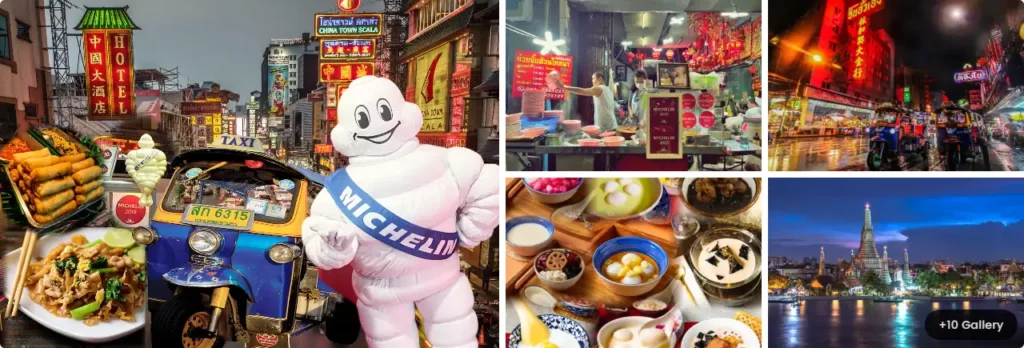
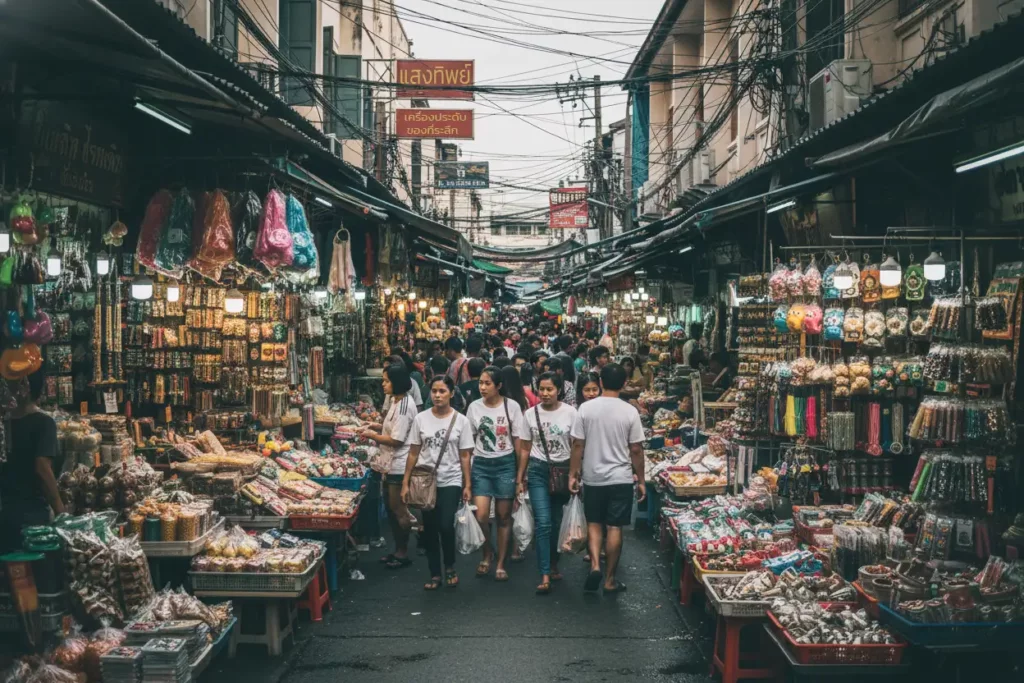
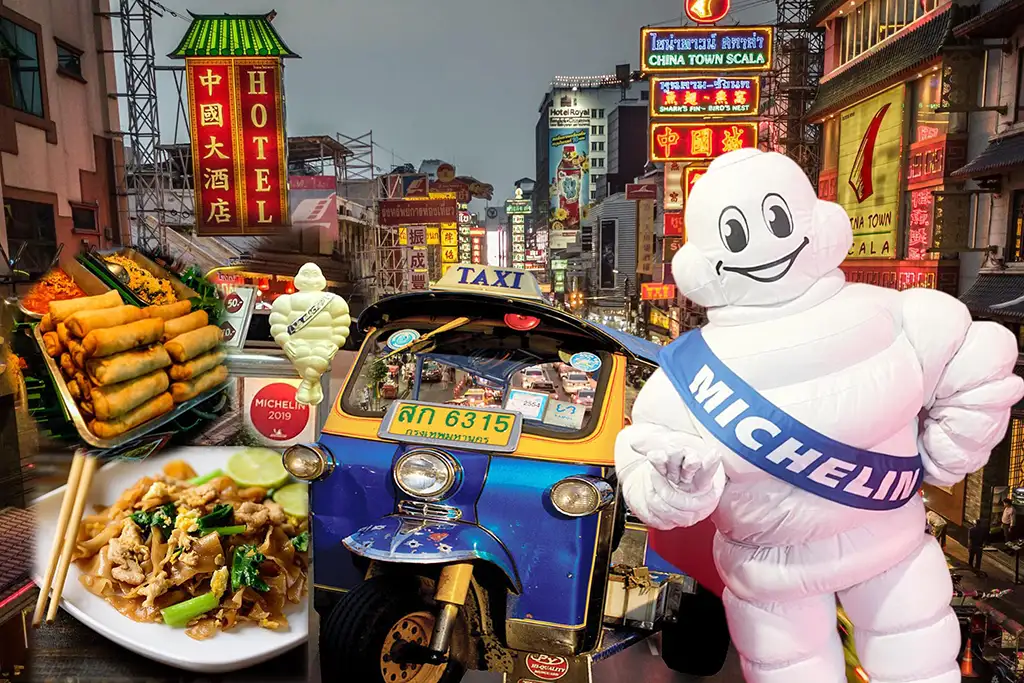
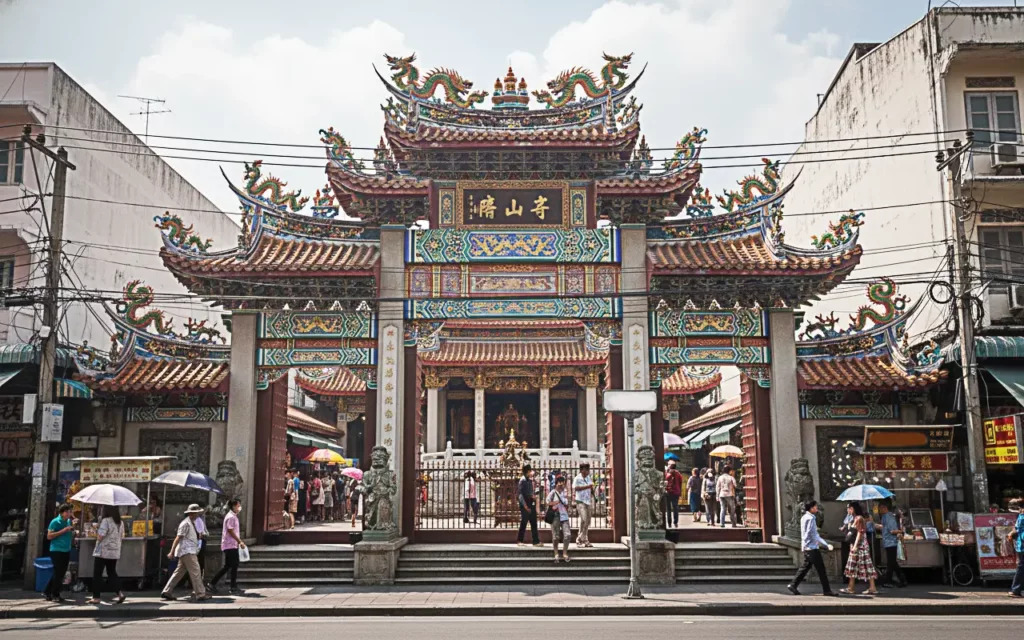
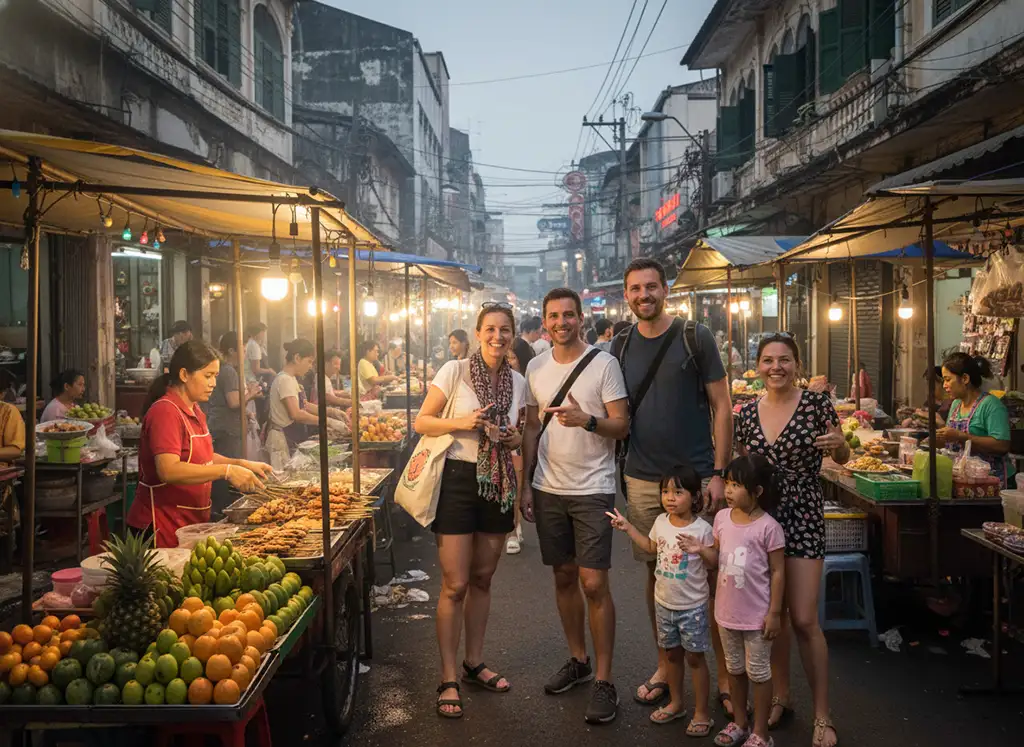
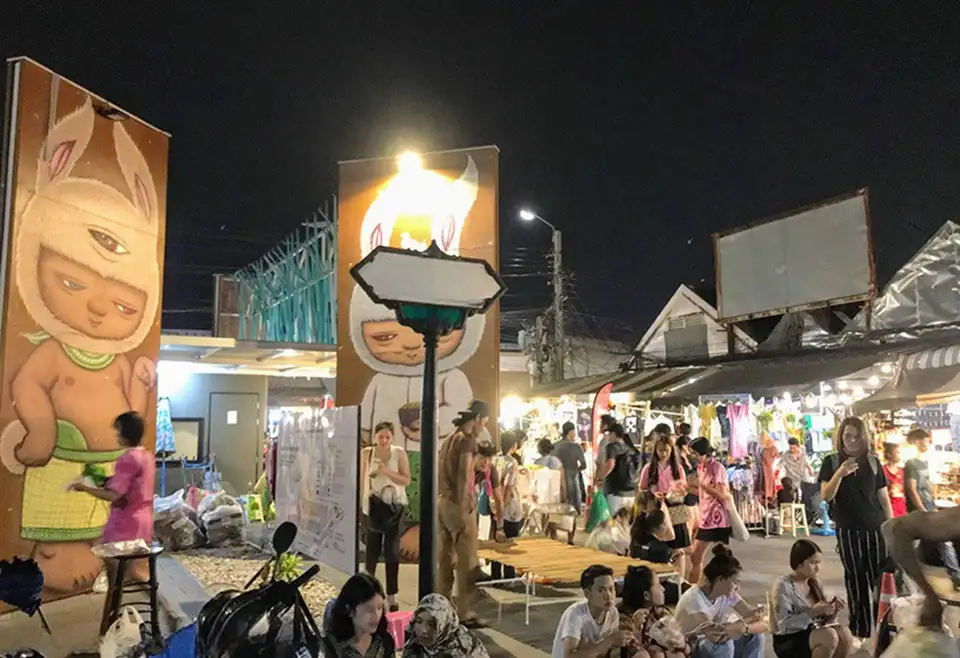
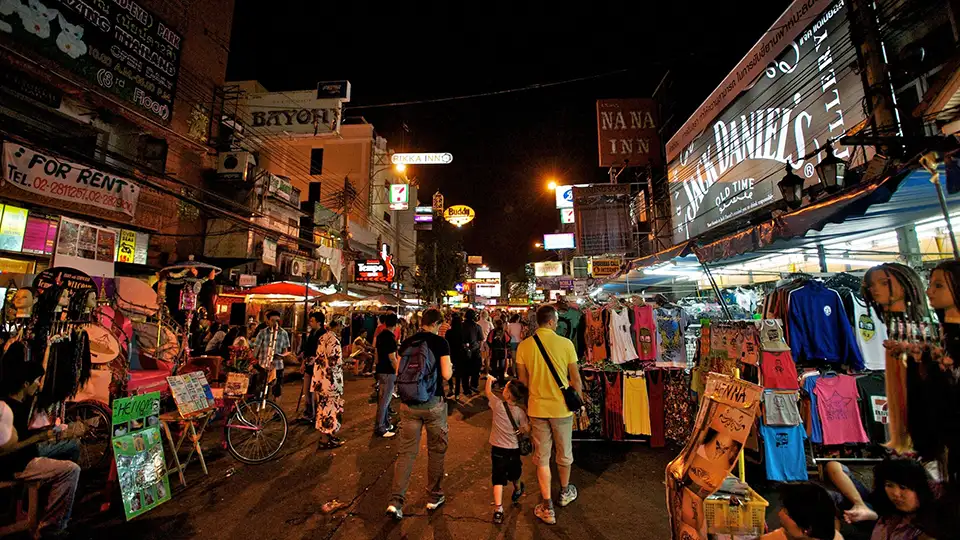
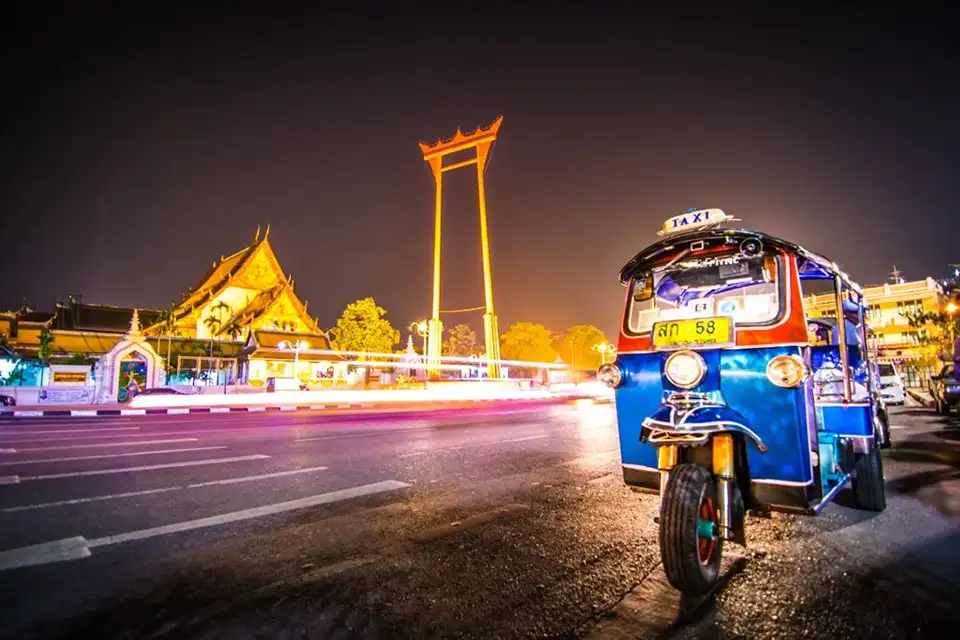
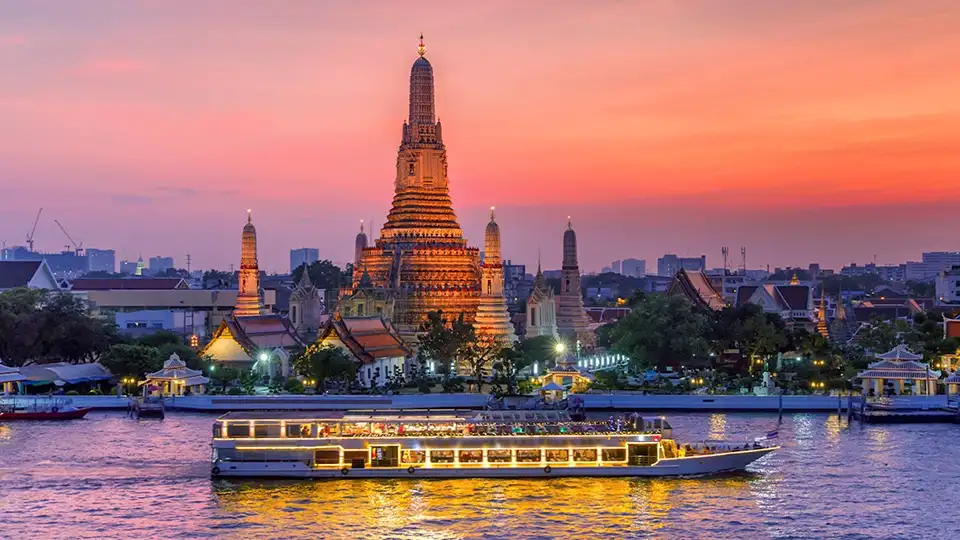
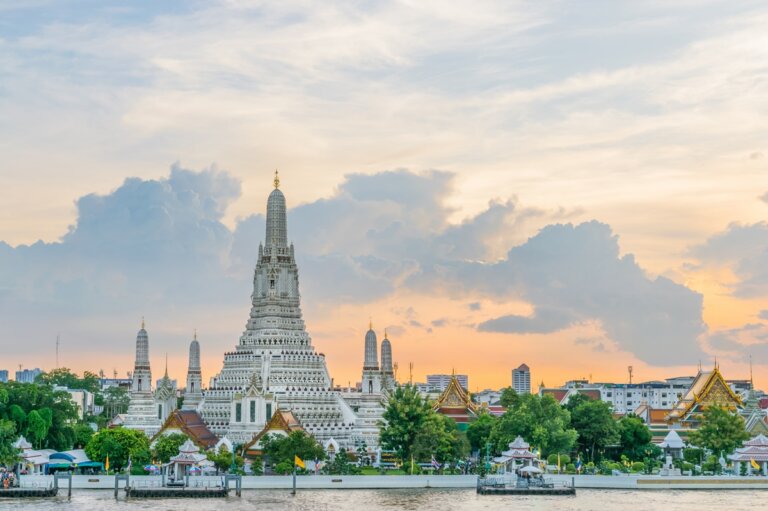
Forget the glossy brochures. The real Bangkok thrives in its hidden alleys, sizzling street markets, and warm smiles from locals who welcome you into their world. With BeYourGuides.com, you’ll experience Bangkok like never before—authentic, immersive, and unforgettable.
Be a traveler, not just a tourist—with Bangkok local tour experiences that stay with you.
Kayak Bangkok’s Hidden Canals & Recharge with Nature
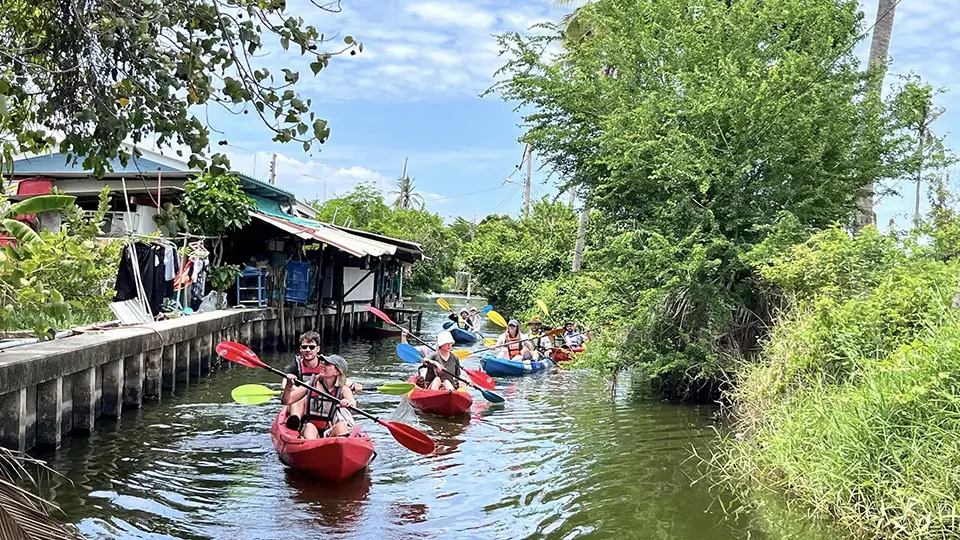
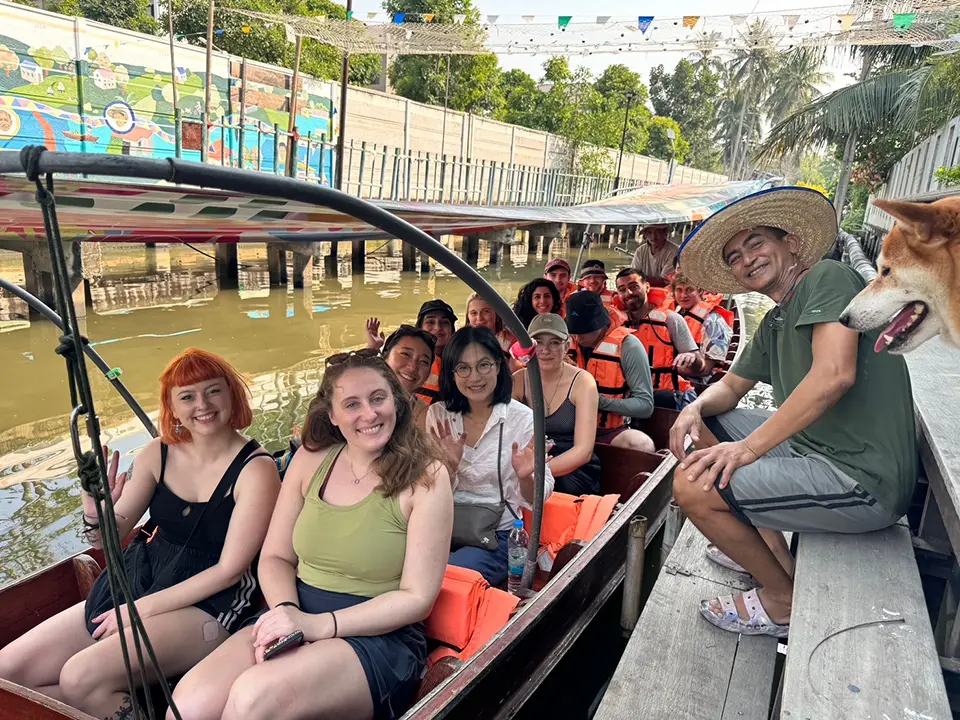
Craving something truly off the beaten path? The Bangkok: Hidden Kayaking & Electric Longtail Boat Tour offers a serene escape into coconut groves and quiet canals. Paddle through peaceful waterways, meet “Shiro” the cheerful dog, and sip fresh coconut juice beneath the trees.
This 3–5 hour eco-friendly experience includes:
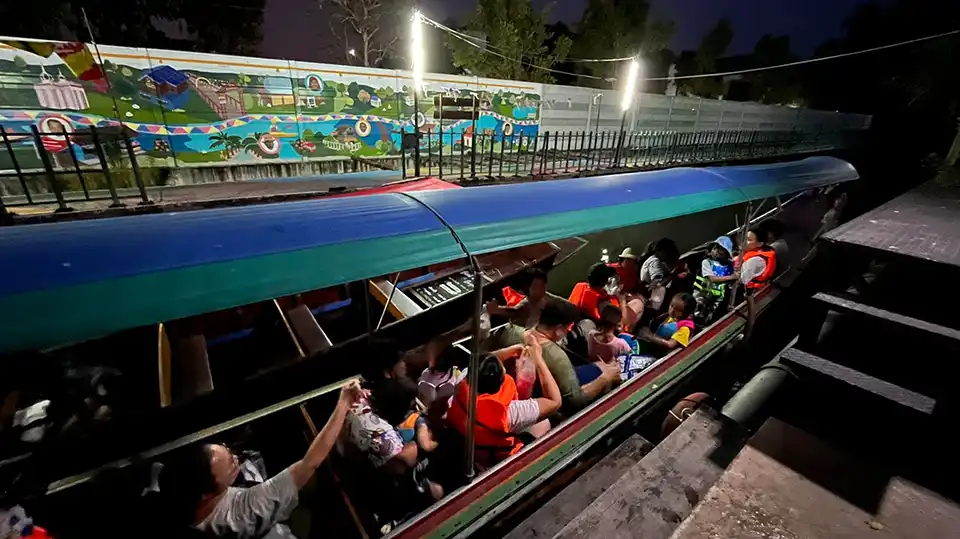
Electric longtail boat ride through art-filled canals
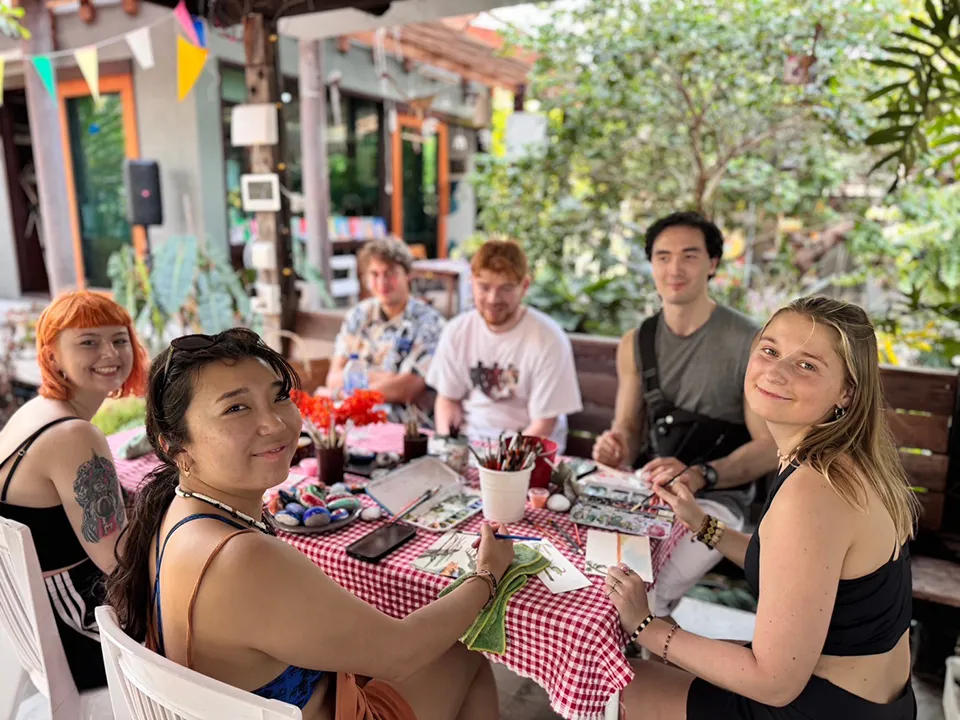
Thai herbal inhaler workshop and art activities
Hotel pickup (Option)
Free cancellation up to 24 hours before departure
Perfect for small groups and travelers seeking a low-carbon, soulful journey.
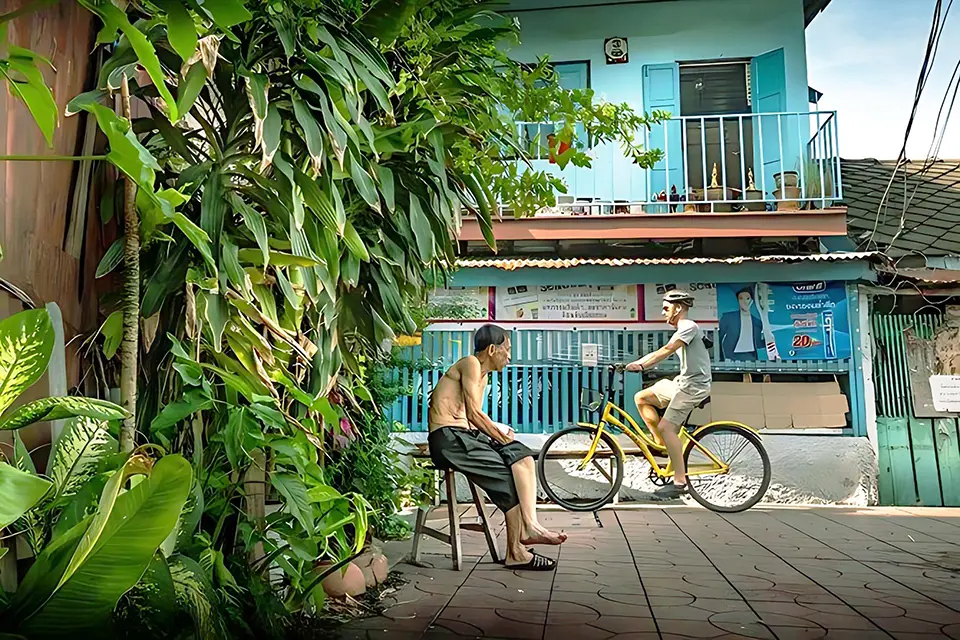
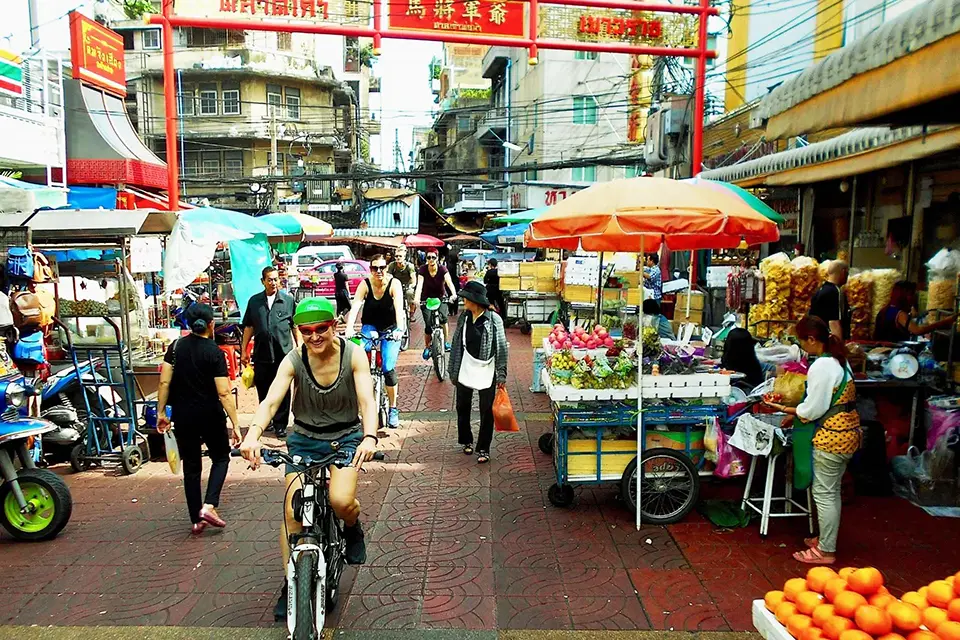
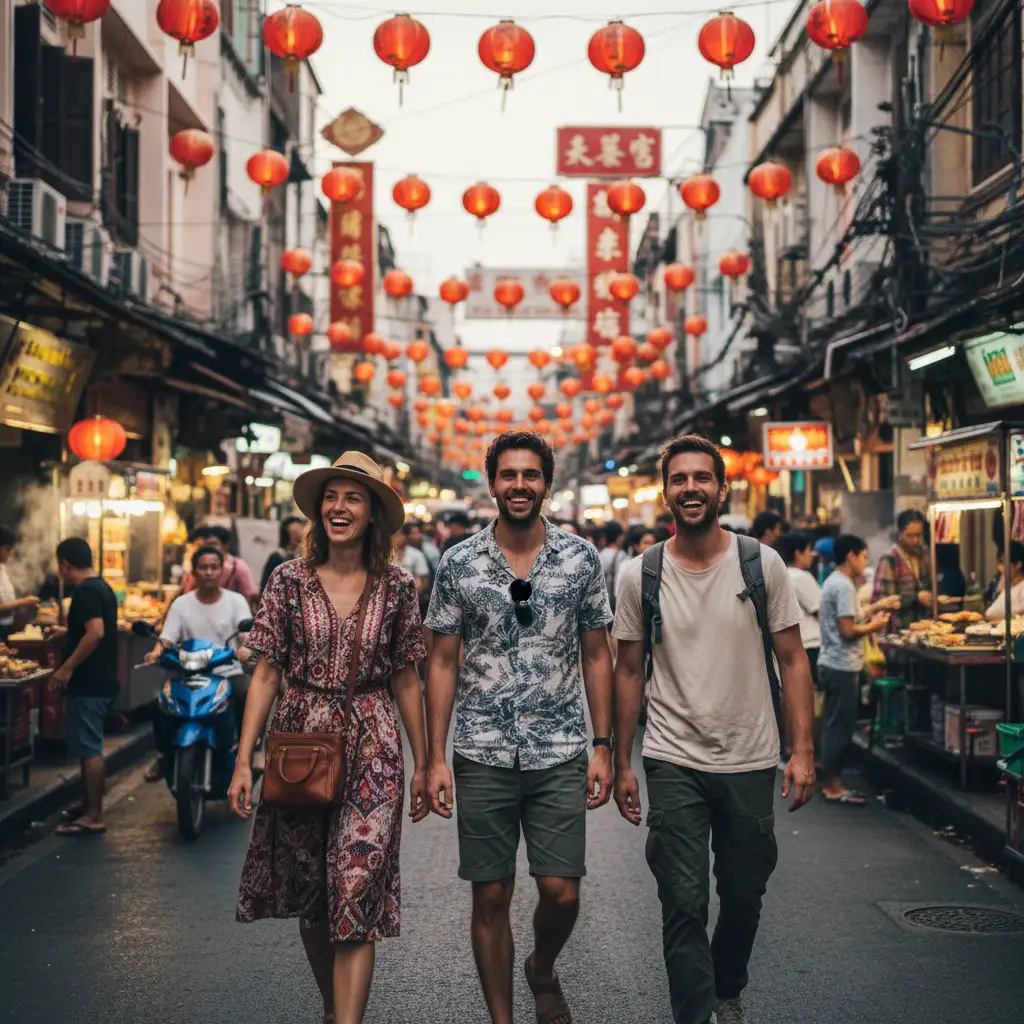
Join a guided Bangkok bike tour and explore the city’s secret soi (alleys) where daily life unfolds far from the tourist crowds. Ride past monks collecting alms, children playing on sidewalks, and elders tending spirit houses.
Details: 3-hour cycling tour through Chinatown and Thonburi
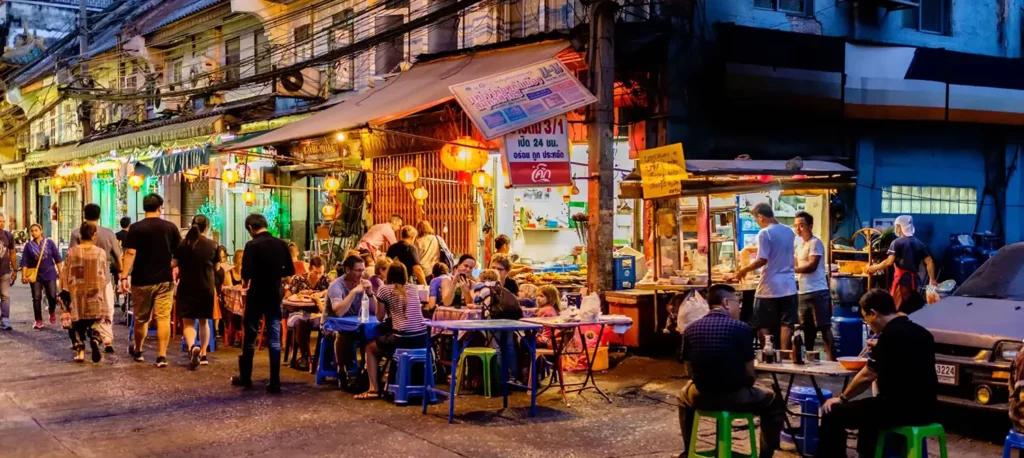
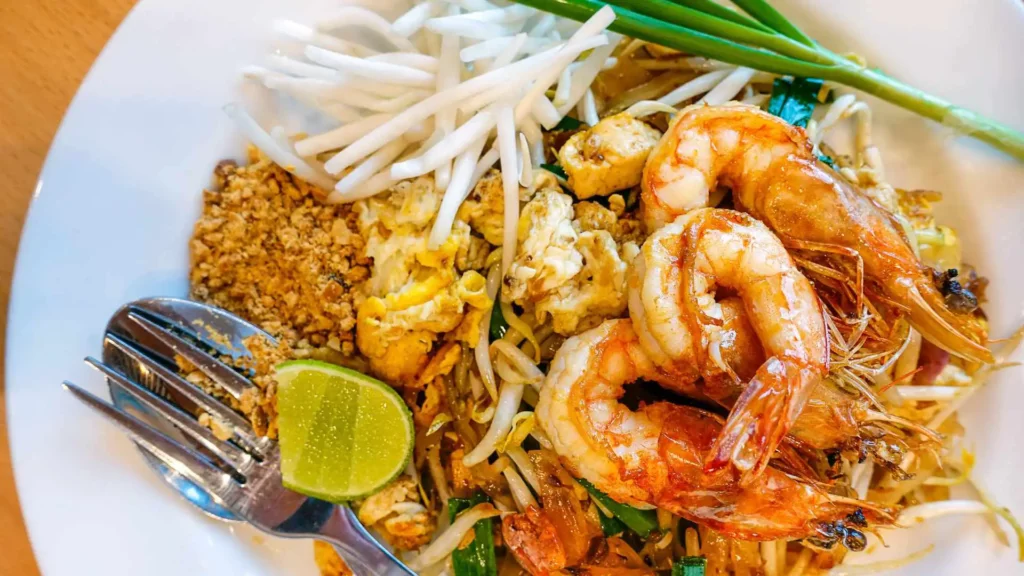
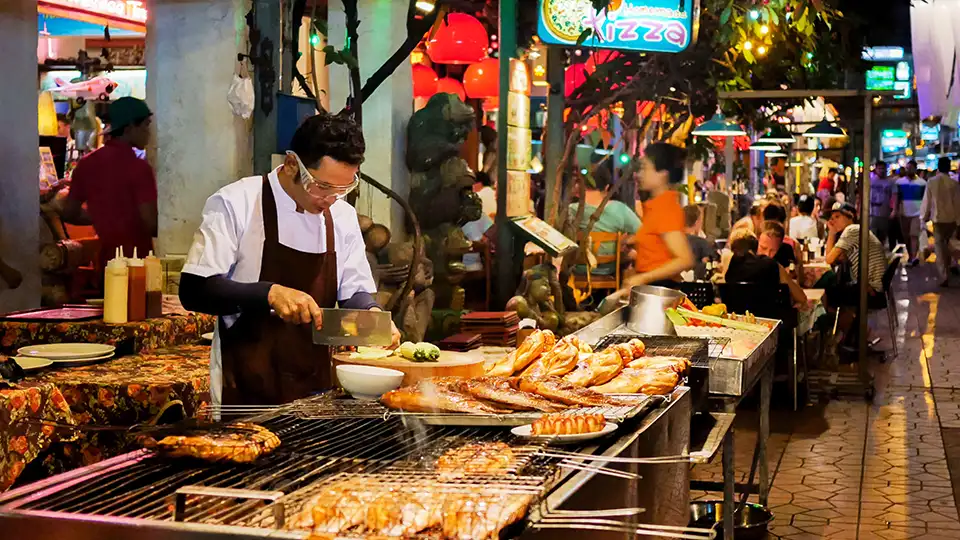
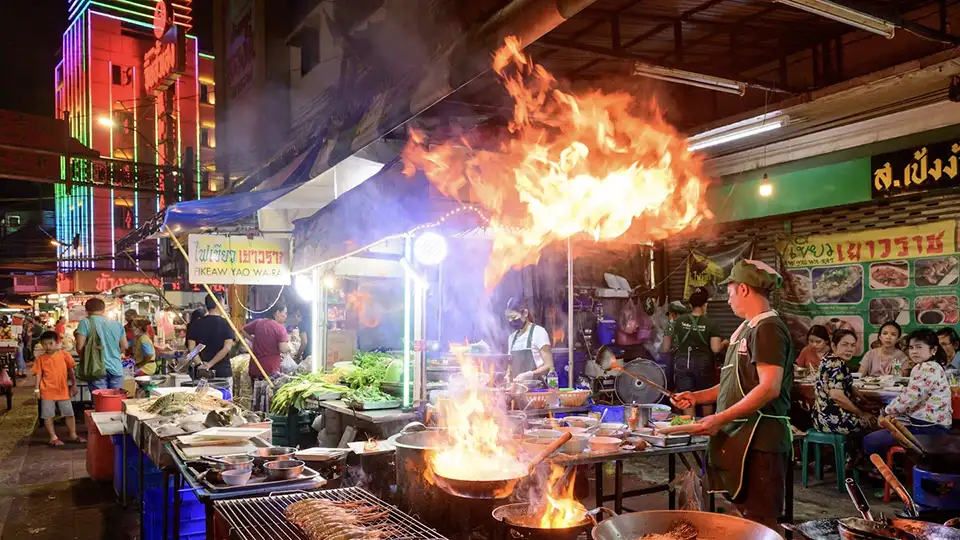
A Bangkok street food tour is more than a meal—it’s a cultural deep dive. Follow your guide through bustling lanes filled with grilled meats, spicy curries, and tropical fruits. Learn to say “Aroy mak!” (very delicious) as you savor mango sticky rice on plastic stools beside locals.
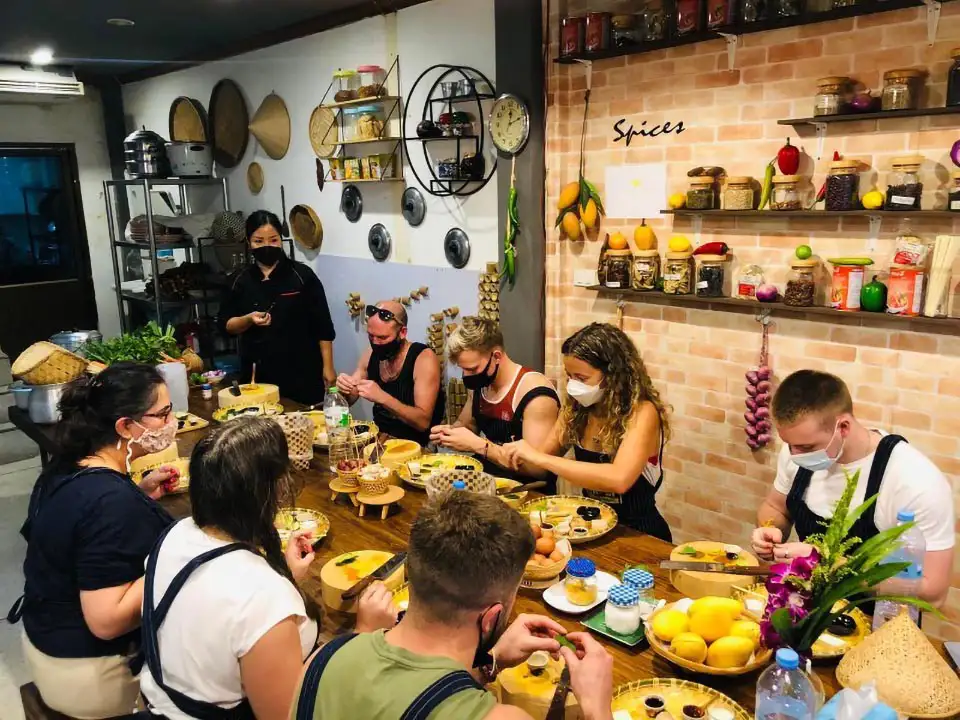
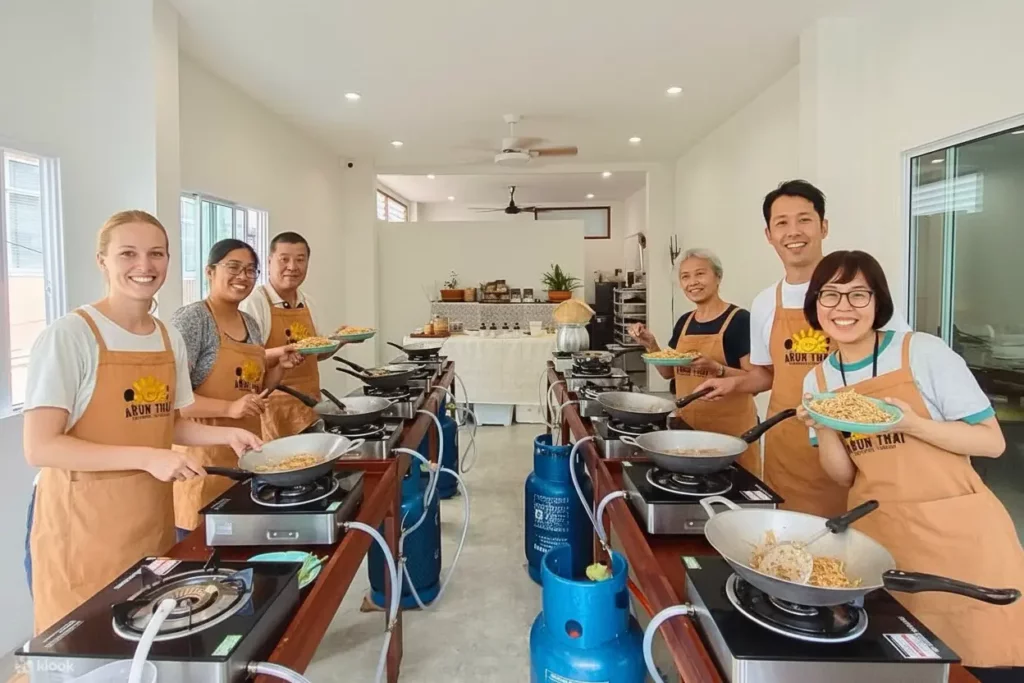
👉Try our Bangkok Cooking Classes for hands-on flavor exploration.
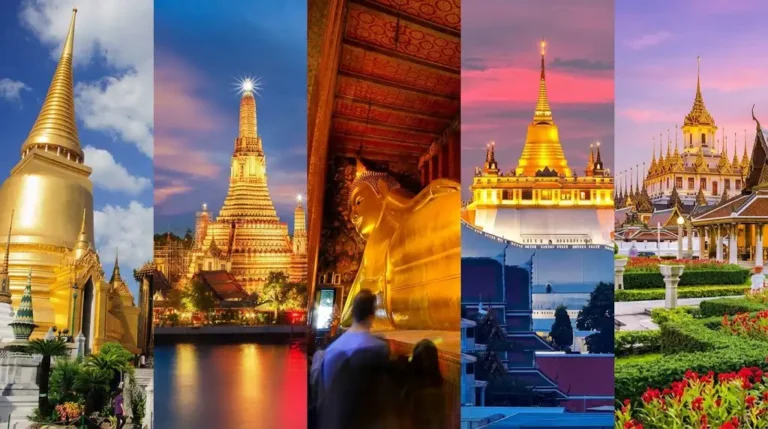
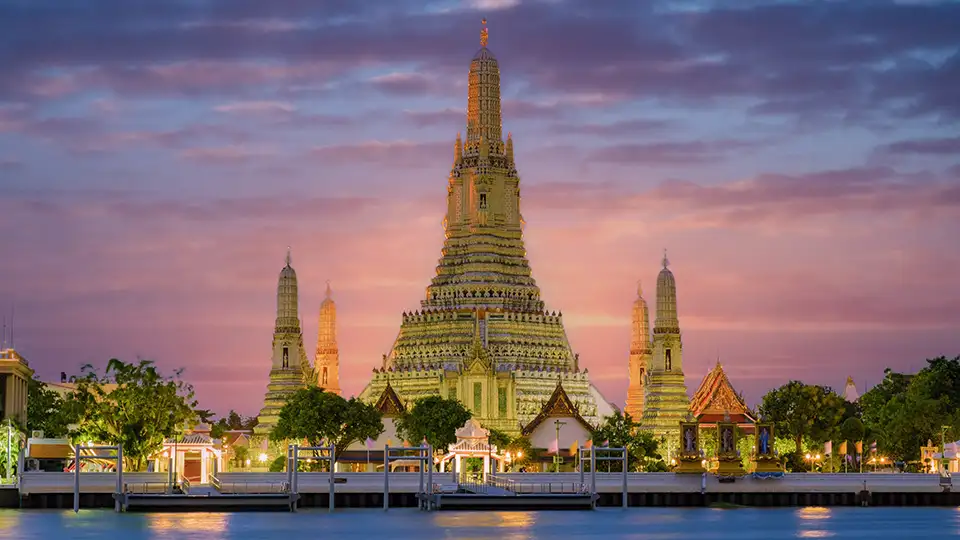
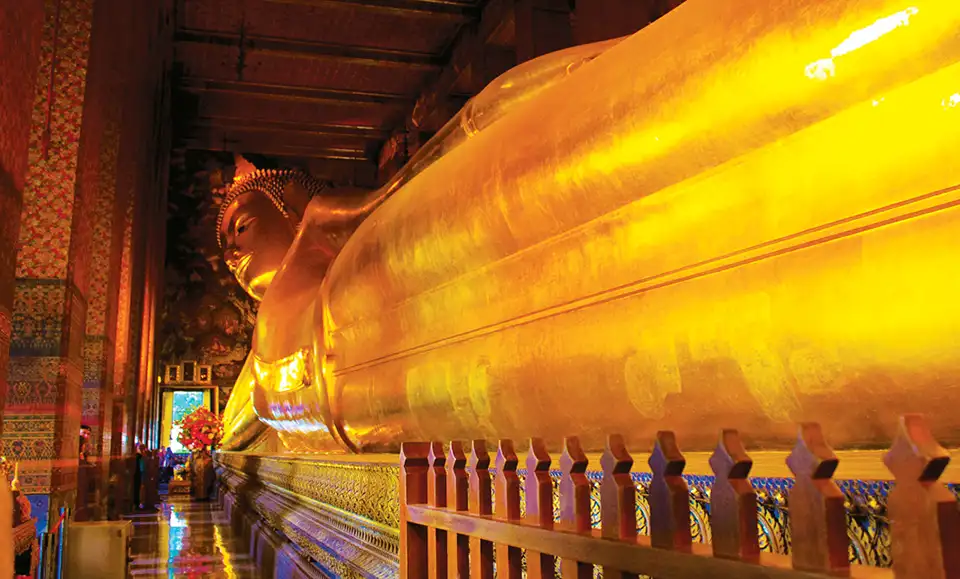
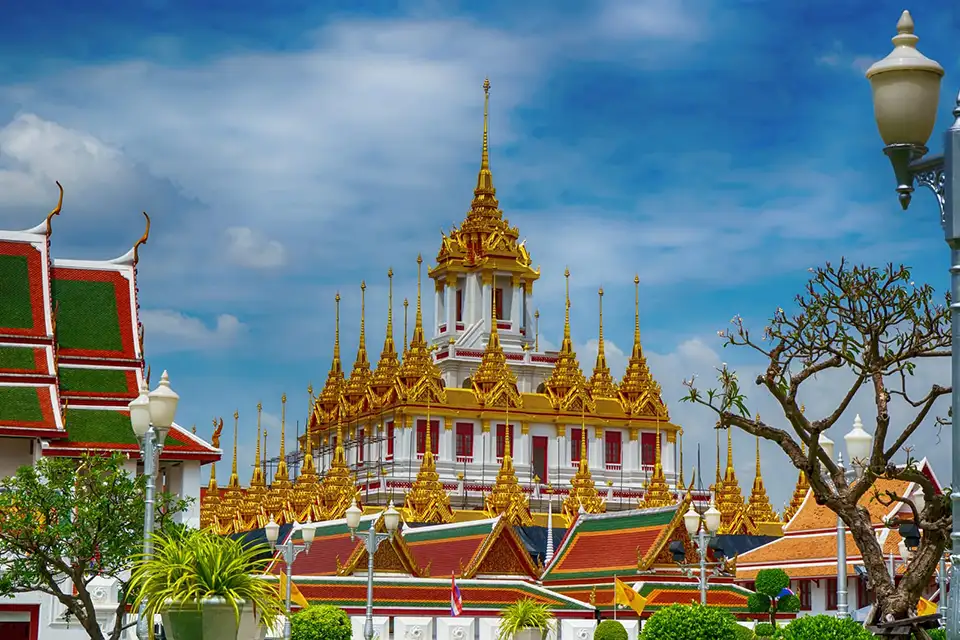
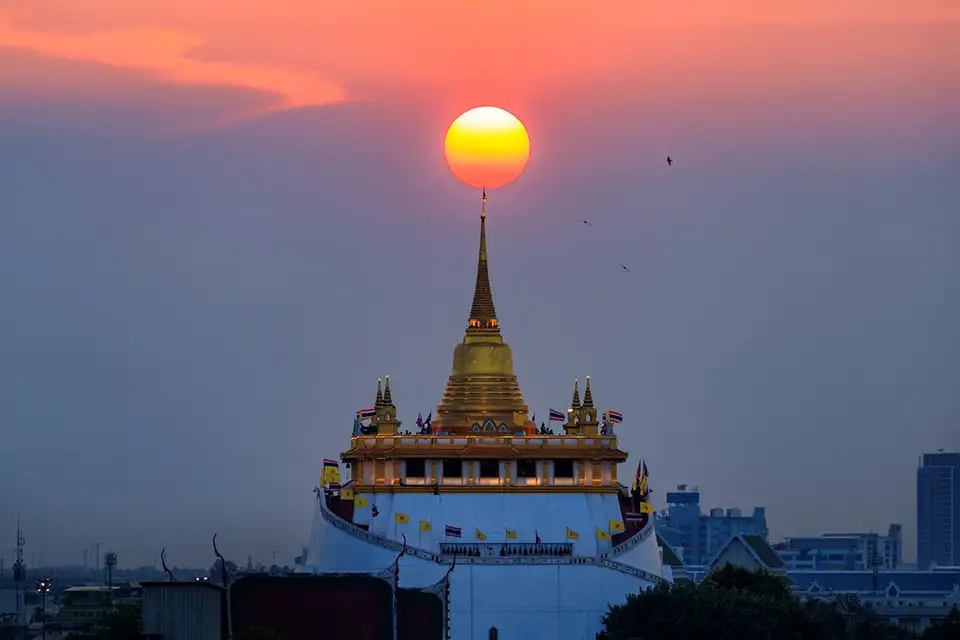
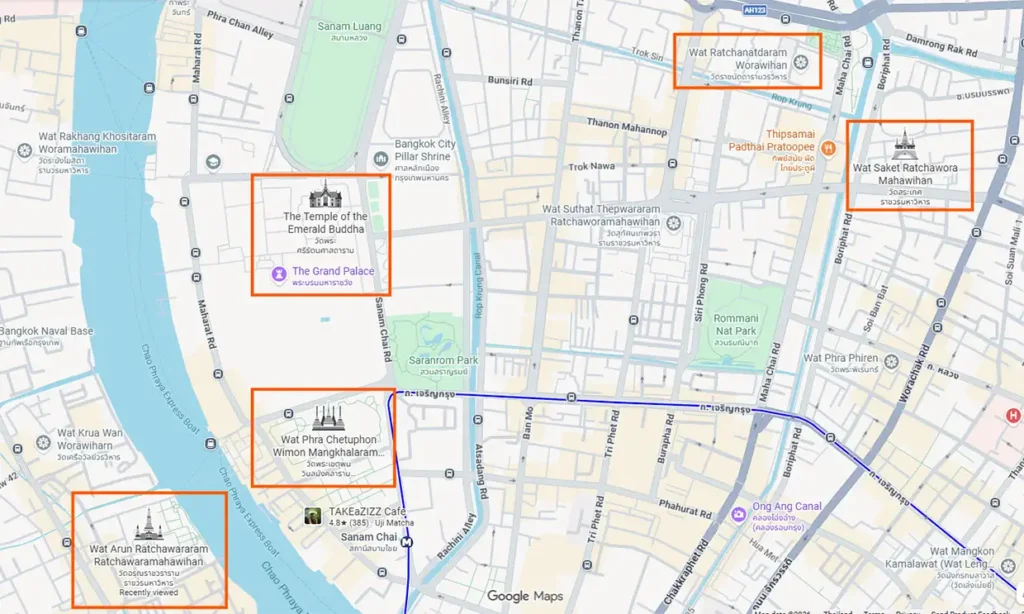
From sunrise temple visits to riverside villages, our Bangkok local tour experiences are crafted to stir your emotions. Whether it’s the golden glow of Wat Arun or a quiet chat with a vendor, you’ll feel the heartbeat of the city.
👉 Looking for a day escape? Book an Ayutthaya Day Trip from Bangkok.
At BeYourGuide.com, we connect you with passionate locals—not scripted guides. These are real people sharing real stories. Whether you’re solo or with friends, our tours are designed to make you feel like you belong.
Q1:What’s the best food tour in Bangkok? Our street food tour through Chinatown and Bang Rak is a top-rated choice, starting at $29 USD.
Q2:Is the Bangkok bike tour suitable for beginners? Yes! It’s a relaxed 3-hour ride with frequent stops and local insights.
Q3:Can I book a private local guide? Absolutely. We offer private and small group options with verified local hosts.
Q4:What should I wear for a local tour? Light clothing, comfortable shoes, and respect for temple dress codes (covered shoulders and knees).
Q5:How long does a typical Bangkok local tour last? Most tours range from 2 to 4 hours. Our cycling and street food tours typically run for 3 hours, with flexible start times available between 09:00 and 18:00 (updated 2025-09-15).
Q6:Do I need to book in advance? Yes, we recommend booking at least 24 hours in advance, especially during peak travel months (November to February). Walk-ins are not guaranteed due to limited group sizes.
Q7:Are Bangkok local tours suitable for families with children? Absolutely. We offer family-friendly options including slow-paced bike rides, market walks, and temple visits. Children under 6 often join free—check individual tour pages for age policies.
Q8:Is food included in the street market tours? Yes. Our Bangkok street food tours include 5–7 tastings, drinks, and dessert. Vegetarian and halal options are available upon request at booking.
Q9:What languages do the guides speak? All our local guides speak English fluently. Some tours also offer French, German, or Spanish-speaking guides—please inquire during booking.
Q10:Are Bangkok local tours wheelchair accessible? Some walking tours and market visits are accessible, but alleyway cycling tours may not be suitable. Contact us for customized accessible experiences.
Q12:What should I bring on a local tour? Comfortable walking shoes, sunscreen, a refillable water bottle, and modest clothing for temple visits. We provide ponchos during rainy season (May–October).
Q13:Can I customize my Bangkok local tour? Yes! We offer private tours tailored to your interests—whether it’s food, history, photography, or hidden neighborhoods. Just select “Private Tour” at checkout.
Q14:Is tipping expected in Bangkok tours? Tipping is not mandatory but appreciated. A typical tip is 100–200 THB ($3–6 USD) per person for excellent service.
Q15:Do tours run during Thai holidays or festivals? Yes, but availability may be limited. Booking early during Songkran (April) or Loy Krathong (November) is highly recommended.
Ready to unlock Bangkok’s best-kept secrets? 👉 Book your Bangkok local tour today at BeYourGuides.com and turn your trip into a memory that lasts forever.
Bangkok’s best museums offer more than dusty vitrines: they are vibrant storytellers—places where art, craftsmanship, and history come alive. Whether you love ancient relics, royal barges, or interactive learning, here are ten that should be on your itinerary if you’re visiting Bangkok.
Quick Navigation: Jump to a Section
1. Bangkok National Museum
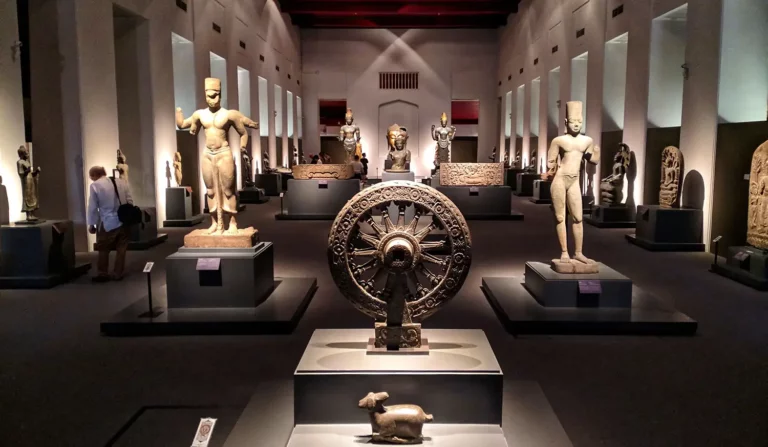
The largest museum in Southeast Asia, with royal regalia, Buddhist art, and treasures from prehistory to the modern era.
Located by the Chao Phraya River, showcasing eight magnificent royal barges used in ceremonial processions.
Hours: Daily, 09:00 AM –05:00 PM
Entry Fee: ~฿100 for foreigners; camera fee ~฿100
Visit Duration: 30–45 minutes
Traveler Favorite: Book a Bangkok Canal — cruise through hidden canals, stop at the museum, and see the city’s timeless riverside life from a new angle.
4. MOCA (Museum of Contemporary Art Bangkok)
A stunning private collection of modern Thai art with world-class presentation.
Hours: Daily, 10:00 AM–06:00 PM
Entry Fee: ~฿300 for adults; discounts for students and seniors
Visit Duration: 1.5–2 hours
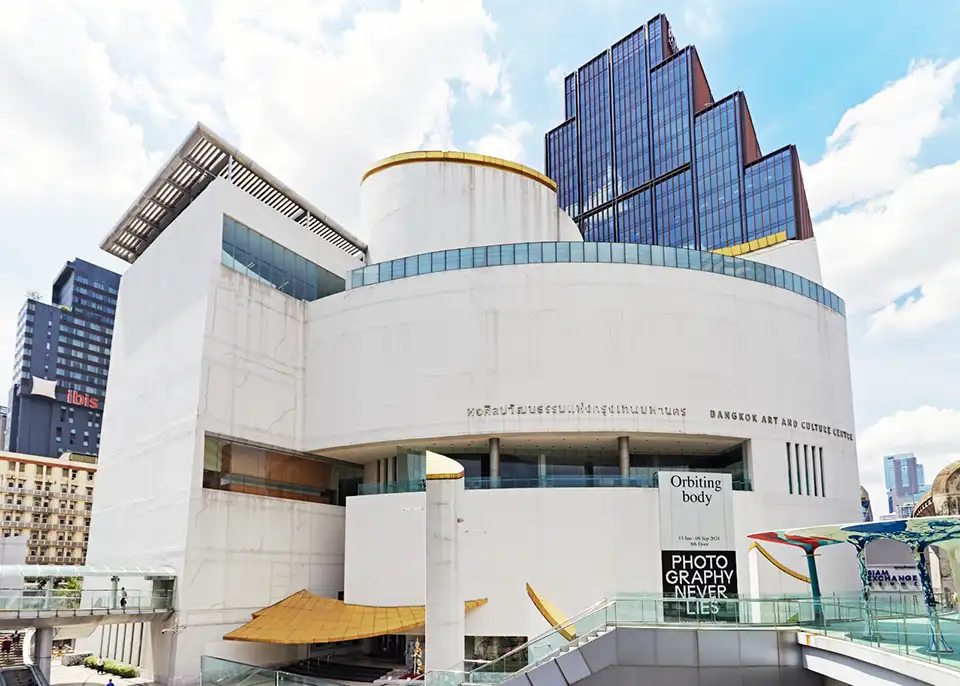
5. Bangkok Art & Culture Centre (BACC)
A central hub for free exhibitions of art, design, film, and performance. Perfect for a casual visit.
Hours: Usually 10:00 AM–09:00 PM (check seasonal changes)
Entry Fee: Free
Visit Duration: 1 hour or longer if special exhibitions are on
6. Siriraj Medical Museum (Museum of Medical Curiosities)
Nicknamed the “Museum of Death,” this fascinating spot inside Thailand’s oldest hospital showcases preserved specimens, pathology exhibits, and historical medical instruments. It’s not for the faint-hearted — but it offers an extraordinary look at the evolution of Thai medicine and forensic science.
Hours: Daily, 10:00 AM–05:00 PM (closed on public holidays)
Entry Fee: ~฿200 for adults
Visit Duration: 1–1.5 hours
7. Jim Thompson House Museum
A beautifully preserved traditional teakwood home surrounded by tropical gardens, this museum tells the story of Jim Thompson — the American entrepreneur who revitalized Thailand’s silk industry. Inside, you’ll find an exquisite collection of Southeast Asian art and antiques.
Entry Fee: ~฿200 for adults; ~฿100 for students; free for children under 10
Visit Duration: 1–1.5 hours
8. Queen Sirikit Museum of Textiles (or Suan Pakkad Palace Museum)
Located within the Grand Palace compound, the Queen Sirikit Museum of Textiles preserves centuries of royal couture, traditional Thai weaving, and global silk craftsmanship. Meanwhile, Suan Pakkad Palace Museum showcases elegant wooden Thai houses filled with art, lacquerware, and pottery.
Entry Fee: Included with Grand Palace ticket (~฿500); Suan Pakkad Palace ~฿100
Visit Duration: 1–1.5 hours each
9. Kamthieng House Museum (Museum of Siam Society)
A hidden gem near Asoke, this 19th-century teak house illustrates the spiritual and agricultural life of northern Thai villagers. Managed by the Siam Society, it’s small but full of cultural insight — perfect for those who love architecture and anthropology.
Entry Fee: ~฿100 for adults; discounts for students
Visit Duration: ~45 minutes–1 hour
10. Erawan Museum(slightly outside central Bangkok)
Dominated by its majestic three-headed elephant statue, this museum in Samut Prakan is both an architectural wonder and a spiritual symbol. Inside are dazzling Buddhist relics, sculptures, and stained glass under a dome representing heaven and earth.
Best time of day: Mornings or late afternoons for fewer crowds and cooler weather.
Holiday closures: Some museums close Mondays or on public holidays (Songkran, New Year). Check official or Tourism Authority sites.
Transportation: Many museums are near river piers or MRT/BTS stations. Combine public transport with Grab or taxi.
Dress & photography rules: Modest dress (shoulders/knees covered). Photography sometimes costs extra, especially at the Royal Barges Museum.
FAQs about
Q1: Which museum gives the best introduction to Thai history in one visit? The Bangkok National Museum is the most comprehensive start. If you only have a short time, Museum Siam offers a very accessible “story of Thai identity” with interactive exhibits.
Q2: Are these museums walk-in only or should I buy tickets in advance? Most allow walk-in. For very popular temporary exhibitions (especially at MOCA or BACC) or during peak tourism periods, advance tickets may help.
Q3: Is there a museum pass or discount in Bangkok? As of now, there’s no universal “museums pass” for Bangkok like in some European cities. Some museums give group discounts (e.g. Museum Siam) or free admission for seniors or children. BeYourGuides often lists bundle deals combining museum tickets with transfers or city tours.
Q4: What’s the rough cost for museums per day? If you visit 2–3 places, expect to spend ฿300–฿800, depending on entry fees and optional photography charges. Free-entry options like BACC can balance out the pricier ones such as MOCA or the Royal Barges Museum.
Q5: Are Bangkok museums family-friendly? Definitely! Museum Siam and the Children’s Discovery Museum are designed for interactive learning. Families also love Erawan Museum for its massive three-headed elephant sculpture and colorful art displays. For private or family-friendly tours, BeYourGuides.com offers customized itineraries.
Q6: What are the best art museums in Bangkok? For contemporary art, don’t miss MOCA (Museum of Contemporary Art Bangkok) and BACC. For traditional art and architecture, Jim Thompson House and Erawan Museum are stunning. You can join an Art Lovers Tour via BeYourGuides to explore them in one day.
Q7: How can I get around between museums easily? Use the BTS Skytrain and MRT Subway where possible; pair them with short Grab or tuk-tuk rides. Some museums like Museum Siam and the National Museum are within walking distance of each other. You can also book a half-day or full-day private car with driver through BeYourGuides for maximum comfort.
Q8: Are photography and videos allowed inside the museums? Usually yes, but some (especially the Royal Barges Museum and Jim Thompson House) may charge a small fee for cameras. Always ask before taking photos of sacred or royal objects. With BeYourGuides tours, your guide will brief you on these cultural etiquettes.
Q9: What should I wear when visiting temples or royal museums? Dress modestly—cover shoulders and knees, and remove hats when entering sacred areas. Light cotton or linen clothes are perfect for Bangkok’s climate. If you join a guided museum or temple tour, your guide will help ensure you’re dressed appropriately.
Q10: What’s the best time to visit Bangkok’s museums? Mornings (10 AM–noon) and late afternoons are ideal—cooler and less crowded. Many visitors combine museum visits with nearby cafés or riverside attractions through custom day tours on BeYourGuides.
If you set out to see Bangkok’s best museums, you’ll walk through centuries of Thai culture, art, and storytelling. From the gleaming royal barges to immersive exhibitions at Museum Siam, every visit offers a deeper sense of place.
Plan wisely, travel curiously, and let these museums become more than stops — let them be the stories you’ll carry home.
The Christmas markets in Bangkok offer festive food, twinkling lights, handcrafted gifts, and European-style winter vibes in the heart of Thailand. This guide shows the 10 best markets, who they’re perfect for, prices, tips, and how to book holiday experiences with BeYourGuides.com.
Quick Navigation: Jump to a Section
Why This Matters / Who It’s For
Bangkok in December is magical—warm nights, glowing lights, European-style Christmas decorations, and markets filled with food, music, and culture. This guide is perfect for:
Travelers planning a winter escape
Couples looking for romantic holiday vibes
Families seeking kid-friendly festivities
Shoppers who love handmade crafts
Travelers wanting a unique, non-snowy Christmas
Key Facts
(General facts across top markets)
Dates: Mid-November to early January
Best Time to Visit: 5:30 PM – 9:00 PM
Price Range: Free entry; food $2–$12
Special Features: Live music, craft stalls, gourmet treats, photo zones, Christmas trees
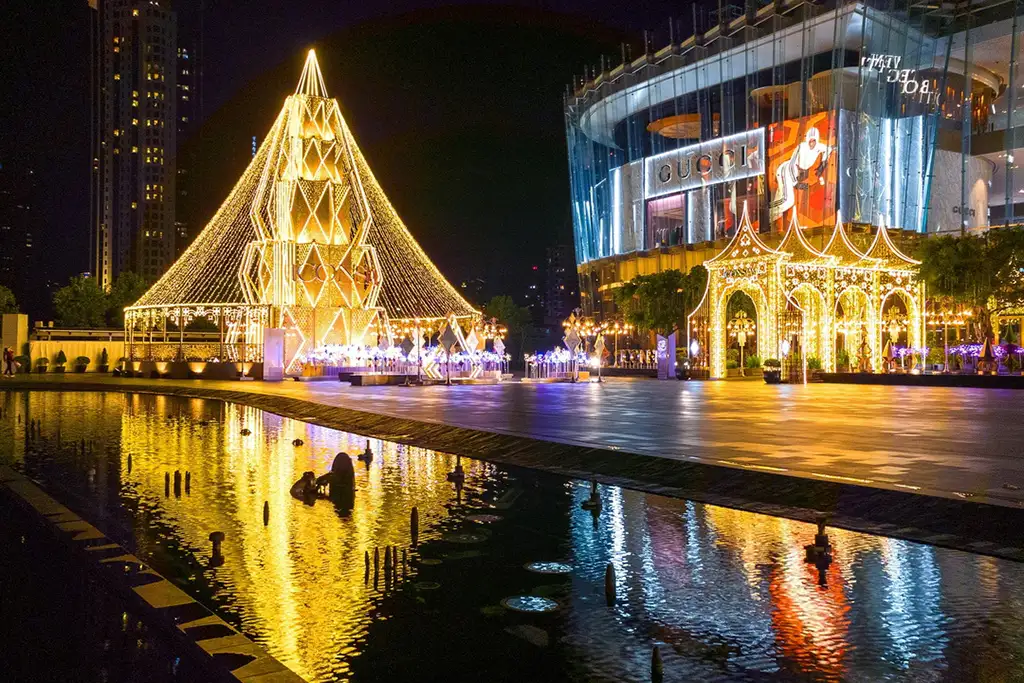
Located along the Chao Phraya River, ICONSIAM hosts the most visually spectacular Christmas setup in Bangkok. The entire riverfront terrace transforms into a glowing Christmas village with gourmet stalls, snow-machine effects, and a towering tree that changes color every hour.
What travelers love:
A massive European-style tree with synchronized lights
Daily cultural shows, Thai dancing, and live Christmas choirs
A riverside promenade filled with luxury pop-up shops
The “Bangkok Illumination Festival” — an iconic annual light show
Perfect sunset photography spots overlooking the river
Best for: Couples, families, and luxury travelers who want a premium festive experience.
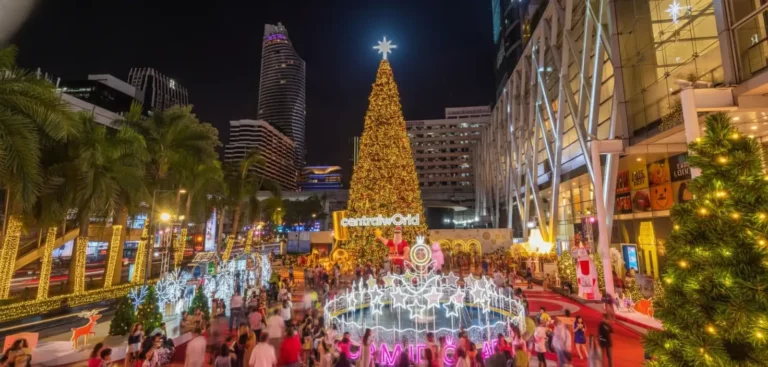
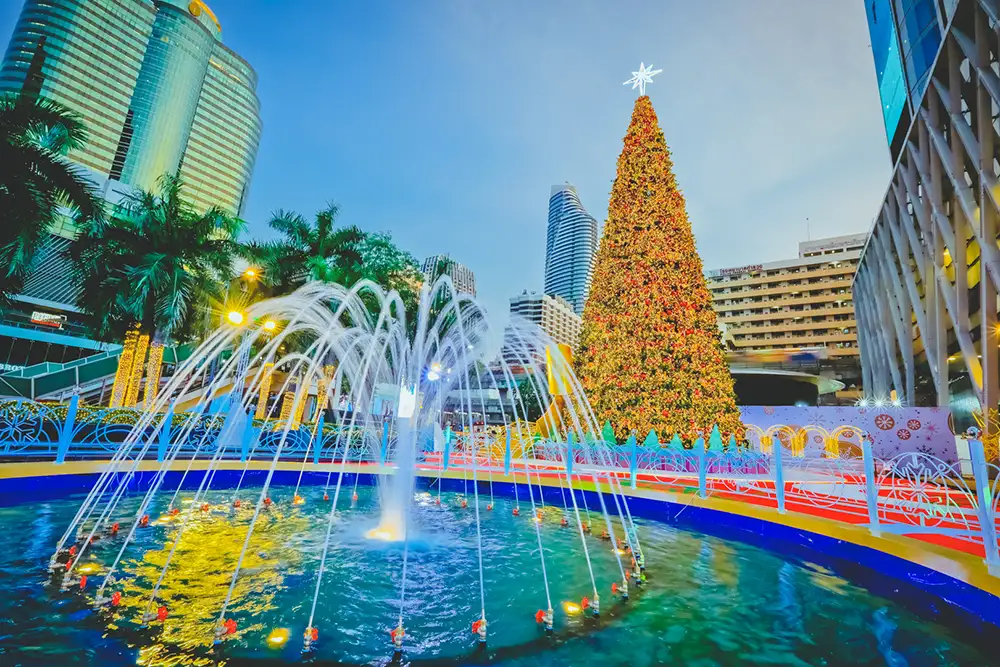
2. CentralWorld Christmas Village (Bangkok’s Biggest Christmas Tree)
CentralWorld is often called “The Times Square of Bangkok”, and its Christmas celebration is legendary. The giant outdoor plaza becomes a multi-zone Christmas village with food trucks, neon tunnels, and themed selfie parks.
What travelers love:
Thailand’s tallest Christmas tree (40+ meters)
Nightly DJ sets and pop-up concerts
Holiday-themed drink bars and dessert stalls
AR photo zones, LED tunnels, and interactive installations
Snow bubble cannons for kids
Best for: Nightlife lovers, families with kids, and shoppers.
3. EmQuartier & Emporium Winter Festival (Luxury Holiday Market)
EmQuartier offers a chic, modern Christmas atmosphere — think Scandinavian design, gourmet holiday food, and premium décor. The area is filled with aesthetic installations perfect for Instagram.
4. Asiatique The Riverfront Christmas Market (Romantic & Nostalgic)
Asiatique blends vintage market vibes with stunning nighttime scenery by the river. During Christmas, the boardwalk becomes a festive promenade with music, craft stalls, and holiday-themed boat rides.
What travelers love:
Ferris Wheel overlooking the Chao Phraya
Live Christmas jazz and acoustic sessions
Romantic riverside dinner options
Huge collection of handicrafts perfect for souvenir shopping
Kids-friendly shows and street performers
Best for: Couples, families, and travelers who love scenic waterfronts.
Siam Discovery brings a modern, creative, design-led Christmas experience. The entire building becomes an interactive winter playground with art installations, immersive light tunnels, and themed pop-ups.
What travelers love:
Futuristic Christmas installations designed by Thai artists
Eco-friendly, sustainable holiday market concepts
Pop-up stores featuring local designers & handmade gifts
“Discovery Plaza” filled with seasonal food & craft vendors
Indoor comfort + visually stunning photo zones
Best for: Creative travelers, design lovers, eco-conscious visitors.
Located near Chidlom BTS, Amarin Plaza is famous for hosting one of the most lively and friendly street-style Christmas markets in Bangkok. The outdoor plaza transforms into a festive lane packed with crafts, food, and live entertainment.
What travelers love:
Cozy outdoor Christmas market setting
Affordable handmade gifts, candles, home décor
Daily live music and family-friendly performances
Pop-up food stalls with Thai + international comfort dishes
Great spot for casual, joyful Christmas photos
Best for: Families, casual shoppers, travelers who love mid-range handmade finds.
8. Central Embassy “Embrace the Joy” Winter Market
Central Embassy delivers the most luxury-forward, minimalist, Scandinavian-inspired Christmas atmosphere in Bangkok. Expect premium decorations, curated artisan vendors, and upscale dining.
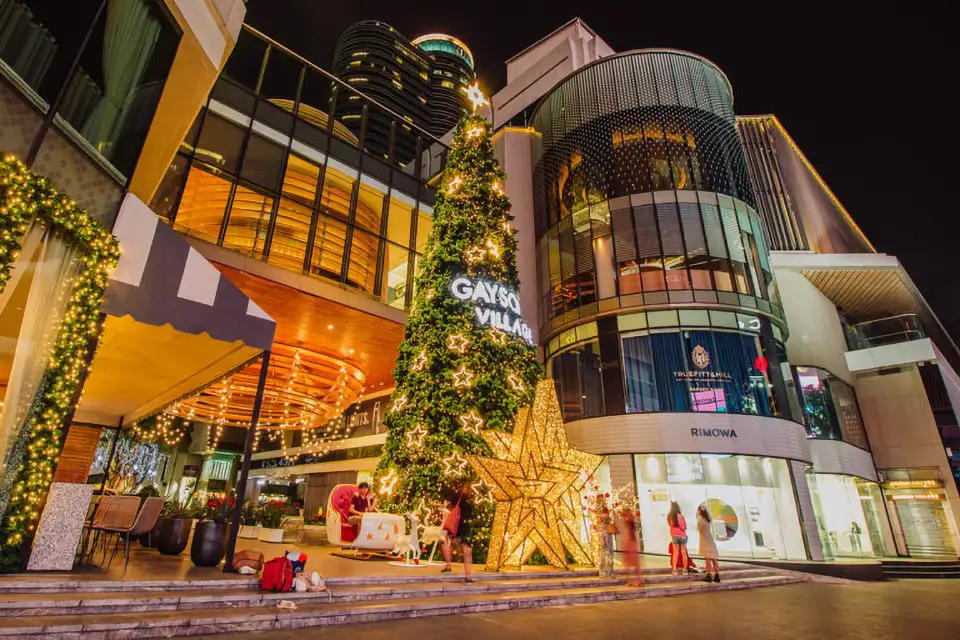
Gaysorn Village is Bangkok’s luxury boutique community mall, and its Christmas event focuses on artisanal craftsmanship, aesthetic décor, and high-end experience curation.
What travelers love:
Curated craft brands from Thai artisans
Luxury lifestyle pop-ups: leather goods, fragrances, art pieces
Indoor comfort with elegant Christmas scenery
Stylish photo corners with golden tones
Live jazz evenings & wine pairing events
Best for: Mature travelers, art lovers, premium shoppers.
As Thailand’s newest mega-development, One Bangkok debuts a grand, urban-luxury Christmas market blending architecture, art, and festive entertainment. It’s set to become one of the city’s top holiday attractions.
What travelers love:
Grand-scale Christmas light avenues
Pop-up food streets with gourmet vendors
Outdoor concerts & cultural performances
Interactive art installations with digital elements
Spacious, walkable design — great for families & seniors
Best for: First-time Bangkok visitors, families, and travelers wanting a modern, world-class festive experience.
More Than Just Markets: Festive Experiences to Make Your Bangkok Christmas Magical
Bangkok isn’t just a city of glittering Christmas markets — it’s a place where festive nights turn into unforgettable journeys. If you want to elevate your holiday trip with something special, here are handpicked experiences from BeYourGuides that pair perfectly with every Christmas market on your list. Each one adds culture, flavor, and a touch of “only in Bangkok” magic to your itinerary.
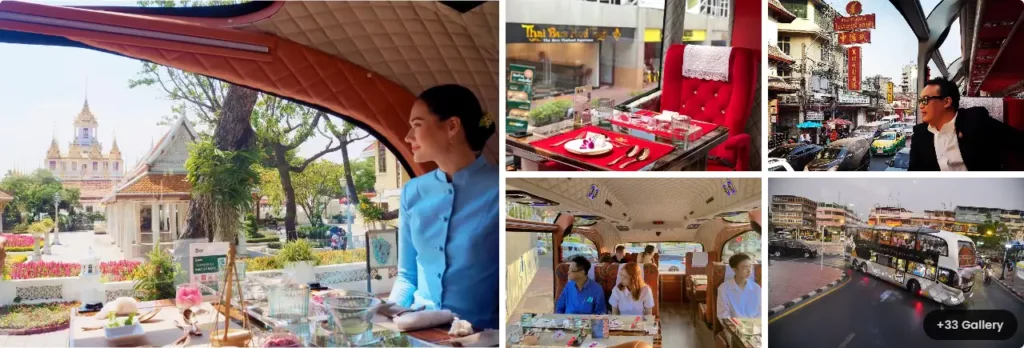
Best paired with: CentralWorld, Siam Paragon, ICONSIAM After exploring the sparkling markets in the heart of the city, step onboard a luxury double-decker bus for a Michelin-awarded Thai dinner served as you cruise past Bangkok’s night skyline. Perfect for travelers who want comfort, gourmet food, and stunning views all in one festive evening.
Best paired with: Siam Discovery, Amarin Plaza Hop into a classic Tuk Tuk and dive into Bangkok’s late-night flavors — from legendary street dishes to hidden local restaurants. It’s a fun and adventurous way to continue your evening after Christmas shopping, especially if you love authentic local cuisine.
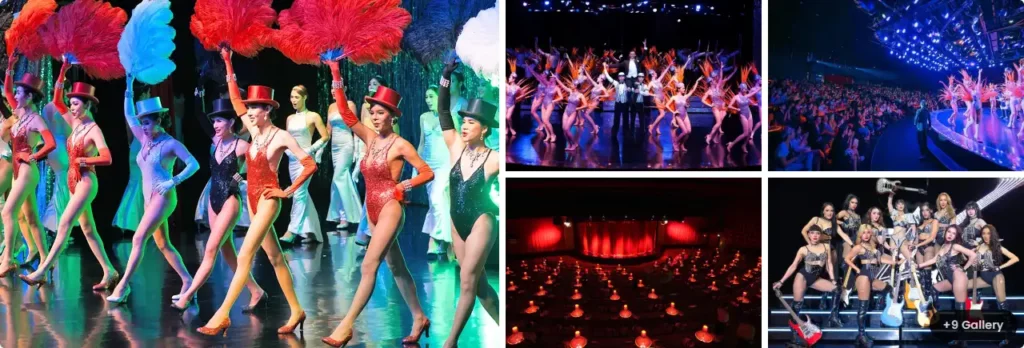
Best paired with: Asiatique Christmas Market When the riverside lights start to shimmer, end your Christmas night with a vibrant performance from Bangkok’s iconic cabaret artists. It’s colorful, festive, and the perfect way to wrap up a magical night along the Chao Phraya River.
4. Hands-On Thai Cooking Class & Market Tour
Best paired with: Any Christmas Market Day Spend your morning learning to cook Thai dishes with a local chef, then enjoy festive evenings at the markets. A great addition for travelers who want to bring home more than souvenirs — bring home skills.
Best paired with: Siam Paragon Christmas Market For families, couples, and ocean lovers — SEA LIFE adds a magical underwater world to your holiday itinerary. Kids especially love pairing a Christmas outing with a visit to the city’s largest aquarium.
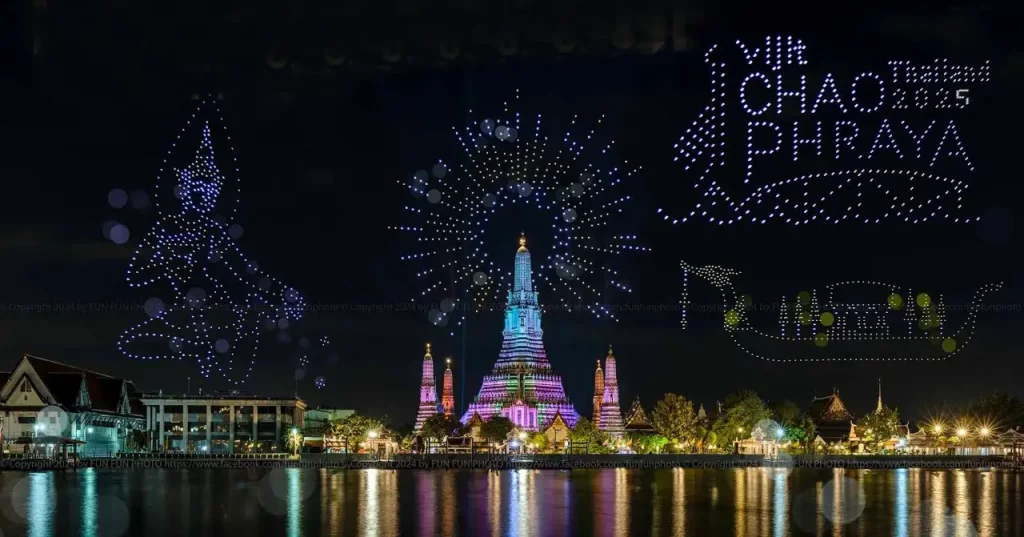
Best paired with: ICONSIAM, Asiatique From November to December, the Chao Phraya River turns into a dazzling festival of lights, drone shows, and riverside illuminations. Combine your Christmas market visit with a dinner cruise for one unforgettable night.
Suggested Festive Itineraries
Here are some ready-made combinations your readers will love:
Luxury Christmas Night
ICONSIAM → Christmas Market → Dinner on the Michelin Bus Tour → Calypso Cabaret Show at Asiatique
Adventure & Foodie Christmas
Siam Discovery → Market → Tuk Tuk Night Food Tour → Stroll through CentralWorld Lights
Family-Friendly Christmas Day
Siam Paragon → SEA LIFE Bangkok → Christmas Market + Light Tunnel → River Cruise at sunset
FAQs about Christmas markets in Bangkok
Q1: What is the best way to get to these shopping centers?
Most malls are easily accessible by BTS Skytrain.
Siam Discovery – BTS Siam Station
Amarin Plaza – BTS Chit Lom Station
Central Embassy – BTS Phloen Chit Station
Gaysorn Plaza – Direct link from BTS Chit Lom
One Bangkok – MRT Lumphini Station (Linking routes opening in phases)
Q2: What are the typical opening hours?
Most centers open 10:00 AM – 10:00 PM daily. Special hours may apply on holidays or during events.
Q3: Is there a nearby money exchange or ATM?
Yes. All locations have ATMs, and major malls like Central Embassy, Gaysorn Plaza, and Siam Discovery have reliable money exchange booths on lower floors.
Q4: Do these malls offer tax refund services for tourists?
Yes. Most of the listed malls — especially Central Embassy, Gaysorn Plaza, and Siam Discovery — have VAT Refund for Tourists counters. Look for “VAT Refund” signage or ask at the Information Desk.
Q5: Are these malls suitable for families and kids?
Absolutely.
Siam Discovery offers interactive zones and kid-friendly brands.
Central Embassy and Gaysorn Plaza are more luxury-focused but still have cafés and open spaces suitable for families.
Q6: Are there good dining options at these locations?
Yes, each center has a variety of restaurants:
Siam Discovery – Trendy cafés and lifestyle dining
Amarin Plaza – Affordable Thai food court & cafés
Central Embassy – Luxury dining + Eathai food hall
Gaysorn Plaza – Boutique cafés & fine dining
One Bangkok – Restaurants in development as the district opens in phases
Q7: Do the malls offer luggage storage?
Some malls provide locker services or concierge storage. Check at the Information Counter of Siam Discovery, Central Embassy, or Gaysorn Plaza.
Q8: Is Wi-Fi available?
Most locations offer free Wi-Fi, especially Siam Discovery and Central Embassy. You may need to register with an email or phone number.
Q9: Are these places wheelchair-friendly?
Yes. All listed malls are fully accessible, with elevators, ramps, and accessible restrooms.
Q10: Are there direct walkways between these malls?
Yes.
Siam Discovery connects via skywalks to Siam Center, Siam Paragon, and BTS.
Amarin Plaza, Gaysorn Plaza, and Central Embassy are linked via the Ratchaprasong Skywalk, making it easy to walk between them without going to street level.
Romantic things to do in Bangkok on Valentine’s Day go far beyond roses and candlelight. This city knows how to flirt — with skyline sunsets, candlelit rivers, secret food alleys, and once-in-a-lifetime experiences designed for two.
If you’re planning a Valentine’s escape that feels cinematic, intimate, and effortlessly unforgettable, Bangkok delivers — especially when you choose experiences crafted for couples.Below are seven hand-picked Valentine’s Day experiences in Bangkok that couples from Europe and the US consistently fall in love with.
Quick Navigation: Jump to a Section
1. Chao Phraya River Valentine’s Dinner Cruise (Romance on Water)
Nothing says romance in Bangkok quite like drifting down the Chao Phraya River as the city lights shimmer around you.
On Valentine’s Day, selected river cruises elevate the experience with:
Private couple seating
Elegant Valentine-themed décor
A multi-course international & Thai dinner
Live music or soft jazz onboard
Iconic views of Wat Arun, Grand Palace, and Rama VIII Bridge
This isn’t just dinner — it’s Bangkok’s skyline turned into your love story backdrop.
Conclusion: Why Bangkok Is Made for Valentine’s Day
Romantic things to do in Bangkok on Valentine’s Day aren’t about one perfect activity — they’re about choice, contrast, and chemistry.
From candlelit river cruises to sky-high sunsets, street-food adventures to quiet canals, Bangkok lets couples design a Valentine’s Day that truly fits their love story.
And with curated experiences from BeYourGuides, you don’t just visit Bangkok — you experience it together.
FAQs about
Is Bangkok good for Valentine’s Day? Yes. February weather is ideal, and the city offers many couple-focused experiences.
Do I need to book Valentine’s tours early? Yes. River cruises and SkyWalk slots often sell out weeks in advance.
Are these experiences suitable for first-time visitors? Absolutely. Most include English-speaking guides and clear logistics.
Is Bangkok safe for couples at night? Tourist areas and guided experiences are generally safe and well-lit.Can I cancel if plans change? Many BeYourGuides tours offer free cancellation. Check each listing.
Book your Bangkok Valentine’s experience now and turn one night into a memory you’ll share for years with BeYourGuides.com.
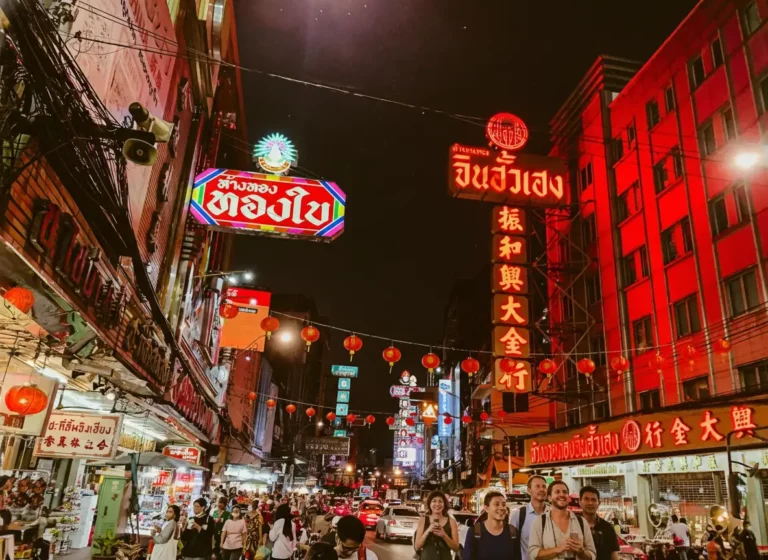
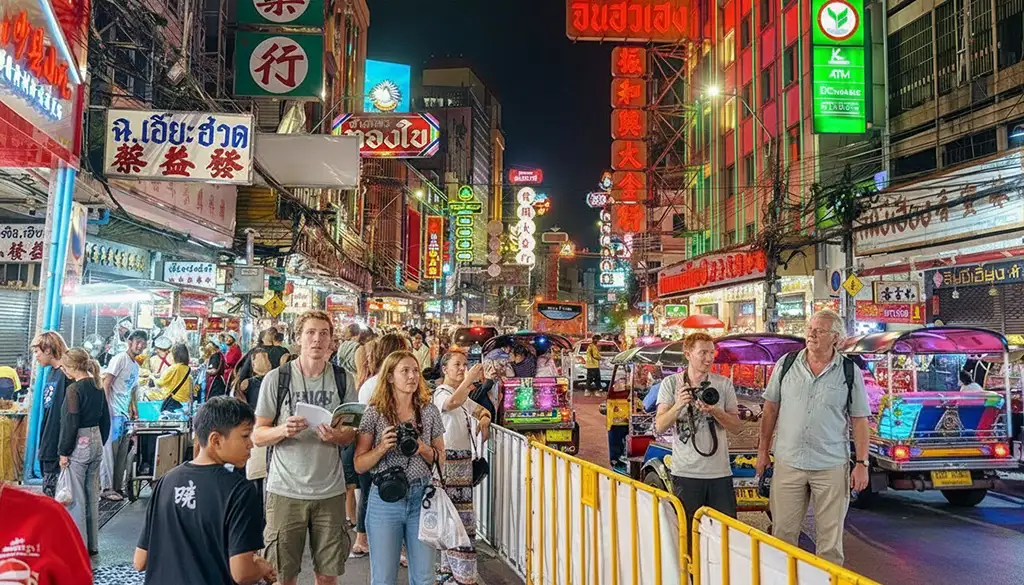
Bangkok’s China Town, also known as Yaowarat Road, is one of the city’s most vibrant neighborhoods. By day, it’s full of gold shops, markets, and hidden temples. By night, it turns into one of the world’s best street food destinations. Whether you are here for history, food, or cultural immersion, China Town is an experience you will never forget.
Quick Navigation: Jump to a Section
Why Visit China Town in Bangkok?
China Town is more than just a market. It’s a living cultural hub where Thai and Chinese traditions meet. You can walk past century-old shrines, sample world-famous street food, and discover hidden alleys filled with stories.
Cultural experience: Visit temples like Wat Traimit (Temple of the Golden Buddha).
Street food paradise: Try dishes recommended by the Michelin Guide along Yaowarat Road.
Shopping: Hunt for herbs, spices, gold, and souvenirs in Sampeng Market.
Nightlife: Enjoy neon-lit streets buzzing with food vendors and locals.
7 Best Things to Do in China Town Bangkok
1. Visit Wat Traimit (Golden Buddha Temple)
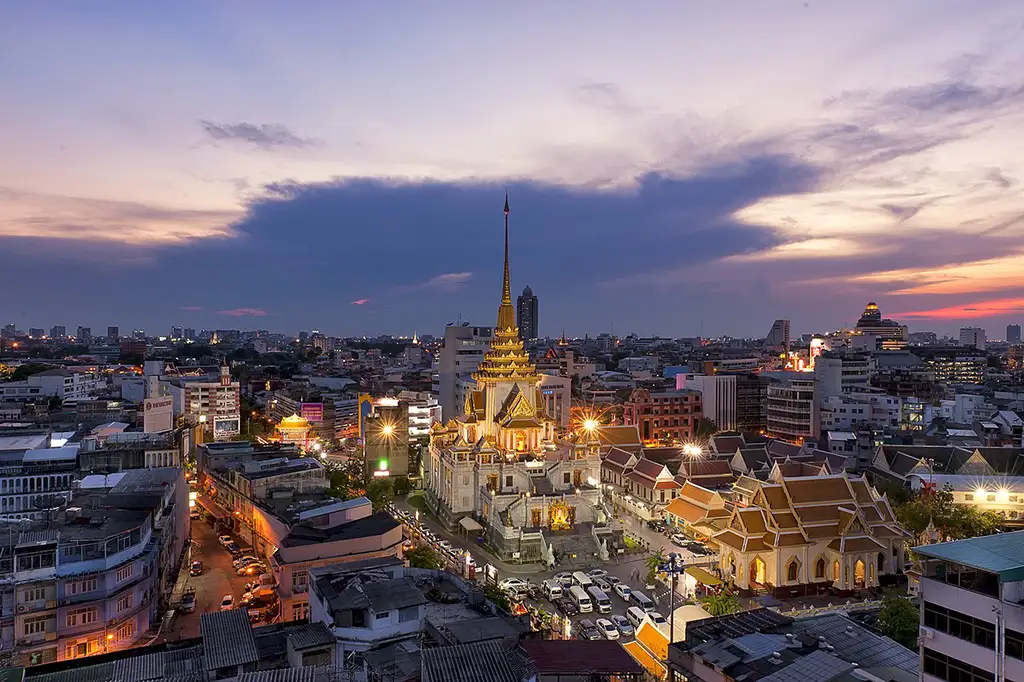
Highlight: Home to the world’s largest solid gold Buddha (5.5 tons, 3 meters tall). The statue was discovered under plaster in the 1950s, revealing its true golden core.
Opening Hours: Daily 08:00 AM – 05:00 PM.
Entrance Fee: 40 THB
Tips for Visitors:
Go early morning to avoid crowds.
Dress modestly (shoulders & knees covered).
Don’t miss the museum exhibition that tells the history of Bangkok’s China Town.
Highlight: The main artery of China Town, glowing with neon lights and packed with hundreds of food vendors after dark.
Best Time: From 6:00 PM onwards, when street food stalls open.
Must-Try Foods:
Dim Sum: Try freshly steamed dumplings and buns.
Guay Jub: Rolled rice noodles in peppery broth.
Grilled Seafood: Enjoy prawns, crabs, and squid grilled to perfection.
Bird’s Nest Soup: A luxurious Chinese delicacy.
Mango Sticky Rice: A Thai dessert you shouldn’t miss.
Tips for Visitors:
Bring cash, as many stalls don’t accept cards.
Expect queues at popular stalls — but worth the wait.
Carry a bottle of water, as it can get hot and crowded.
👉 BeYourGuides can provide: Bangkok China Town Walking Food & Culture Tour (Yaowarat Road) with local guide. Please contact us.
3. Explore Sampeng Market
Highlight: Bangkok’s oldest wholesale market, dating back to the 18th century. A labyrinth of narrow alleys selling fabrics, trinkets, jewelry, and traditional Chinese herbs.
Opening Hours: Daily 09:00 AM – 06:00 PM.
What to Buy: Fabrics, fashion accessories, Chinese medicine, souvenirs.
Q1: What is the best time to visit China Town in Bangkok? Evening is best (6:00 PM – midnight), when the street food stalls open and the area becomes lively.
Q2: What food is China Town Bangkok famous for? Dim sum, oyster omelet, roasted duck, bird’s nest soup, and mango sticky rice are must-try dishes.
Q3: Is China Town walkable? Yes, it’s best to explore on foot. Wear comfortable shoes, as the streets can be crowded.
Q4: How much time do I need in China Town? At least 3–4 hours in the evening to enjoy food, markets, and temples.
Q5: Can I join a food tour in China Town? Yes. Guided Bangkok food tours are highly recommended for first-time visitors.
If you want to dive into the heart of Bangkok’s culture, history, and flavor, you must Explore China Town in Bangkok. From hidden temples to world-class street food, it’s a neighborhood that never sleeps and always surprises.
👉 Plan your perfect China Town experience today withBeYourGuides.com.
Bangkok — the city where golden temples meet neon nights — welcomes every traveler with open arms. You don’t need a luxury budget to live the best version of your Thailand adventure. With a bit of smart budget travel Bangkok planning, you can stretch every dollar, eat like a local, and enjoy authentic experiences that make memories last a lifetime.
Quick Navigation: Jump to a Section
1. Use Public Transport Instead of Taxis
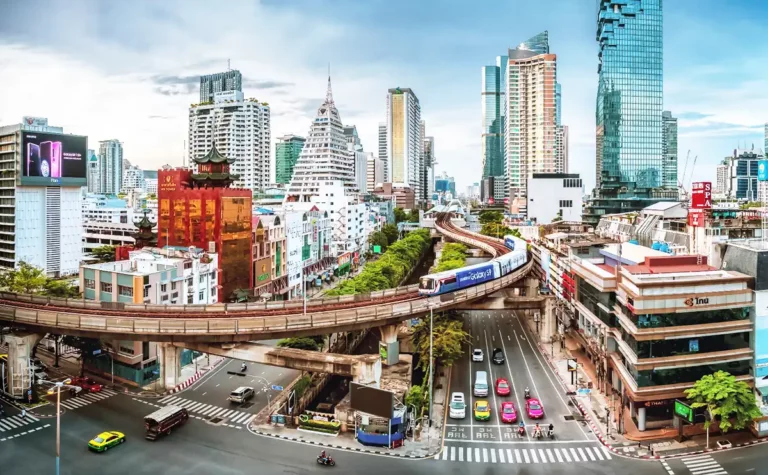
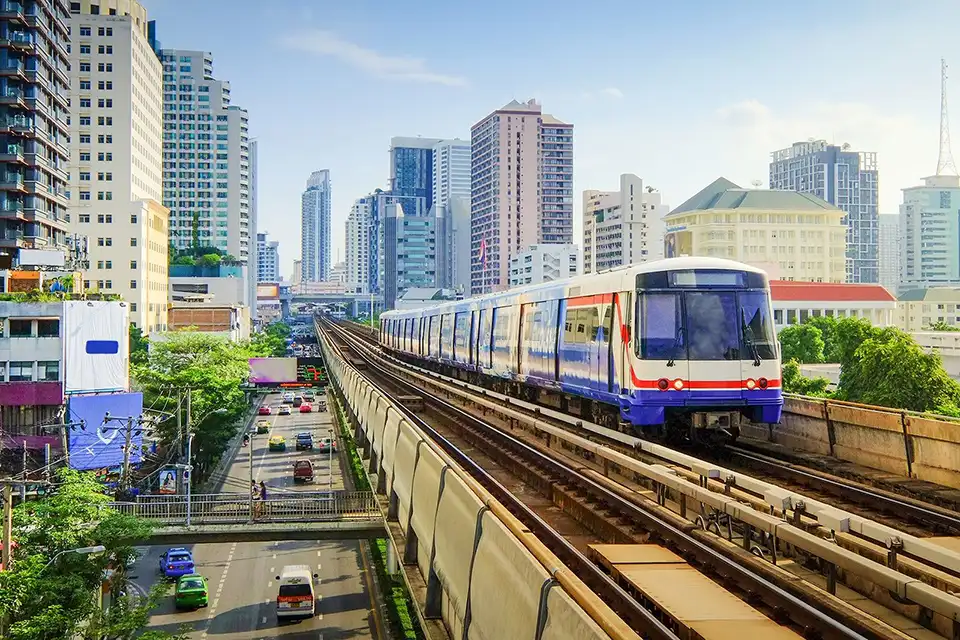
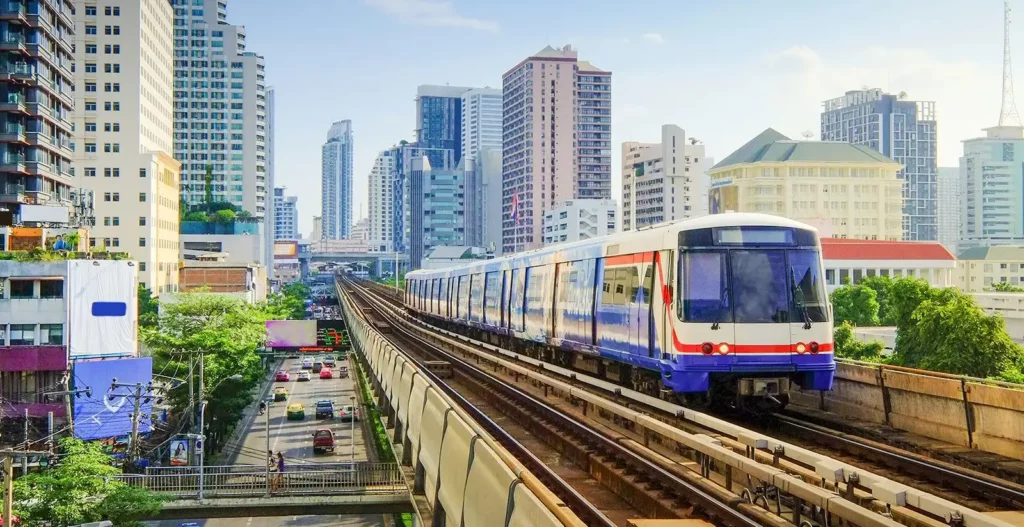
Bangkok’s public transportation system is modern, reliable, and cheap. The BTS Skytrain and MRT Subway connect nearly all major attractions — from Chatuchak Market to the Grand Palace — and fares range between 16–59 THB ($0.50–$1.60) per trip.
The One-Day Pass for the BTS (150 THB) is a traveler favorite, offering unlimited rides for a full day [Bangkok Mass Transit Authority, updated 2025].
Avoid the heavy traffic (and higher taxi fares) by hopping on the Airport Rail Link, which costs only 45 THB ($1.20) from Suvarnabhumi Airport to downtown — compared to 350–500 THB by taxi.
BTSBTSMRTMRTAirport Rail LinkAirport Rail Link
👉 Prefer comfort and convenience? Book a private airport transfer with us — affordable, safe, and ready when you land.
Bangkok is home to thousands of hotels — from sleek high-rises to charming hostels tucked into quiet sois (alleys). If you’re on a budget, you can easily find rooms between 500–900 THB ($14–25) per night in areas like Ari, Sukhumvit 38, or Khaosan Road.
Some of the best-rated options include:
Here Hostel Bangkok (Khaosan area, from 600 THB/night)
The Yard Hostel (Ari, eco-friendly, from 700 THB/night)
Naga Residence (Riverside, from 850 THB/night)
3. Eat Like a Local — Street Food is a Bangkok Legend
The heart of Bangkok beats strongest at its food stalls. Street vendors offer everything from Pad Thai (40 THB) and Mango Sticky Rice (50 THB) to Grilled Satay (10 THB per stick).
Popular food hubs include:
Yaowarat Road (Chinatown): A must-visit for night owls. Try Guay Jub (rolled noodle soup), dim sum, and the famous Yaowarat toast with butter and sugar. Prices start around 40–80 THB ($1–2). 📍Location
Victory Monument: Local noodle stalls line the area — Boat Noodles are legendary here at 15 THB ($0.40) per bowl. 📍Location
Khao San Road: Known as the “backpacker’s capital,” this lively street offers more than just nightlife. During the evening, it transforms into a global food bazaar. You’ll find Pad Thai (50 THB), Spring Rolls (40 THB), Banana Pancakes (60 THB), and even insect snacks for the daring traveler. Many stalls stay open until 2:00 a.m., perfect after a night out. 📍Location
💡 Tip: Follow the locals — if you see a line, it’s worth waiting! Most dishes cost between 40–70 THB ($1–2), proving that authentic Thai flavor doesn’t require fine-dining prices.
According to the Tourism Authority of Thailand (updated 2025), over 90% of international visitors try street food in Bangkok — a culinary adventure that defines the city’s soul.
Bangkok’s spiritual side is one of the richest in Asia — and it doesn’t have to cost you a single baht. Beyond the famous paid temples like Wat Pho and Wat Arun, there are dozens of free-entry temples where you can experience local devotion, peaceful gardens, and stunning architecture without a ticket.
Here’s a list of recommended temples with free entry (verified as of 2025):
1. Wat Mahathat Yuwaratrangsarit (Old Town) – Free
Located near Sanam Luang Park, this temple is one of Thailand’s oldest and an important center for Buddhist meditation. You can even join free Vipassana meditation sessions offered by monks daily (09:00–17:00). 📍 Phra That Road, near the Grand Palace 🕒 Open 08:00 AM – 06:00 PM
2. Wat Ratchabophit Sathit Maha Simaram – Free
This hidden gem blends Thai and European architecture, with Italian-style interiors and colorful mosaics. Few tourists visit here, making it a quiet spot for reflection. 📍 Fueang Nakhon Road, Phra Nakhon 🕒 Open 08:00 AM – 05:00 PM
3. Wat Intharawihan (Big Buddha Temple) – Free
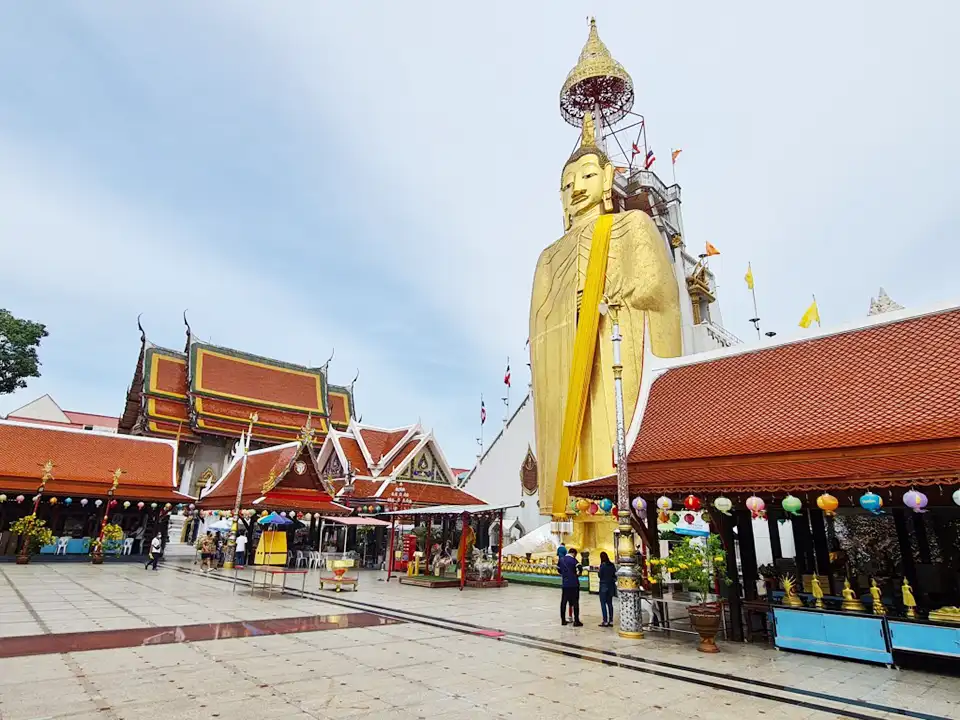
Home to a 32-meter-high standing Buddha, this temple is located in the Dusit district and is often filled with locals making offerings. It’s photogenic, peaceful, and easily accessible. 📍 Wisut Kasat Road, Dusit 🕒 Open 08:00 AM – 06:00 PM
4. Wat Prayoon (Temple of the Iron Fence) – Free for outer grounds
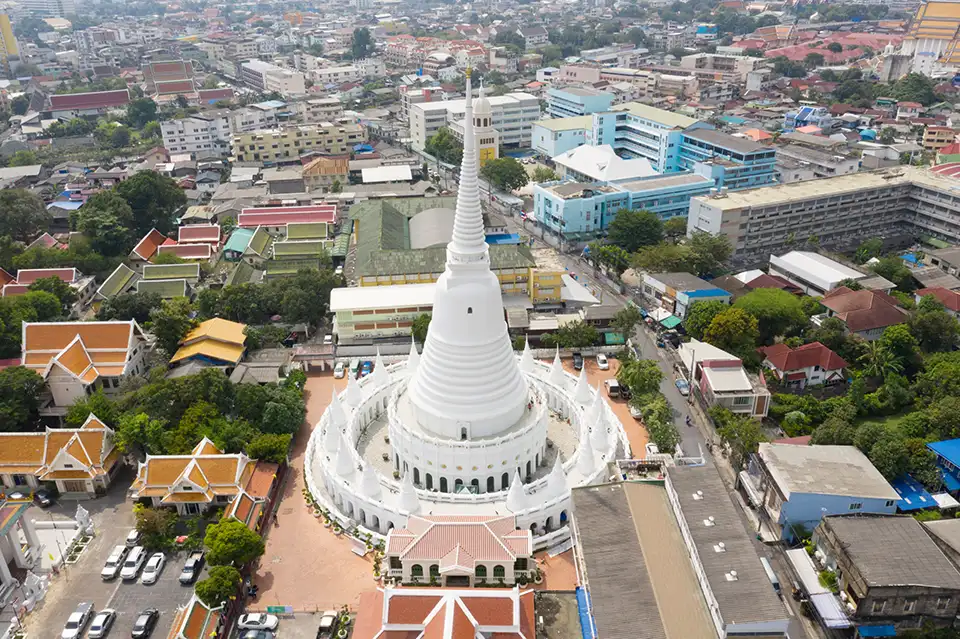
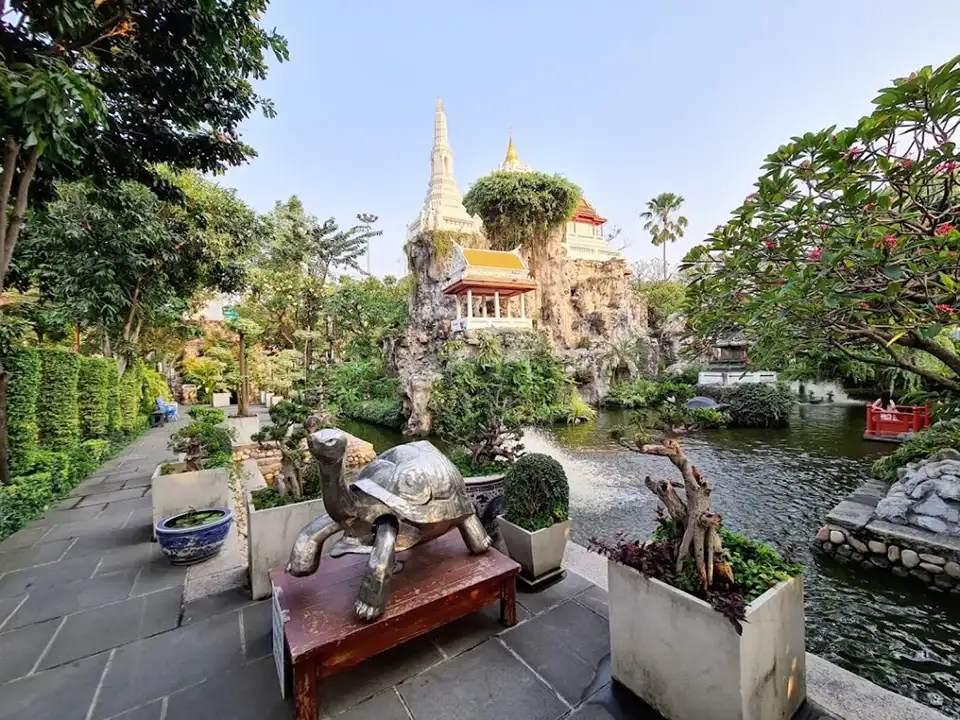
This UNESCO-awarded temple on the Thonburi side offers a tranquil atmosphere and white stupa surrounded by turtles. Entry to the main chedi is 20 THB ($0.55), but the gardens and ponds are free to explore. 📍 Thonburi, near Memorial Bridge 🕒 Open 08:00 AM – 05:00 PM
5. Wat Bowonniwet Vihara – Free
Located near Khao San Road, this royal temple houses important Buddha images and is the residence of the current Thai Supreme Patriarch. Perfect for combining with a walking visit to Rattanakosin Island. 📍 Phra Sumen Road, Phra Nakhon 🕒 Open 08:00 AM – 06:00 PM
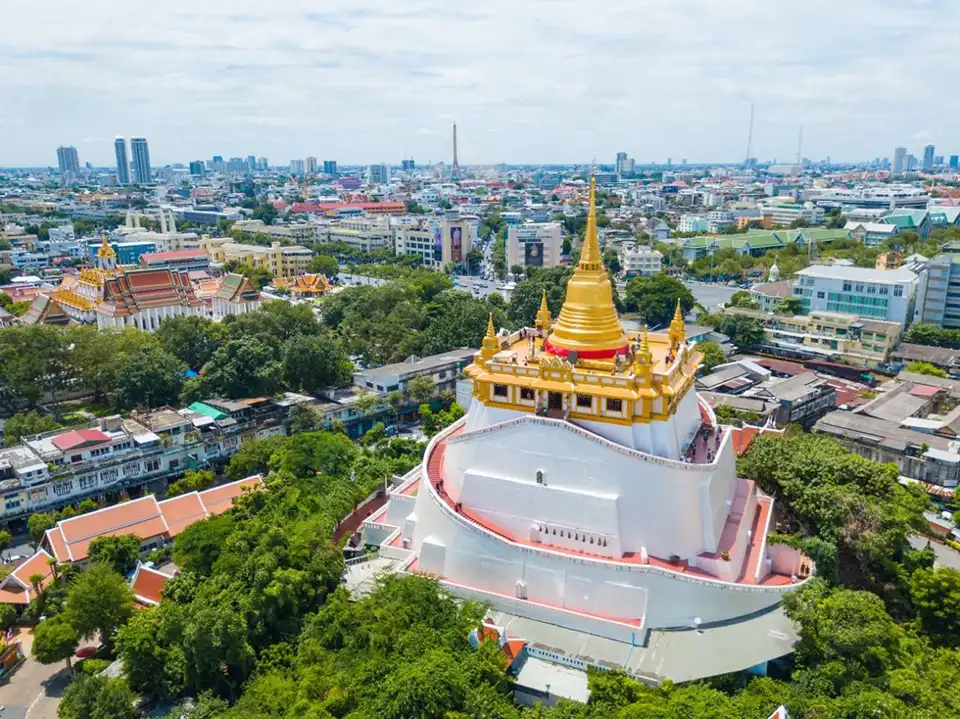
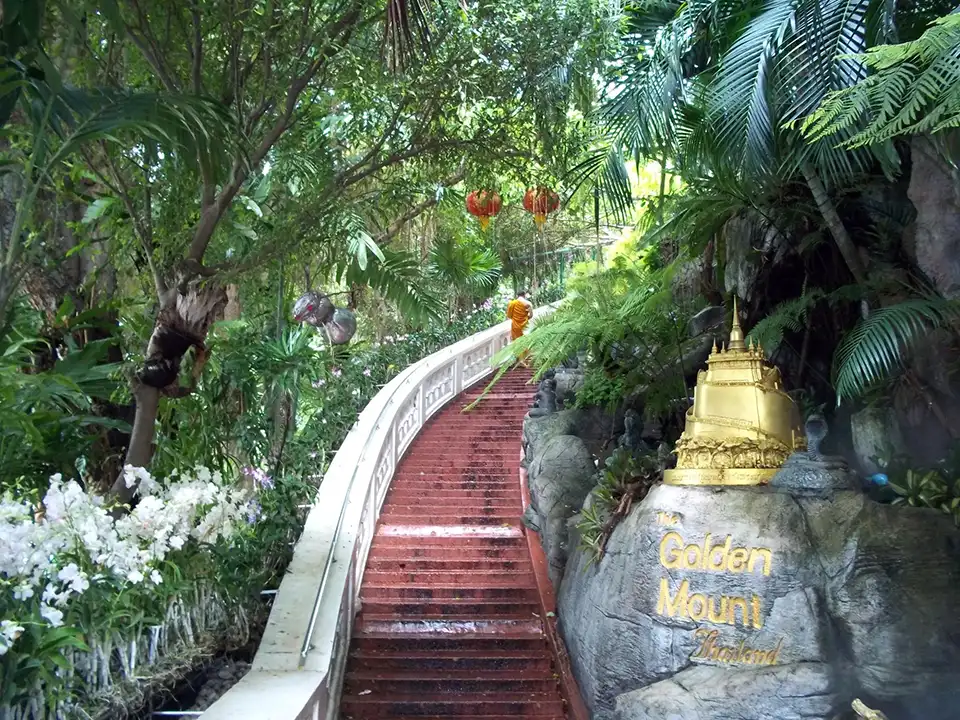
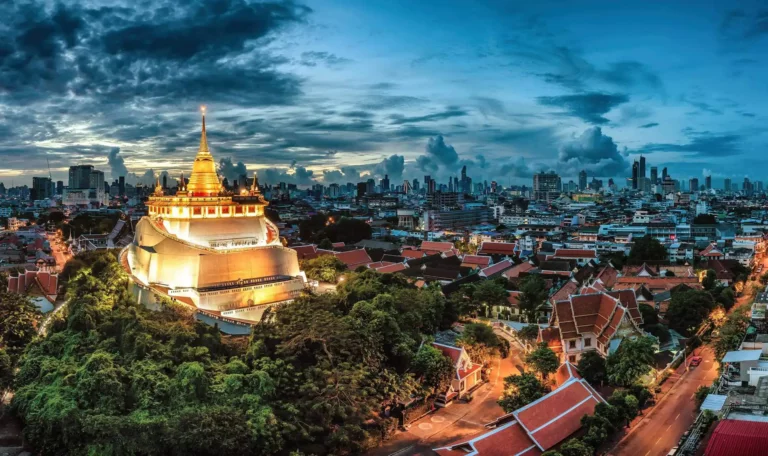
6. Wat Saket (Golden Mount) – Small fee, worth it
Though not free, it’s still one of the cheapest panoramic spots in Bangkok at 100 THB ($3). The climb up 344 steps rewards you with stunning views of the Old City — especially at sunset.
Top Free Green Spaces in Bangkok for Budget Travelers
Even in one of Asia’s busiest cities, Bangkok offers peaceful, completely free parks where you can relax, exercise, or enjoy local life. These green spaces are ideal for travelers who want to unwind without spending a single baht — all easily accessible by BTS or MRT.
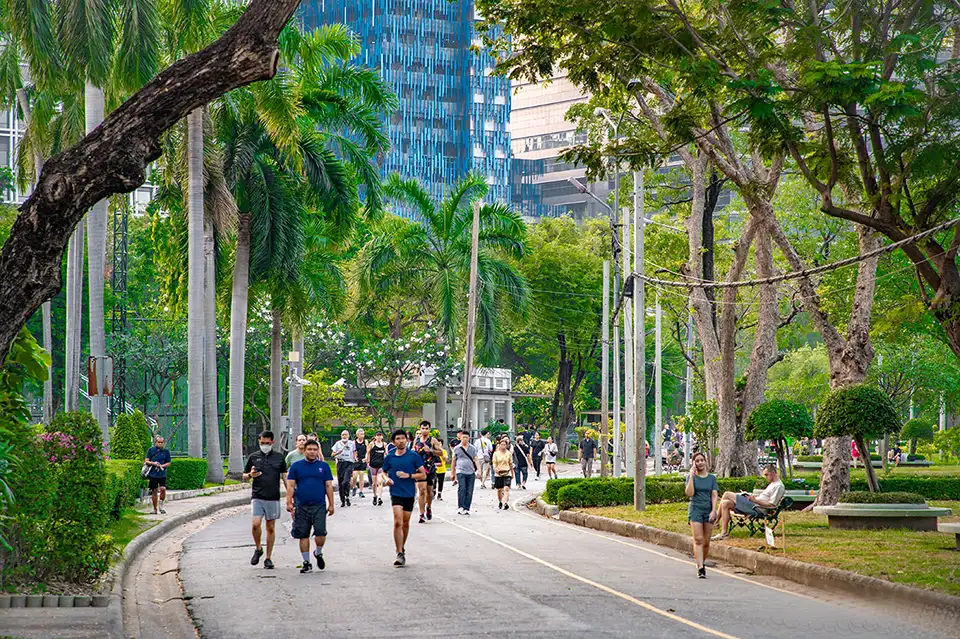
1. Lumphini Park — Bangkok’s Central Oasis
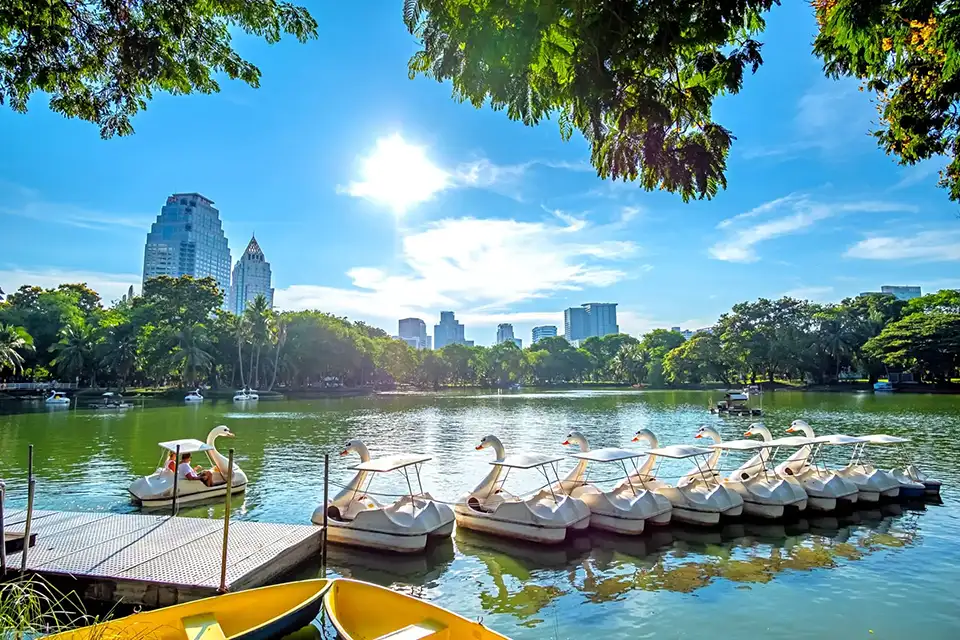
Highlight: Often called the “green heart of Bangkok,”Lumphini Park is the city’s oldest and most famous public park. It covers over 360 rai (142 acres) — roughly the size of 90 football fields — and offers shaded walking paths, lakes with paddle boats, and a jogging track popular with locals.
What to Do for Free:
Join morning or evening group workouts (aerobics and tai chi are common).
Spot water monitor lizards roaming freely — they look intimidating but are harmless!
Stroll or cycle around the 2.5 km loop while watching Bangkok’s skyline at sunset.
Bring a picnic or buy snacks from nearby food stalls.
How to Get There:
MRT: Lumphini Station (Exit 3) or Si Lom Station (Exit 2)
BTS: Sala Daeng Station (then walk 5–10 minutes)
Opening Hours: 04:30 AM – 09:00 PM (daily)
Why It’s Perfect for Budget Travelers: It’s free, spacious, and safe — an ideal escape to recharge after a day of sightseeing.
2. Benjakitti Park — The Lakeside Park with a Skyline View
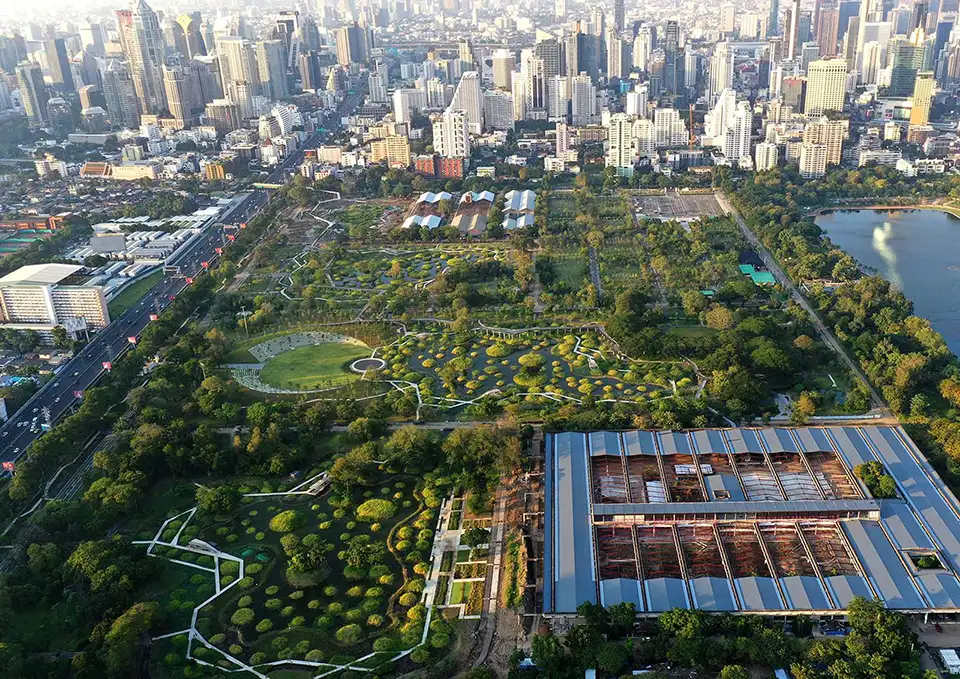
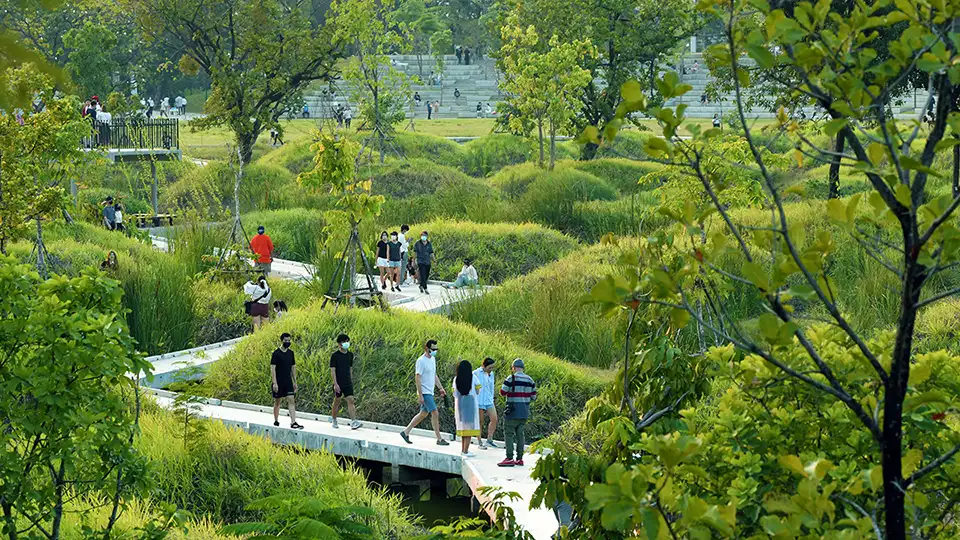
Highlight: Located near Asok, Benjakitti Park (also spelled Benjakiti) is one of Bangkok’s most beautiful and modern green spaces. The park features a large central lake, dedicated cycling and jogging lanes, and the recently expanded Benjakitti Forest Park, which adds wetlands, skywalks, and boardwalks surrounded by lush greenery.
What to Do for Free:
Walk or cycle along the 1.8 km elevated skywalk connecting Benjakitti to Lumphini Park.
Watch locals jog around the lake at sunrise or sunset — it’s one of the best city views for free.
Spot birds and fish in the eco-conservation area, perfect for photography lovers.
Visit the park’s open-air amphitheater where free community events and music are sometimes held.
How to Get There:
MRT: Queen Sirikit National Convention Center Station (Exit 3)
BTS: Asok Station (10-minute walk)
Opening Hours: 05:00 AM – 09:00 PM (daily)
Budget Tip: Grab affordable street food from nearby Ratchadaphisek Road or Sukhumvit Soi 10 before you enter the park for a picnic.
3. The Royal Field (Sanam Luang) — History Meets Local Life
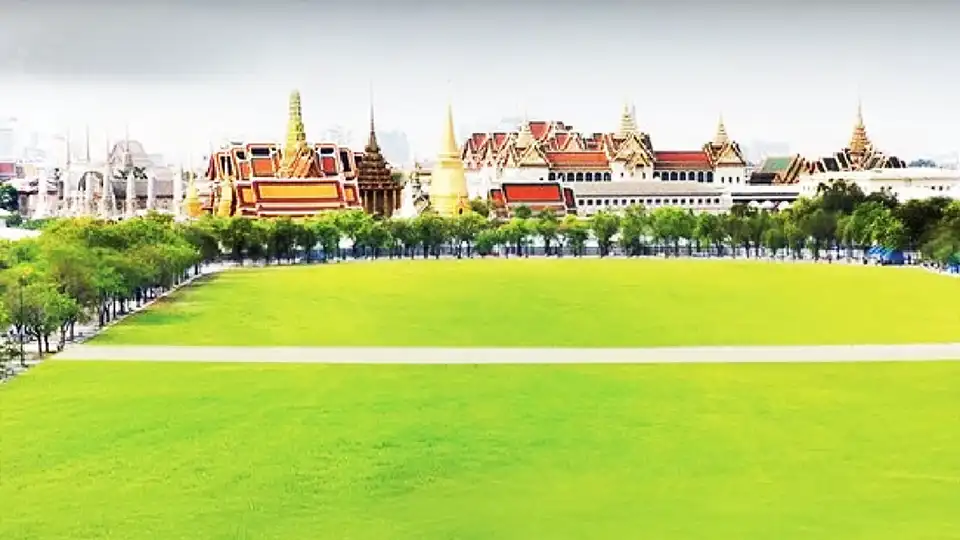
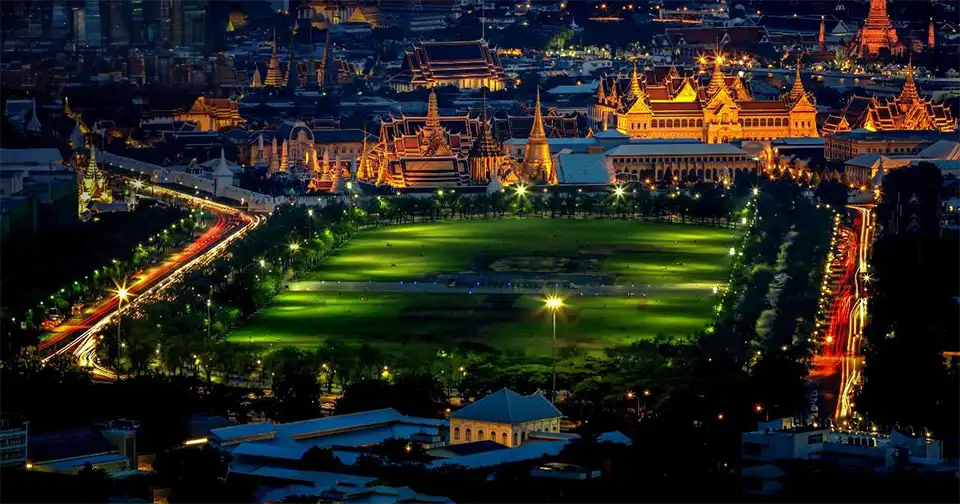
Highlight: Located directly opposite The Grand Palace, Sanam Luang (The Royal Field) is a historic open space used for royal ceremonies, festivals, and national celebrations. It’s not a park in the traditional sense, but it’s one of the most culturally important public spaces in Bangkok — and completely free to visit.
What to Do for Free:
Enjoy panoramic views of the Grand Palace and Wat Phra Kaew — especially stunning at sunset.
Walk around in the early morning or late afternoon to see locals flying kites, jogging, or relaxing under the trees.
Visit during festivals such as Songkran (Thai New Year in April) or King’s Birthday celebrations, when Sanam Luang becomes a stage for public performances and fireworks.
Combine your visit with a walk to nearby free attractions like Wat Ratchabophit and Tha Maharaj riverside area.
How to Get There:
MRT: Sanam Chai Station (Exit 1), then a short 10-minute walk
By Boat: Take the Chao Phraya Express Boat to Tha Chang Pier, then walk across the street.
Opening Hours: 🕓 Open 24 hours, though early morning and sunset are the best times to visit.
Traveler Note: Respect local customs — as it’s a royal ground, avoid loud music, drinking, or inappropriate clothing.
Private tours are great — but group tours offer the same experiences for less. An Ayutthaya Day Trip from Bangkok, including transport, lunch, and a guide, starts around 900–1,200 THB ($25–33) [BeYourGuides.com verified, 2025].
Joining a small group also helps you meet fellow travelers and reduces your carbon footprint.
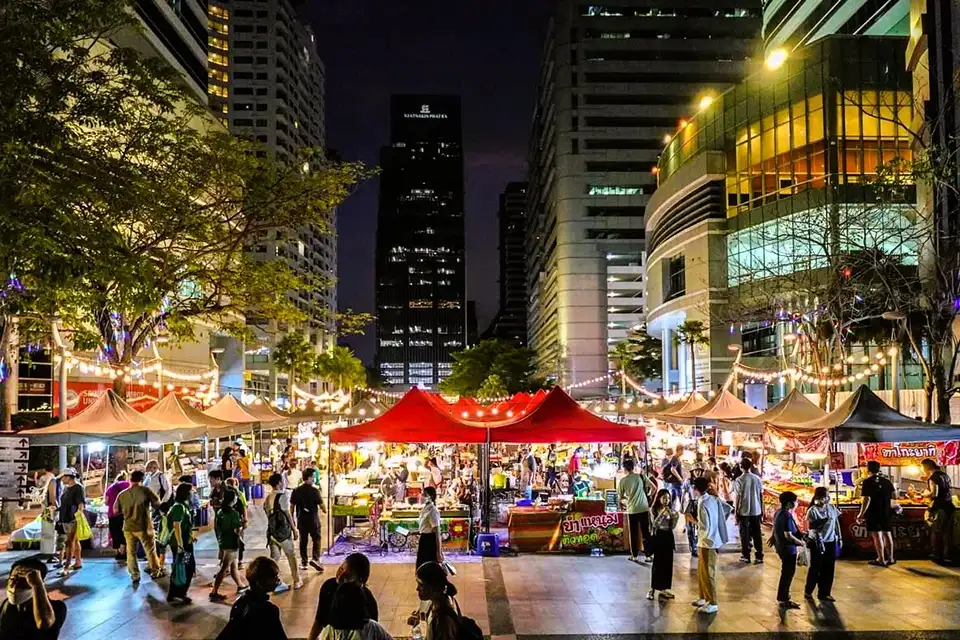
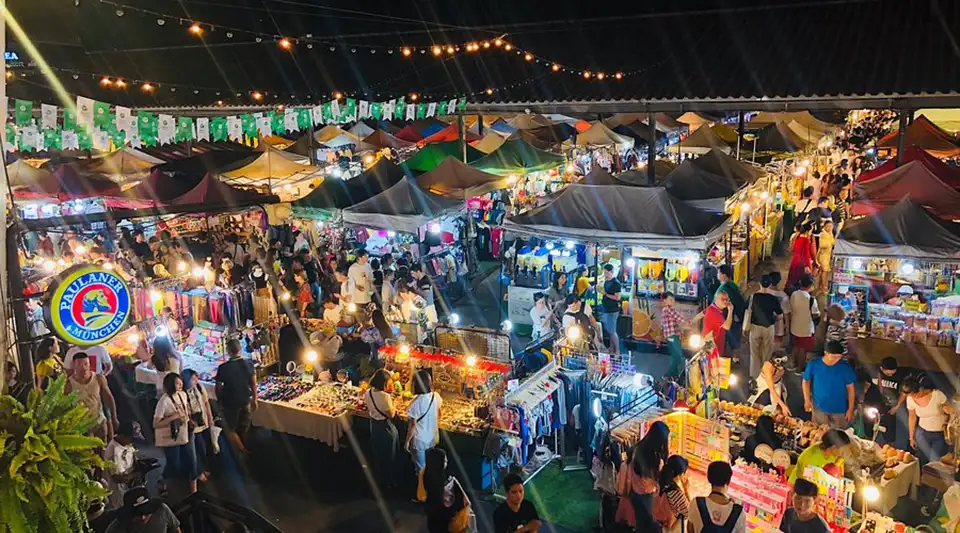
Bangkok comes alive after dark. Markets are not just for shopping — they’re cultural adventures.
1. The Chatuchak Night Market
The Chatuchak Night Market — also known as JJ Green Market 2 — is the new evening version of the famous weekend market. It brings together the same lively spirit but in a cooler, more relaxed nighttime vibe. Expect trendy clothes, vintage accessories, handmade crafts, and rows of street food stalls serving everything from grilled squid to Thai milk tea.
Budget Tip: It’s ideal for budget travelers and backpackers, as prices here are often lower than in shopping malls or tourist-heavy areas.
Local snacks: 30–50 THB ($0.80–$1.30)
Streetwear or T-shirts: 100–200 THB ($2.70–$5.40)
Souvenirs & handmade gifts: from 50 THB ($1.30)
You can also find small bars and chill-out zones with live acoustic music — perfect for relaxing after a day of exploring Bangkok.
How to Get There: Take the BTS Skytrain to Mo Chit Station or the MRT to Chatuchak Park Station. From there, it’s just a 5–10 minute walk to the market area behind Mixt Chatuchak Mall.
Opening Hours: Friday–Sunday, 04:00 PM – 12:00 AM
Vibe: Youthful, artistic, and laid-back — a mix of locals, university students, and budget-conscious travelers. It’s less crowded than the daytime version but still offers that authentic Bangkok night market energy.
Why It’s Great for Smart Budget Travelers: You can combine an evening visit here with daytime shopping at Chatuchak Weekend Market or Mixt Chatuchak Mall, making it a one-stop destination for affordable shopping, dining, and nightlife in one area.
2. Train Night Market Srinakarin (Talad Rot Fai Srinakarin)
Highlight: A retro-themed night market famous for its vintage collectibles, secondhand fashion, and Thai street food. Locals love it for the nostalgic vibe — with old cars, neon lights, and open-air bars playing live music.
Budget Tip: Grab dinner for under 100 THB ($2.70) — try grilled seafood, pad thai, or mango sticky rice. You can also shop for rare vintage décor or denim jackets at a fraction of downtown prices.
How to Get There: Located behind Seacon Square Shopping Mall on Srinakarin Road. Take the Airport Rail Link to Hua Mak Station, then a short taxi or Grab ride (about 10 minutes).
Opening Hours: Thursday–Sunday: 04:00 PM – 12:00 AM
Vibe: Relaxed, local, and authentic — great for those who prefer a more Thai-style market than the touristy ones.
Highlight: The new-generation version of the old Ratchada Train Market, offering a modern layout but keeping the same energy — street food, fashion, live music, and open-air bars.
Budget Tip: Meals start at 50–80 THB ($1.30–$2.20), and many vendors accept cashless payments. It’s clean, organized, and perfect for budget travelers who want the night market atmosphere without chaos.
How to Get There: Take the MRT to Rama 9 Station (Exit 2), then walk about 5 minutes to the market (next to Central Rama 9).
Opening Hours: 🕓 Daily, 16:00–24:00
Vibe: Trendy and social — ideal for travelers who enjoy taking night photos, trying street food, or relaxing at local bars with craft beer.
If you’re arriving at Suvarnabhumi Airport, skip the pricey taxis and hop on the Airport Rail Link (ARL) — it’s fast, reliable, and costs only 45 THB ($1.20) to reach Phaya Thai Station, where you can easily connect to the BTS Skytrain.
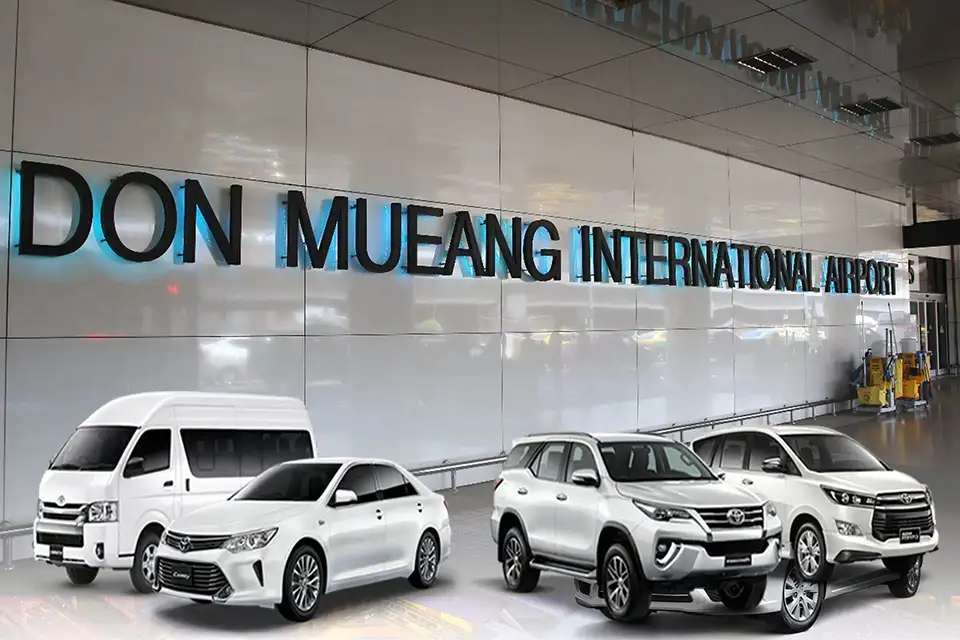
For travelers landing at Don Mueang Airport, take the A1 or A2 bus for just 30 THB ($0.85) to reach the Mo Chit BTS Station or Chatuchak MRT Station.
Choosing public transport not only saves money but also helps you avoid Bangkok’s notorious rush-hour traffic (07:00–09:00 and 17:00–19:00), when taxi fares and travel time can easily double.
👉 Prefer comfort and convenience? Book a private airport transfer with us — affordable, safe, and ready when you land.
Bangkok’s Art & Culture Centre (BACC), near Siam, offers free exhibitions all year round. Many temples host free cultural performances during festivals, and public events like Loy Krathong (November) and Songkran (April) fill the streets with joy — no tickets needed.
You can also visit ChangChui Creative Park, a quirky art space made from recycled airplane parts — entry is free, open daily.
Negotiation is part of the fun. Sellers expect you to bargain — but do it with a smile. Start by offering around 70% of the asking price, and you’ll likely meet halfway.
Markets like Pratunam and Chatuchak are ideal for practicing your bargaining skills.
Pratunam Market isn’t fancy — it’s energetic, colorful, and packed with stalls selling everything from T-shirts (100–150 THB) and jeans (200–300 THB) to handmade jewelry (50 THB). It’s a paradise for those who enjoy hunting for deals and don’t mind a little chaos.
Many vendors are wholesalers, which means you can get lower prices if you buy in bulk (usually 3 items or more). Bargaining is part of the fun here — smile, stay friendly, and you’ll often get 10–30% discounts.
Pratunam MarketPratunam Market
10. Plan with Online Deals & Flash Discounts
Before you go, check platforms like BeYourGuides.com, which often offer flash deals up to 30% off for tours, transfers, and cooking classes. You can find great-value activities like:
Bangkok Floating Market Tour – from 850 THB
Bangkok Food Tour – from 1,000 THB
Thai Cooking Class – from 1,200 THB
Booking online ensures transparent pricing, verified operators, and easy cancellations — perfect for travelers who love flexibility.
👉 Internal link: Explore Bangkok Cooking Classes.
FAQs about Smart Budget Travel Bangkok
Q1: What’s the best food tour in Bangkok for budget travelers? Street food tours start from 1,000 THB ($28) and include multiple tastings. See options on BeYourGuides – Bangkok Food Tours.
Q2: Is Bangkok safe for solo travelers? Yes. Bangkok is considered one of the safest cities in Southeast Asia for tourists. Use registered taxis or Grab, and avoid carrying large amounts of cash.
Q3: What’s the cheapest way to get to Ayutthaya? Take a 3rd-class train from Hua Lamphong Station for around 15–20 THB ($0.50). Group tours, however, offer guides and air-conditioning — worth the extra cost.
Q4: What’s a reasonable daily budget for Bangkok? On average, 1,000–1,500 THB/day ($28–42) covers meals, transport, and attractions for most budget travelers.
Q5: When is the best time to visit Bangkok on a budget? The most affordable months are May to October, during Thailand’s “green season.” Hotels and flights are often 20–40% cheaper, and popular attractions are less crowded. Just carry an umbrella—short afternoon rains are common but pass quickly.
Q6: Are there free walking tours in Bangkok? Yes! Several local groups offer tip-based walking tours around Old Town, Chinatown, and the Riverside. These tours usually last 2–3 hours and are a great way to learn Thai culture without fixed costs. Check Bangkok Greeters or listings on BeYourGuides.com for updated schedules.Q7: Can I use digital payments or should I carry cash? Most convenience stores, BTS stations, and restaurants accept credit cards or mobile payments (PromptPay, Apple Pay, Alipay), but street food stalls and markets prefer cash. It’s smart to keep 300–500 THB ($8–14) in small bills for local purchases.
Bangkok rewards the curious — not just the wealthy. With smart budget travel Bangkok planning, you’ll discover that Thailand’s capital offers incredible value without compromising experience. Whether you’re savoring $1 street food, gliding on the Skytrain, or exploring ancient temples, every baht you spend returns tenfold in memories.
👉 Start your Bangkok adventure smartly — book budget-friendly tours, activities, and experiences today on BeYourGuides.com.
Bangkok is one of the few cities in the world where the energy doesn’t fade after sunset. With neon-lit markets, glowing temples, buzzing bars, and riverside cruises, Bangkok at night offers a mix of tradition and modern fun. Whether you love culture, food, or nightlife, the city has something unforgettable waiting for you.
Quick Navigation: Jump to a Section
1. Watch the Sunset from a Rooftop Bar
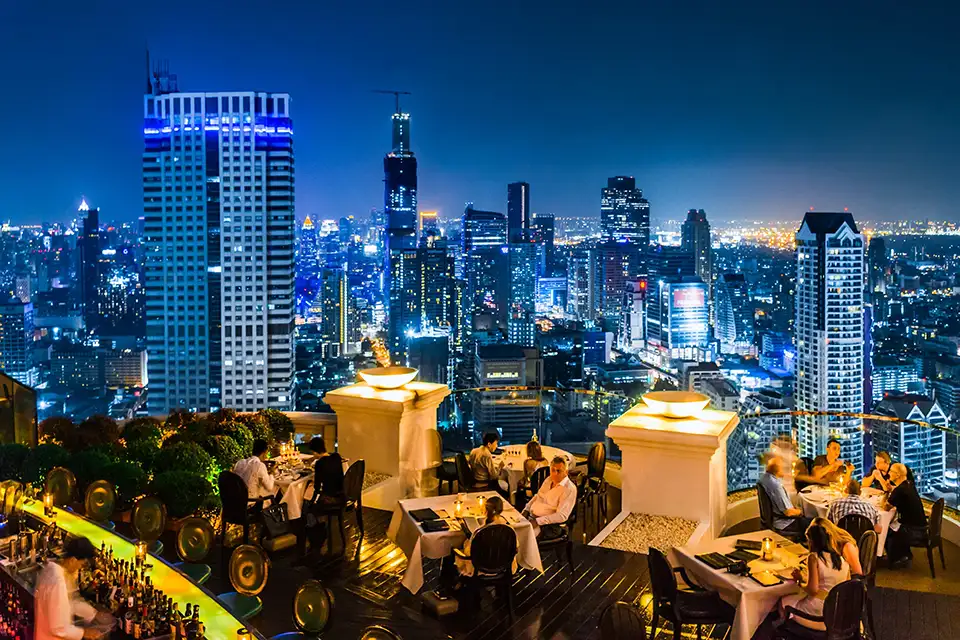
Bangkok is famous for its rooftop scene. Bars like Vertigo at Banyan Tree or Sky Bar at Lebua offer sweeping city views. A cocktail in hand, watching the skyline turn golden, is one of the most iconic Bangkok at night experiences.
Why at night? The skyline lights up like a sea of stars, making the view magical.
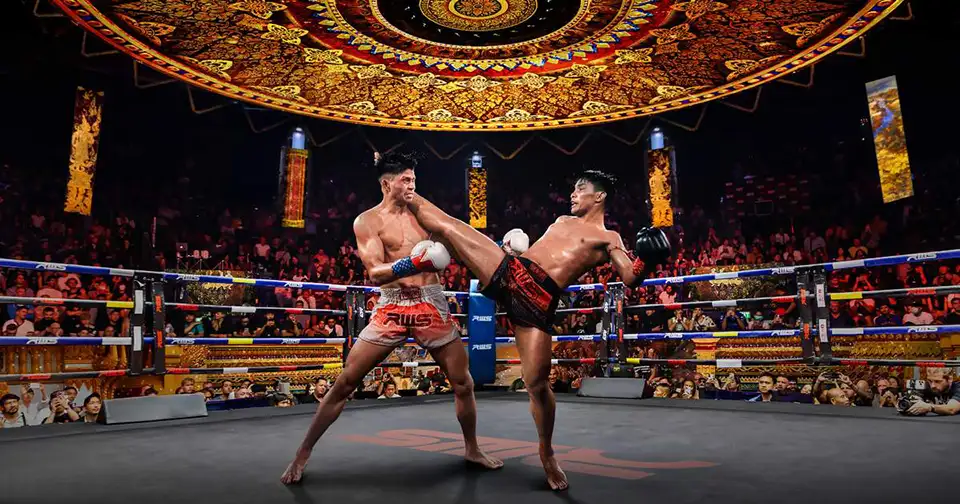
For adrenaline lovers, nothing beats the atmosphere at Rajadamnern Stadium. This legendary arena has hosted fighters since 1945. Watching live Muay Thai under the spotlights is a mix of tradition, sport, and raw energy.
Why at night? Matches usually begin in the evening, keeping the energy alive well into the night.
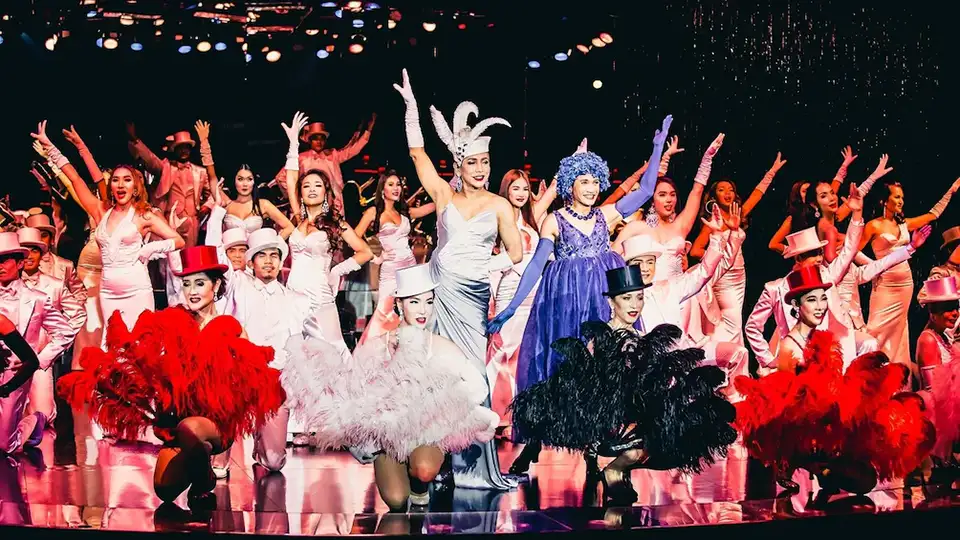
Glitter, feathers, and music—Calypso Cabaret is a dazzling performance celebrating Thailand’s cabaret culture. Perfect for couples, families, and groups of friends, it’s a show of color and creativity.
Why at night? The neon stage lights add to the magic, and you can pair it with a Thai dinner for the full experience.
4. Take in Panoramic Views from MahaNakhon Skywalk
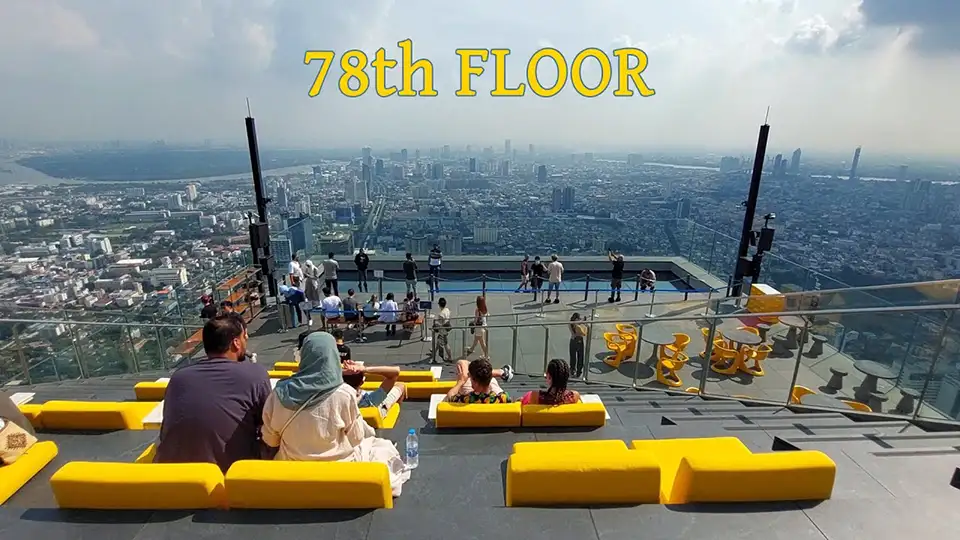
The King Power MahaNakhon is Bangkok’s tallest skyscraper. Its Skywalk offers a thrilling glass floor and 360° views. Arrive before sunset and watch the city transform from day into night.
If you want shopping and street food in one place, Chatuchak Market is the spot. Open on Friday evenings, it’s less crowded than weekends but still packed with vendors selling clothes, art, and street snacks.
🔗We have related interesting info about the Weekend Market:
The heart of Bangkok’s backpacker culture. Khao San Road is all about cheap drinks, endless street food, live music, and neon chaos. Try a Thai beer, taste fried insects, or just people-watch.
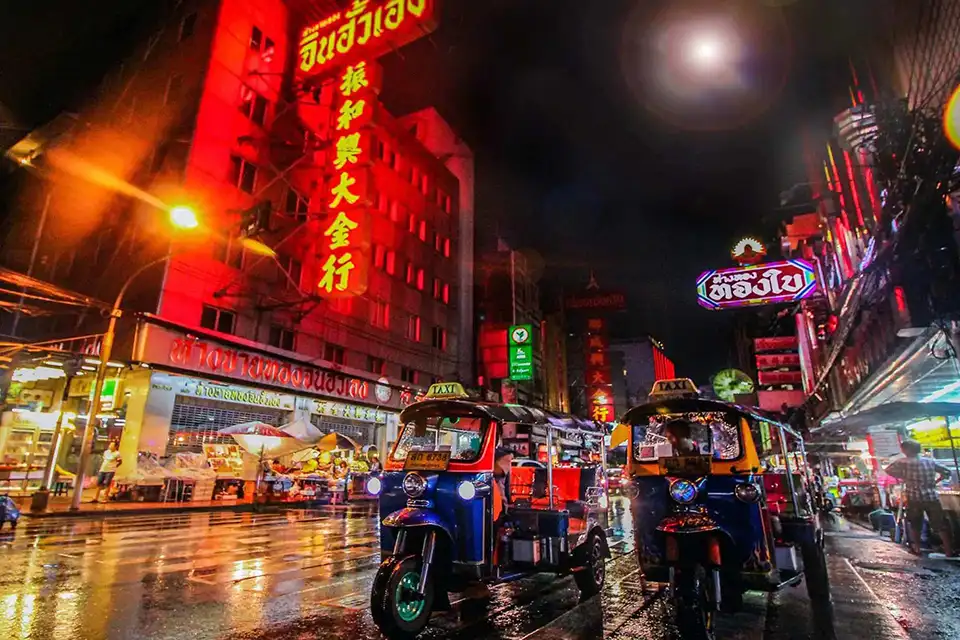
Hop into a tuk-tuk for a night tour. You’ll zip through glowing alleys, temples, and food stalls while enjoying the thrill of open-air rides. It’s the most fun way to discover Bangkok after dark.
Imagine floating past Wat Arun and the Grand Palace at night, both beautifully lit. A dinner cruise on the Chao Phraya River offers live music, buffets, and an elegant way to see the city.
9. Taste Your Way Through a Midnight Street Food Tour
Bangkok is a street food paradise. Join a guided food tour to sample more than 10 dishes—from pad thai and mango sticky rice to grilled satay. Local guides know the hidden gems where flavors never disappoint.
Q1: What is the best neighborhood for nightlife in Bangkok? Silom, Sukhumvit, China Town and Khao San Road are the top spots, each offering unique vibes.
Q2: What’s the best romantic activity in Bangkok at night? A dinner cruise on the Chao Phraya River is perfect for couples.
Q3: Is Bangkok safe at night for tourists? Yes, main tourist areas are generally safe. Stay aware of your belongings and use licensed taxis or Grab.
Q4: Can I visit temples at night? Some temples like Wat Arun are stunning from the outside after dark, though most are closed inside.
From rooftop views to lively markets and cultural shows, Bangkok at night offers adventures for every traveler. Whether you’re here for food, nightlife, or romance, the city glows with energy you’ll never forget.
Bangkok FAQs often include questions about weather, safety, transport, food — you name it. In this guide, I answer the 30 most common ones with up-to-date facts, quick tips, and links to BeYourGuides tours so you can get from planning to exploring faster.
Quick Navigation: Jump to a Section
1. What’s the best time of year to visit Bangkok?
The best time to visit Bangkok is generally from November to February. This is the “cool” and dry season, with more pleasant temperatures and less humidity. March to May is the hot season, and June to October is the rainy season.
2. What kind of clothes should I pack?
Light, breathable fabrics like cotton or linen are highly recommended due to the heat and humidity. Pack shorts, t-shirts, and comfortable walking shoes. Please note that many temples and religious sites require modest dress (shoulders and knees covered), so bring a light scarf or sarong to cover up when needed, and some longer pants or dresses.
3. Is it safe to drink tap water in Bangkok?
No, it’s generally not recommended to drink tap water in Bangkok. Most hotels provide bottled water, and it’s readily available for purchase everywhere.
4. What’s the best way to get around Bangkok?
Bangkok has a fantastic public transportation system! Tourists can use the BTS Skytrain and MRT subway for longer distances as they’re air-conditioned and avoid traffic. For shorter distances, taxis (make sure they use the meter!), Grab (ride-hailing app), tuk-tuks (for the experience, but negotiate the price!), and even motorbike taxis (for quick trips, but be cautious!) are options. The Chao Phraya Express Boat is also great for riverside attractions.
BTS Skytrain & MRT Subway — efficient for cross-city travel
Taxis (metered), Grab — good for point‐to‐point
Tuk-tuks, motorbike taxis — fun but always negotiate price
Chao Phraya Express Boat — ideal for riverside attractions
👉 For a curated experience, see our Bangkok Temple Tours.
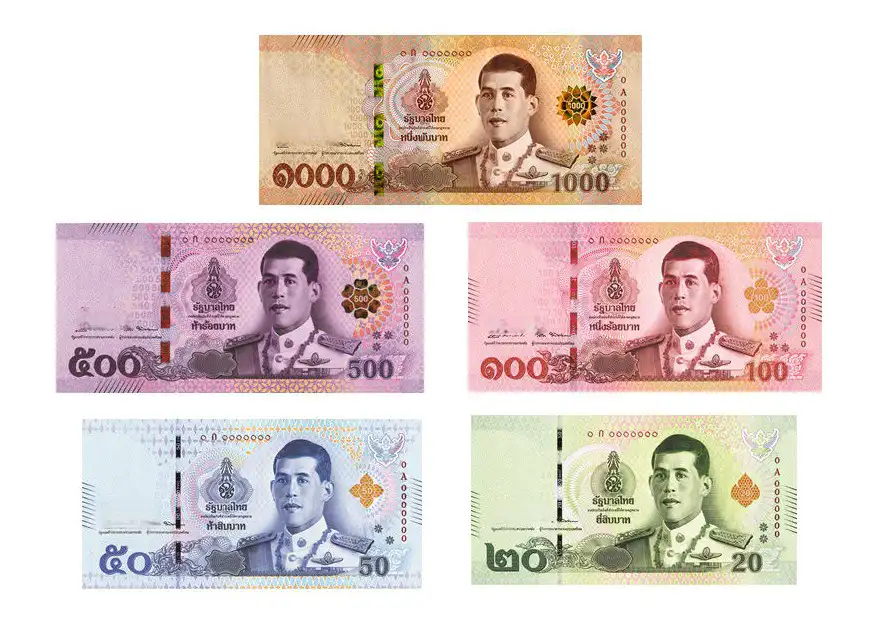
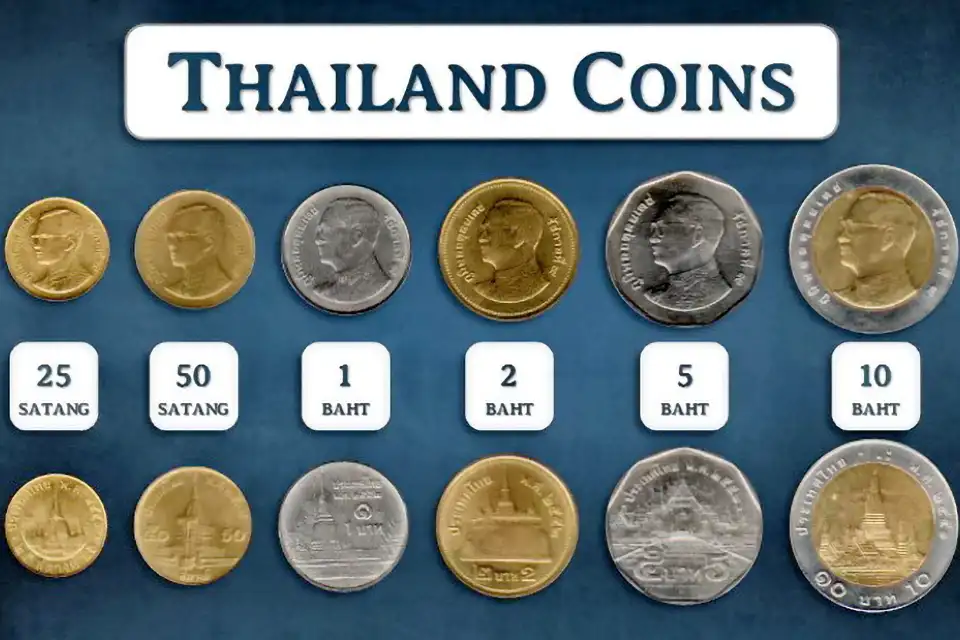
5. What’s the currency in Thailand, and where can I exchange money?
The currency is the Thai Baht (THB). Tourists can exchange some money at the airport upon arrival, however exchange rates might be better at independent money exchange booths found throughout the city. ATMs are also widely available, but be aware of potential foreign transaction fees from your bank.
6. Do I need a visa to visit Thailand?
This depends on your nationality. For example: American can enter Thailand for tourism purposes without a visa for up to 30 days. Please check the official Thai embassy website to confirm the latest visa requirements for specific passport. It’s always best to check for your own country!
7. Is English commonly spoken in Bangkok?
In tourist areas, major hotels, and shopping malls, it’s generally easy to find English speakers. However, in more local areas, it might be less common. Tourists can learn a few basic Thai phrases like “Sawasdee krap/ka” (hello/goodbye) and “Khop khun krap/ka” (thank you) to be polite and helpful.
8. What Thai dishes should I try when visiting Bangkok?
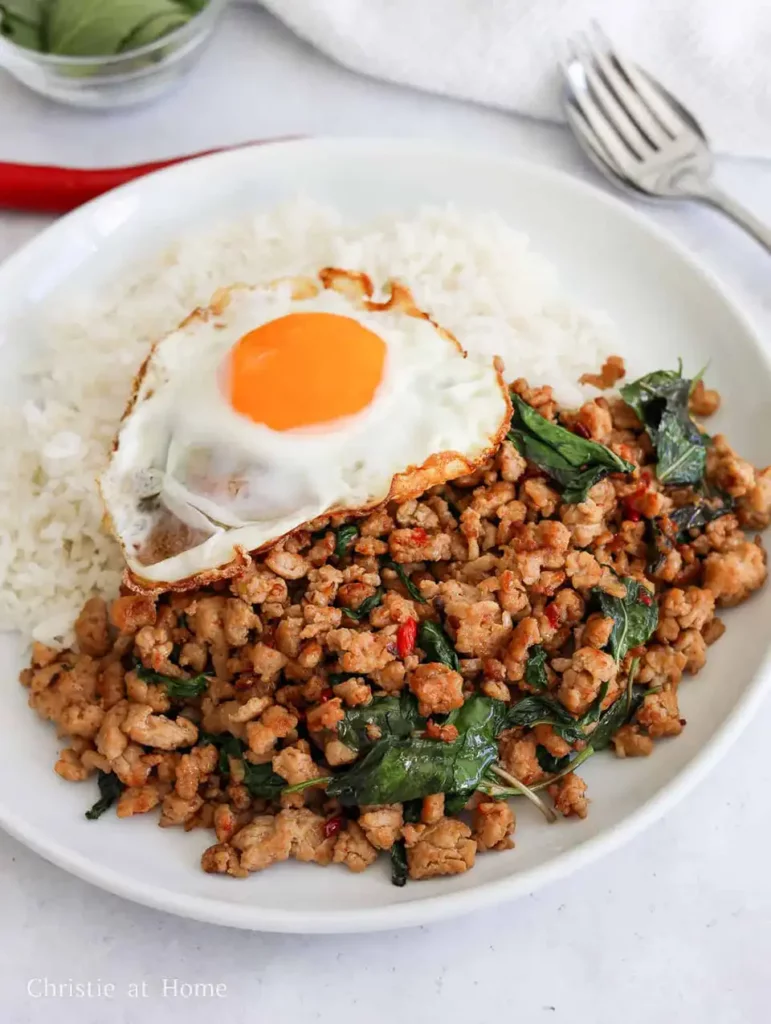
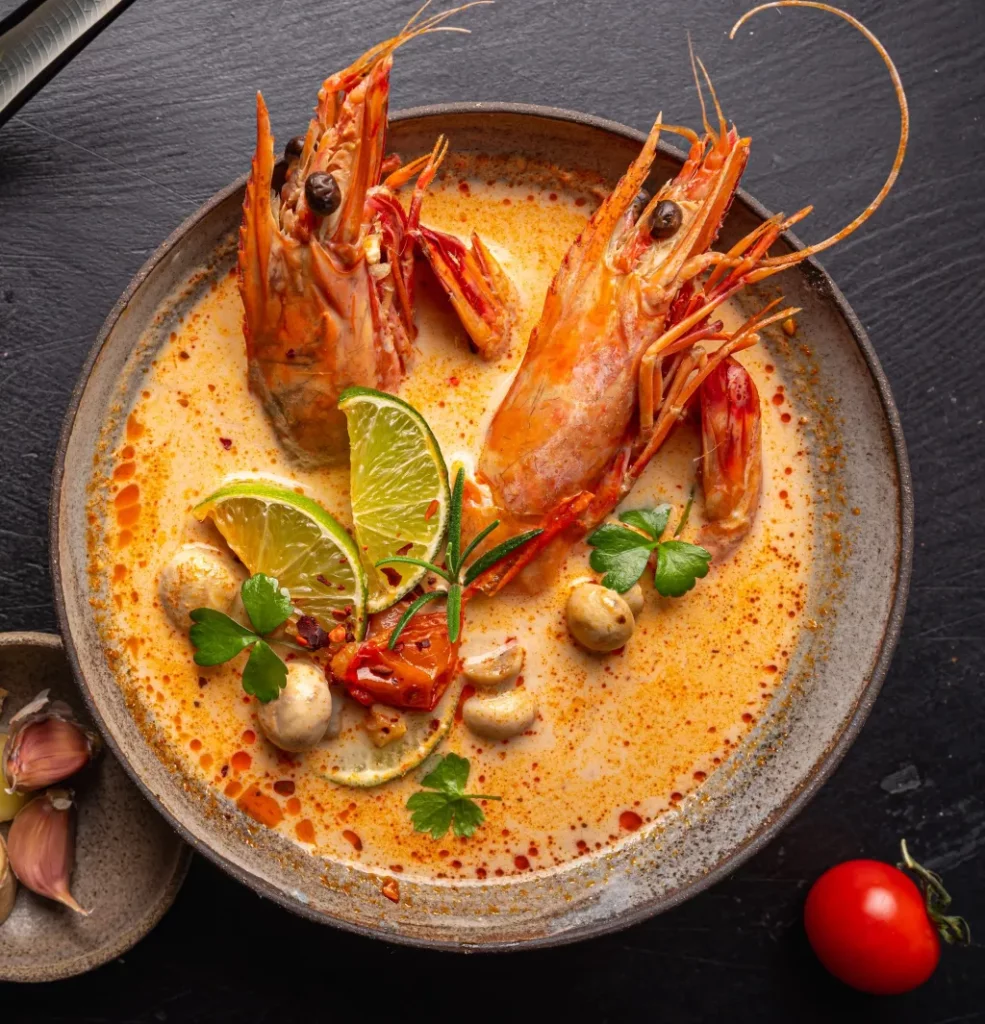
Bangkok is a paradise for food lovers! Don’t miss classics like Pad Thai, Tom Yum Goong (spicy shrimp soup), Som Tum (papaya salad), Mango Sticky Rice, and Massaman Curry. You’ll find incredible flavors everywhere — from Michelin-rated street stalls to luxury riverside restaurants.
Generally, yes, street food is a huge part of the Bangkok experience and is often very safe and delicious. Simple tips is to look for stalls with high customer turnover, meaning the food is fresh, and where the vendors are cooking the food to order. Also, look for cleanliness!
👉 Discover Bangkok’s best street eats — hop on a night-time Tuk-Tuk food adventure!
Wai: The traditional Thai greeting (a prayer-like gesture with a slight bow). While not strictly necessary for tourists, it’s good to know and appreciate.
Head and Feet: The head is considered the most sacred part of the body, and the feet are the lowest. Avoid touching someone’s head and never point your feet at anyone or a Buddha image.
Respect Monarchy and Religion: The King and the Royal Family are highly revered. Show respect for all religious sites and Buddha images.
Dress Modestly at Temples: Always cover your shoulders and knees when visiting temples.
Don’t Step on the Door Sill: It’s considered bad luck to step on the door sill when entering a building.
11. What are some popular attractions I shouldn’t miss?
Grand Palace & Wat Phra Kaew
Wat Arun
Wat Pho
Chatuchak Weekend Market
Street life in Sukhumvit & Silom
👉 Discover the heart of Thai culture on this must-see temple tour.
12. How much should I budget for a day in Bangkok?
This can vary widely depending on your travel style. I’ve estimated that for a comfortable budget including food, transportation, attractions, and some shopping, around 1,500-3,000 THB (approximately $40-$80 USD) per day seems reasonable for a solo traveler. This is a rough estimate and can be adjusted up or down.
Yes, haggling is definitely common, especially at markets like Chatuchak or night markets. It’s expected to negotiate prices, but do so politely and with a smile. Don’t go overboard, and be prepared to walk away if the price isn’t right. For department stores and restaurants, prices are usually fixed.
14. Tipping culture — what should I tip?
Tipping is not mandatory in Thailand, but it’s appreciated for good service, especially in tourist-focused establishments. For restaurants, a small tip (e.g., rounding up the bill or 10%) is common if a service charge isn’t already included. For taxis, you can round up to the nearest convenient amount.
15. What if I get sick or need medical help?
Bangkok has excellent international hospitals with English-speaking staff. Please note down the names of a few highly-rated hospitals like Bumrungrad International Hospital and Samitivej Hospital. It’s also crucial to have travel insurance that covers medical emergencies.
16. Are there any specific scams I should be aware of?
Tuk-tuk Scams: Being taken to gem shops or tailor shops instead of your desired destination. Always confirm the destination and agree on a price upfront.
Grand Palace “Closed” Scam: Someone telling you the Grand Palace is closed and trying to direct you elsewhere. Always verify directly at the entrance.
Fake Gems/Tailors: Be wary of unsolicited offers for cheap gems or custom-made suits that seem too good to be true.
17. Can I use credit cards everywhere?
Major hotels, large restaurants, and department stores generally accept credit cards. However, for street food, smaller shops, markets, and many local establishments, cash is king. Please carry both.
18. What’s Bangkok nightlife like?
Bangkok’s nightlife is legendary! Rooftop bars with incredible views, lively night markets, bustling bars, and clubs. Areas like Sukhumvit (especially around Soi 11) and Silom are known for their vibrant nightlife.
👉 We recommend our well-designed tours of Bangkok nightlife – book your tours now.
Hydration is key! Please drinking plenty of bottled water. Please plan to take breaks in air-conditioned places like shopping malls or cafes, and wear light clothing. Early morning or late afternoon are probably the best times for outdoor activities.
20. Can I take day trips from Bangkok?
Yes — top choices include:
👉 Step outside the city for a day of authentic Thai sights and sounds.
21. How do I get from Bangkok Airport to the city center?
From Suvarnabhumi Airport (BKK), the fastest way is the Airport Rail Link, which connects directly to the BTS Skytrain at Phaya Thai Station (about 30 min, THB 45). Taxis cost around THB 350–500 including tolls
👉 Start your Bangkok journey stress-free — book a private airport transfer today.
22. What SIM card or eSIM should I use in Bangkok?
Local SIMs from AIS, TrueMove H, or DTAC offer affordable tourist plans — typically THB 150–300 for 7 days with 5–10 GB data. At Suvarnabhumi and Don Mueang airports, counters are open 24 hours. eSIMs are also available on official apps.
23. How much does public transport cost in Bangkok?
BTS Skytrain: THB 17–47 per trip
MRT Subway: THB 16–43
River Boat: from THB 20
24. Are credit cards and ATMs widely available?
Yes. Visa, MasterCard, and UnionPay are accepted at most hotels, malls, and restaurants. ATMs are everywhere — withdrawal fee around THB 220 per transaction for foreign cards. Cash is still needed for markets and street vendors.
25. What’s the dress code for nightlife venues in Bangkok?
Most rooftop bars and clubs require smart-casual attire — no flip-flops, sleeveless shirts, or beachwear. Night markets are casual.
Absolutely. Family attractions include Safari World, SEA LIFE Bangkok Ocean World, and Asiatique the Riverfront. Many day tours are family-friendly, such as Bangkok Floating Market & Railway Market Tour — fun for all ages.
27. Do I need travel adapters or voltage converters?
Thai standard is 220 V, Type A / B / C plugs work with adapters.
28. How safe is Bangkok at night?
Central and tourist areas are generally safe; avoid poorly lit alleys and always use registered taxi/app.
29. Is Wi-Fi / internet fast in Bangkok?
Yes — most hotels, cafes, malls provide free Wi-Fi; 5G coverage is widespread.
30. Is bargaining on public transport allowed?
No — taxis must use meter; tuk-tuks need negotiated fare before ride.
From visa rules to street food, these Bangkok FAQs give you confident clarity before you arrive. Once you land, skip the guesswork — book your tours and experiences directly on BeYourGuides.com and let local experts take care of the details.
Bangkok is famous for its grand temples, busy streets, shopping malls, and vibrant nightlife. But beyond the city’s well-known attractions lies another side of Bangkok—quiet canals, lush coconut groves, traditional communities, local art, and waterways where everyday life continues at a slower pace.
For travelers looking to experience authentic Bangkok beyond the typical tourist attractions, kayaking and electric longtail boat tours offer a wonderful way to explore the city’s hidden waterways.
BeYourGuides offers two unique experiences that combine nature, culture, creativity, and local life: the Bangkok Hidden Kayaking & Electric Longtail Boat Experience and the Bangkok Hidden Kayaking & Damnoen Saduak Floating Market and Maeklong Railway Market tour. Both experiences are designed for travelers who want to see a more peaceful and authentic side of Thailand.
Quick Navigation: Jump to a Section
Why Explore Hidden Bangkok by Water?
Bangkok has long been known as a city of canals. While modern roads and buildings dominate much of the capital today, its waterways still provide a fascinating glimpse into traditional Thai life.
Exploring Bangkok by kayak or electric longtail boat allows you to move away from the busy urban environment and discover peaceful canals, coconut groves, local communities, colorful artwork, and traditional lifestyles.
Instead of simply visiting famous attractions, these experiences allow travelers to slow down and observe how local people live around Bangkok’s waterways.
The kayaking experiences are also a great choice for travelers who enjoy nature and outdoor activities. Paddling through calm canals surrounded by greenery creates a completely different atmosphere from sightseeing in central Bangkok.
1. Bangkok Hidden Kayaking & Electric Longtail Boat Experience
This experience is ideal for travelers who want to discover Bangkok’s quieter side through a combination of kayaking, an electric longtail boat ride, local art, and Thai cultural activities.
The experience lasts approximately 3–5 hours, with available starting times depending on the selected package. Travelers can choose from join-tour or private-group options.
Kayak Through Peaceful Coconut Groves
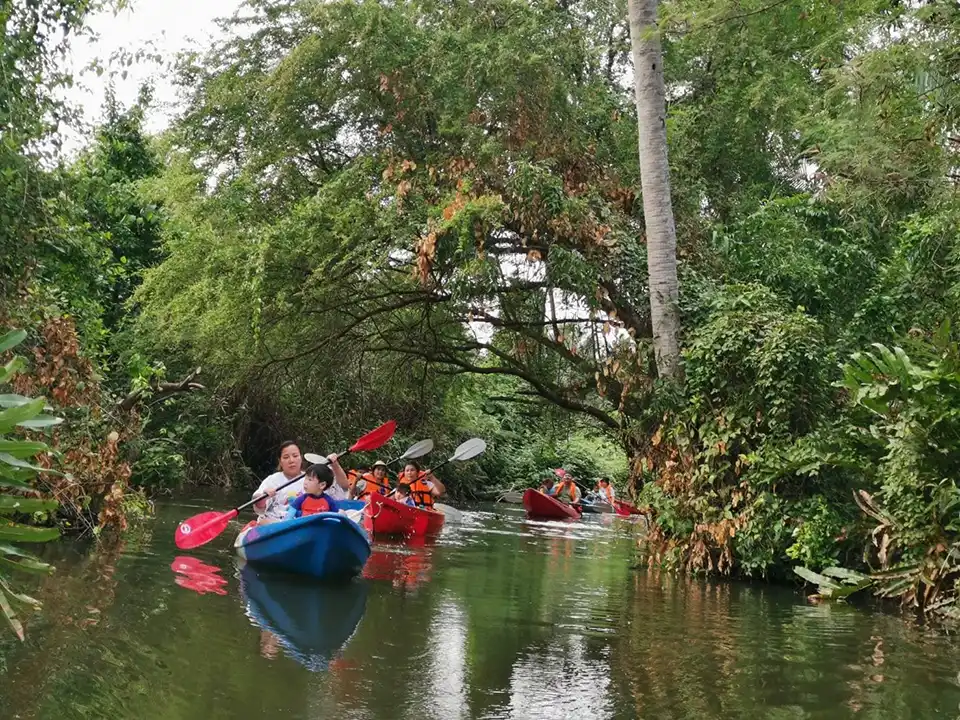
One of the highlights is kayaking through serene canals surrounded by coconut trees and greenery. The peaceful environment offers a refreshing escape from Bangkok’s busy streets.
The experience is designed as a low-carbon outdoor activity, making it particularly appealing to travelers who enjoy nature and more responsible ways of exploring a destination.
You may also meet Shiro, the cheerful dog belonging to the kayak owner, who can make the kayaking experience even more memorable.
After kayaking, travelers can relax with fresh coconut juice while taking in the peaceful surroundings.
Experience Bangkok’s Local Waterways by Electric Longtail Boat
The adventure continues with a ride on a classic electric longtail boat.
This provides a different perspective of Bangkok’s canals and local communities. Along the way, travelers can observe canal-side life, local vendors, colorful wall art, and artwork beneath bridges.
The electric boat adds a cultural and environmental dimension to the experience while allowing visitors to explore areas that many conventional Bangkok tours do not cover.
Discover Local Art and Thai Herbal Traditions
The experience also includes a visit to a local artist gallery house.
Travelers can participate in an art activity and create their own piece while learning about the inspiration and creativity behind the local artist’s work.
A Thai herbal inhaler workshop adds another cultural element to the experience. It provides a relaxing introduction to a traditional Thai wellness practice and gives travelers something memorable to take away from their journey.
Who Is This Tour Best For?
This experience is especially suitable for:
Travelers looking for unique things to do in Bangkok
Nature lovers
Couples seeking a peaceful experience
Small groups and private groups
Travelers interested in Thai culture and local communities
Visitors who want an alternative to conventional sightseeing
Eco-conscious travelers
Photography enthusiasts
Travelers who enjoy kayaking and outdoor activities
For travelers who want to combine Bangkok’s famous markets with a more unusual local experience, this full-day adventure offers an exciting mix of culture, markets, creativity, and nature.
The tour combines three very different experiences: the iconic Maeklong Railway Market, the colorful Damnoen Saduak Floating Market, and a peaceful kayaking adventure through coconut groves.
See the Famous Maeklong Railway Market
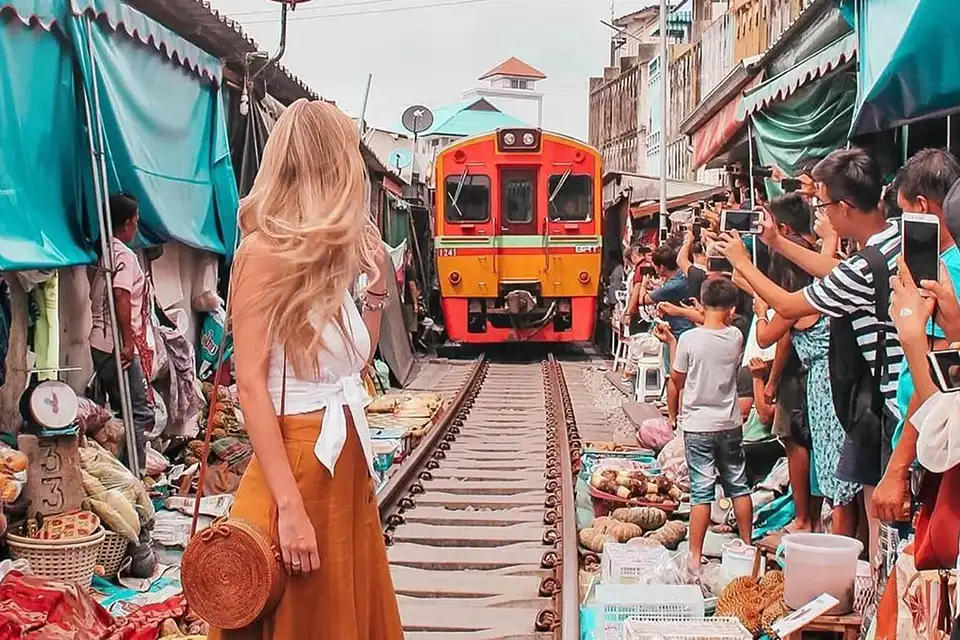
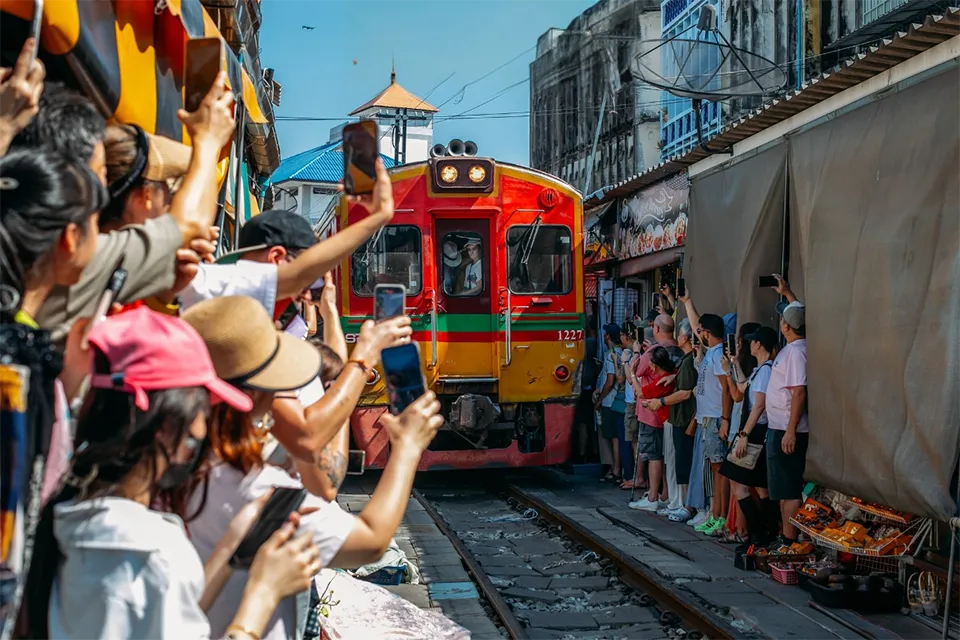
One of the most exciting moments of the tour is visiting Maeklong Railway Market.
The market is famous for being located directly along an active railway track. When a train approaches, vendors quickly pull back their awnings and move their goods away from the tracks. Once the train passes, the market returns to normal.
It is an unforgettable example of how traditional commerce and everyday transportation coexist in Thailand.
Travelers can also visit a traditional Thai house and learn about the production of brown coconut sugar, providing an opportunity to discover another aspect of local Thai culture.
Experience Damnoen Saduak Floating Market
Next, continue to Damnoen Saduak Floating Market, one of Thailand’s best-known floating markets.
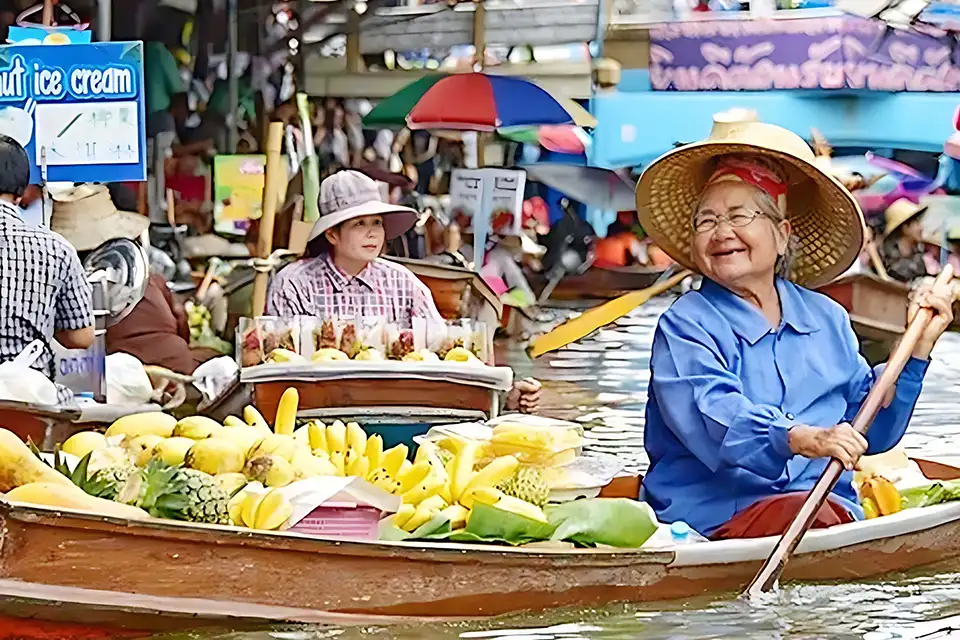
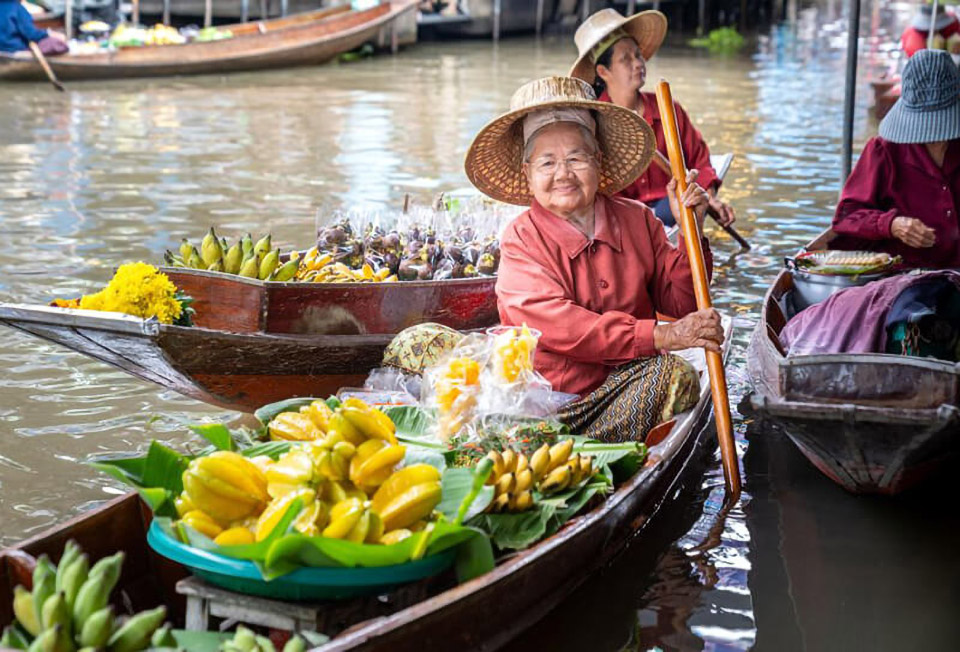
Instead of walking through a conventional market, travelers can see local vendors selling tropical fruits, food, handicrafts, and other products from boats along the waterways.
The colorful boats, busy canals, and traditional atmosphere create excellent opportunities for photography and cultural discovery.
It is also a chance to observe an important part of Thailand’s traditional canal-based lifestyle.
Get Creative at a Local Artist Gallery
The experience goes beyond sightseeing with a visit to a local artist gallery house.
Travelers can learn about the artist’s creative journey and participate in an art workshop where they can create their own artwork.
A Thai herbal inhaler workshop is also included, providing a relaxing cultural experience inspired by traditional Thai practices.
Kayak Through a Hidden Coconut Grove
The final highlight is kayaking through a peaceful coconut grove.
Away from the crowds and busy tourist attractions, the calm waterways offer an opportunity to reconnect with nature and experience a quieter side of Thailand.
Travelers can enjoy the surrounding greenery, meet Shiro the friendly dog, and relax with fresh coconut juice after the kayaking experience.
This combination of adventure and relaxation makes the tour particularly appealing to travelers who want more than a standard sightseeing itinerary.
Which Hidden Bangkok Experience Should You Choose?
Both tours provide opportunities to explore Bangkok’s waterways, but they suit different travel styles.
Choose the Bangkok Hidden Kayaking & Electric Longtail Boat Experience if you want a shorter experience focused on kayaking, local canals, art, Thai culture, and an electric longtail boat ride.
Choose the Hidden Kayaking, Damnoen Saduak Floating Market & Maeklong Railway Market tour if you want a more comprehensive day trip combining famous Thai markets with kayaking, local culture, art, and nature.
In simple terms:
For a relaxed half-day adventure: choose the Hidden Kayaking & Electric Longtail Boat Experience.
For a full-day cultural adventure: choose the Hidden Kayaking, Floating Market & Railway Market Tour.
What Makes These Experiences Different?
What makes these tours special is the combination of well-known Thai attractions and lesser-known local experiences.
Rather than spending the entire day in crowded tourist areas, travelers have the opportunity to move between markets, canals, coconut groves, local communities, art spaces, and traditional waterways.
The experiences also combine different types of travel:
Adventure – Kayaking through peaceful canals.
Culture – Discovering traditional markets and local lifestyles.
Nature – Exploring coconut groves and quiet waterways.
Creativity – Participating in local art activities.
Wellness – Experiencing a Thai herbal inhaler workshop.
Sustainability – Enjoying low-carbon kayaking and electric longtail boat experiences.
This makes the tours a particularly good choice for travelers searching for unique Bangkok experiences beyond the usual tourist attractions.
Practical Information
For the Hidden Kayaking & Electric Longtail Boat Experience, the activity generally takes around 3–5 hours, depending on the selected package. Join-tour options have scheduled departure times, while private options are also available.
The floating market and railway market experience is a full-day trip and includes hotel pickup within the designated area or a meeting point at MBK Shopping Mall, depending on the selected arrangement.
The kayaking experiences include a kayak and life jacket. The tours also provide drinking water, coconut juice, art equipment, herbal inhaler equipment, and tour insurance according to the selected package.
Travelers should wear comfortable clothing suitable for outdoor activities.
Please note that the kayaking experiences are not suitable for wheelchair users, people with low fitness levels, people with back problems, heart problems, or significant mobility impairments.
Why Book These Experiences with BeYourGuides?
Booking through BeYourGuides makes it easy to discover unique experiences in and around Bangkok while having access to organized tours, English-speaking guides, transportation options, and clearly listed inclusions.
The Hidden Kayaking & Electric Longtail Boat Experience currently has a 4.87/5 rating, while the Hidden Kayaking, Floating Market & Railway Market experience has a 4.9/5 rating, with both experiences recommended by 95% of travelers on their respective listings.
For travelers who want to experience Thailand beyond the usual sightseeing routes, these tours offer an excellent combination of nature, culture, adventure, and authentic local experiences.
FAQs about Bangkok Kayak
Is kayaking in Bangkok suitable for beginners?
Yes. The experiences are designed as guided recreational kayaking activities. However, travelers should have a reasonable level of fitness and be comfortable participating in an outdoor water activity.
What can I see during the Hidden Kayaking experience?
You can explore peaceful canals, coconut groves, local communities, canal-side life, artwork, and traditional waterways. The experience also includes an electric longtail boat ride, an art activity, and a Thai herbal inhaler workshop.
Can I combine kayaking with the Damnoen Saduak Floating Market?
Yes. The full-day experience combines kayaking with visits to Damnoen Saduak Floating Market and Maeklong Railway Market, as well as local cultural and creative activities.
What is special about Maeklong Railway Market?
Maeklong Railway Market is famous because market stalls operate alongside an active railway track. When a train approaches, vendors temporarily move their awnings and goods away from the tracks before restoring the market afterward.
Can I visit Damnoen Saduak Floating Market and Maeklong Railway Market in one day?
Yes. The Hidden Kayaking & Floating Market experience is designed as a full-day trip combining both markets with additional cultural and nature-based activities.
Is the kayaking experience eco-friendly?
The tours emphasize low-carbon and eco-friendly activities. The kayaking experience provides a way to explore Bangkok’s natural waterways without relying entirely on conventional motorized transportation, while the electric longtail boat experience offers another lower-impact way to explore local canals.
Is hotel pickup available?
Hotel pickup is available within the designated pickup area for the listed experiences. Meeting-point arrangements may also be available depending on the selected package.
What should I wear for the tour?
Comfortable clothing is recommended because the experience includes outdoor activities and kayaking. It is also a good idea to bring sun protection and a change of clothes if you prefer to stay completely dry.
Who should avoid the kayaking experience?
The activity is not suitable for wheelchair users, people with low fitness levels, people with back or heart problems, or people with mobility impairments.
Which tour is better for first-time visitors to Bangkok?
If you want to see several iconic attractions in one day, the Hidden Kayaking, Damnoen Saduak Floating Market & Maeklong Railway Market tour is a strong choice.
If you prefer a more relaxed and intimate experience focused on waterways, nature, local culture, art, and kayaking, the Hidden Kayaking & Electric Longtail Boat Experience is a better option.
Are these tours good for travelers who want to experience local Bangkok?
Absolutely. Both experiences are designed around local waterways, traditional communities, nature, art, and Thai culture, making them ideal for travelers who want to discover a side of Bangkok that is different from the city’s major tourist attractions.
Discover a Different Side of Bangkok
Bangkok is more than temples, shopping malls, traffic, and skyscrapers. Its canals reveal a quieter and more authentic side of the city—one filled with greenery, traditional communities, local creativity, and centuries-old connections to the water.
Whether you choose to paddle through a peaceful coconut grove or combine kayaking with the excitement of Thailand’s famous floating and railway markets, these experiences offer a memorable way to see Bangkok from a completely different perspective.
Ready to explore hidden Bangkok? Choose your experience and discover Thailand beyond the ordinary with BeYourGuides.com.
Discover the Temple of The Emerald Buddha: A Journey into Bangkok’s Spiritual Heart
Bangkok is a city where centuries-old traditions stand alongside modern skyscrapers, creating an unforgettable blend of history, culture, and energy. At the center of Thailand’s rich heritage is the Emerald Buddha, the country’s most revered Buddhist image, housed within the magnificent Wat Phra Kaew (Temple of the Emerald Buddha). More than a religious landmark, the Emerald Buddha represents Thailand’s spiritual identity and royal legacy.
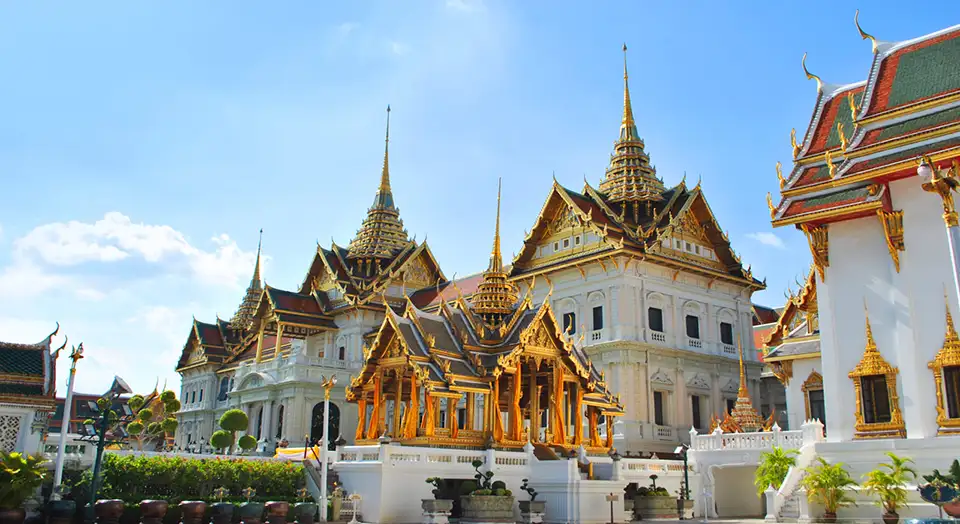
A visit to Wat Phra Kaew offers far more than beautiful architecture. Intricate golden buildings, glittering mosaics, and sacred shrines create an atmosphere of reverence that has attracted pilgrims and visitors for generations. Combined with the neighboring Grand Palace, this remarkable complex provides one of Bangkok’s most rewarding cultural experiences.
Quick Navigation: Jump to a Section
Explore Wat Phra Kaew: Home of the Emerald Buddha Bangkok
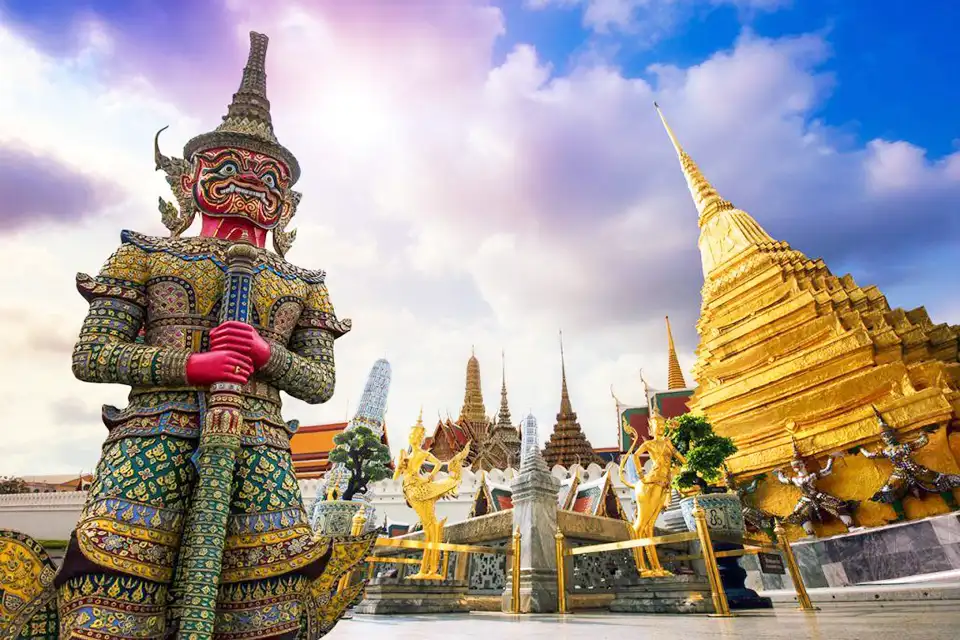
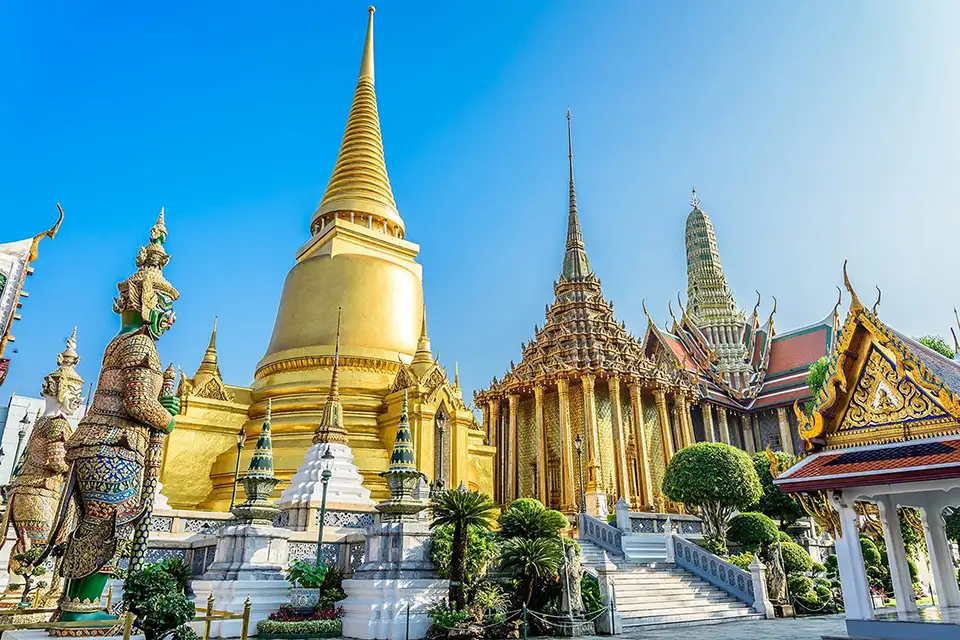
As you enter Wat Phra Kaew, you’ll immediately notice the extraordinary craftsmanship that defines Thailand’s most sacred temple. Towering golden chedis, ornate guardian statues, colorful murals, and detailed mosaic decorations reflect the country’s artistic excellence and deep Buddhist traditions.
Inside the temple sits the Emerald Buddha, a highly revered statue carved from a single piece of green jade rather than emerald. Although only 66 centimeters tall, its spiritual importance is immeasurable. The statue wears one of three elaborate seasonal costumes, each personally changed by the King of Thailand during a royal ceremony marking the beginning of the hot, rainy, and cool seasons. This centuries-old tradition symbolizes the close relationship between the Thai monarchy and Buddhism.
Every corner of Wat Phra Kaew tells a story. From the beautifully painted murals depicting the Ramakien—the Thai national epic—to the dazzling temple roofs that sparkle under the tropical sun, the complex offers endless opportunities for admiration and reflection. Whether you’re interested in history, architecture, photography, or spirituality, this iconic landmark is an essential stop on any Bangkok itinerary.
The History and Legends of the Emerald Buddha
Wat Phra Kaew was established in 1782 by King Rama I when Bangkok became the new capital of Siam. The temple was specifically built to house the Emerald Buddha, which had already traveled across Southeast Asia for centuries before arriving in Bangkok.
According to Thai tradition, the statue was discovered in 1434 after lightning struck a chedi in Chiang Rai, causing its plaster exterior to crack and reveal the beautiful green stone beneath. Although historians believe the statue is carved from jade, the dramatic discovery gave rise to the name “Emerald Buddha,” which remains in use today.
Over the centuries, the sacred image was moved between several kingdoms, including Chiang Mai, Laos, and finally Bangkok, where it became the nation’s most important religious symbol. Today, it continues to serve as a powerful emblem of prosperity, protection, and Thailand’s enduring Buddhist heritage.
Walking through Wat Phra Kaew is more than a sightseeing experience—it’s an opportunity to connect with the history, artistry, and spiritual traditions that have shaped Thailand for generations.
The Emerald Buddha Seasonal Costume Changing
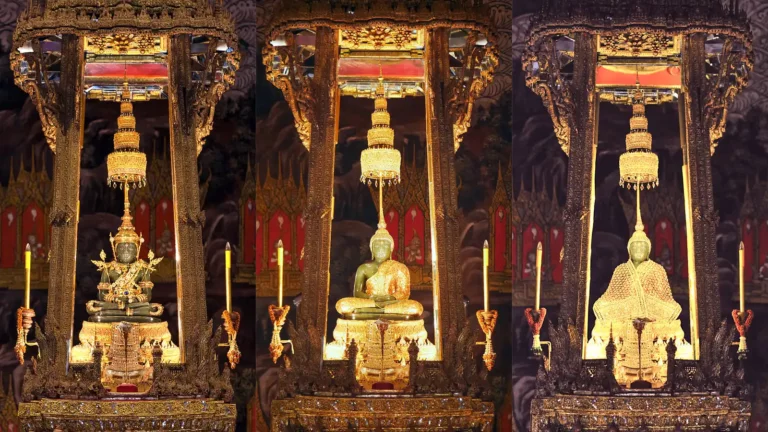
In a ceremony of great reverence, the Emerald Buddha’s ceremonial costumes are changed three times a year—one for each season: Summer, Rainy, and Winter. This ritual is performed only by the King of Thailand, and each custom-made outfit is valued at approximately 3.8 million USD.
During this royal ceremony, a procession of monks and dignitaries accompanies the King, who sprinkles water over the faithful, bestowing good fortune for the upcoming season. The costumes include:
A diamond-encrusted golden robe for the hot season
A solid gold robe for the cool season
A gold-plated monk’s robe with a headdress for the rainy season
A visit to Wat Phra Kaew is more than an opportunity to admire remarkable architecture—it’s also a chance to experience Thailand’s living cultural traditions. Throughout the year, the temple hosts important religious ceremonies and royal events that highlight the country’s deep Buddhist heritage.
Visitors can often observe worshippers making merit, offering flowers and incense, and quietly praying before the Emerald Buddha. These daily rituals provide meaningful insight into the role Buddhism continues to play in Thai society.
If you’re interested in Thai arts and traditions, consider joining a cultural workshop nearby. Many local venues offer classes in traditional crafts such as flower garland making, Thai painting, fruit carving, or umbrella painting. These hands-on experiences allow visitors to gain a deeper appreciation for Thailand’s artistic heritage while creating memorable souvenirs.
Traditional Thai dance performances and classical music are also occasionally held at cultural centers around Bangkok. Pairing your temple visit with one of these performances offers a richer understanding of the country’s history, mythology, and royal traditions.
Map of Grand Palace
Dress Code and Temple Etiquette
As Thailand’s most sacred Buddhist temple, Wat Phra Kaew has a strict dress code that all visitors are expected to follow.
Wear clothing that covers your shoulders and knees. Sleeveless tops, short skirts, ripped jeans, leggings worn alone, and short shorts are not permitted. Comfortable trousers, long skirts, or dresses paired with modest tops are ideal.
If your clothing doesn’t meet the requirements, rental garments are available near the entrance for a small fee.
While exploring the temple grounds, remember these important etiquette guidelines:
Remove hats when entering sacred buildings.
Speak quietly and avoid disruptive behavior.
Never point your feet toward Buddha images.
Follow signs regarding photography, as pictures are prohibited inside certain buildings.
Respect worshippers by keeping a reasonable distance and avoiding interruptions.
Observing these customs helps preserve the peaceful atmosphere and shows respect for local traditions.
When Is the Best Time to Visit?
The Emerald Buddha and Grand Palace are among Bangkok’s most visited attractions, so timing your visit can make a significant difference.
Arriving shortly after opening time, around 8:30 a.m., offers the coolest temperatures and the smallest crowds. Late afternoons are another good option, although some sections may become busier with tour groups.
Weekdays generally provide a more relaxed experience than weekends, while avoiding major Thai public holidays will help you enjoy shorter queues.
The most comfortable season to explore Bangkok is from November through February, when cooler temperatures and lower humidity make walking around the palace complex much more enjoyable. During the rainy season, lush gardens become especially beautiful, although afternoon showers are common, so carrying a lightweight umbrella is recommended.
Discover the Grand Palace
Located beside Wat Phra Kaew, the Grand Palace has served as the ceremonial heart of Thailand since 1782. Although the Thai royal family no longer resides here full-time, the palace continues to host important royal ceremonies and state occasions.
The palace complex is a masterpiece of Thai architecture, combining elegant temples, ceremonial halls, beautifully landscaped courtyards, and richly decorated pavilions. Every building showcases exceptional craftsmanship through intricate carvings, gilded roofs, colorful glass mosaics, and elaborate guardian statues.
One of the architectural highlights is Chakri Maha Prasat Hall, a fascinating blend of traditional Thai roofing and European Renaissance influences. This unique combination reflects Thailand’s openness to international influences while preserving its own cultural identity.
Allow at least two to three hours to explore the palace thoroughly. There is an extraordinary amount to see, and each courtyard reveals new architectural details that reward a slower pace.
Taste Authentic Thai Cuisine Nearby
Exploring Bangkok’s historic district isn’t complete without sampling its famous cuisine.
The streets surrounding the Grand Palace are filled with local restaurants, cafés, and traditional food stalls serving authentic Thai dishes. Popular favorites include Pad Thai, fragrant Green Curry, Tom Yum Goong, grilled satay skewers, and Som Tum, Thailand’s refreshing green papaya salad.
If you’re looking for a relaxed dining experience, riverside restaurants along the Chao Phraya River offer excellent Thai cuisine accompanied by scenic waterfront views.
Don’t leave without trying Mango Sticky Rice, one of Thailand’s most beloved desserts. Sweet ripe mango served with coconut-infused sticky rice perfectly captures the country’s tropical flavors.
Fresh coconut ice cream, Thai milk tea, and tropical fruit smoothies are also ideal refreshments after spending the morning exploring under Bangkok’s warm sunshine.
Celebrate Thailand’s Festivals at the Emerald Buddha
Visiting Wat Phra Kaew during one of Thailand’s traditional festivals adds an extra layer of excitement and cultural immersion to your experience. Throughout the year, important religious celebrations and royal ceremonies bring the temple complex to life with colorful traditions and spiritual significance.
One of the country’s most beautiful festivals is Loy Krathong, celebrated each November during the full moon. People gather to float beautifully decorated baskets made from banana leaves, flowers, and candles on rivers and canals, symbolizing the release of bad luck and the welcoming of new beginnings. While the temple itself remains a place of worship, the festive atmosphere throughout Bangkok creates a magical backdrop for your visit.
Another unforgettable celebration is Songkran, Thailand’s traditional New Year festival held every April. Best known for its lively water fights, Songkran is also a deeply spiritual occasion. Many Thai people visit temples to make merit, offer food to monks, and gently pour scented water over Buddha images as a symbol of purification and good fortune.
If your travel dates are flexible, check Bangkok’s cultural calendar before your trip. Visiting during one of these celebrations offers a unique opportunity to witness Thailand’s traditions in their most vibrant form.
Getting to the Emerald Buddha and Grand Palace
Reaching Wat Phra Kaew is easy thanks to Bangkok’s extensive transportation network.
One of the most scenic options is to take the BTS Skytrain to Saphan Taksin Station, then board a Chao Phraya Express Boat. The river journey provides wonderful views of Bangkok’s historic riverside before arriving near the Grand Palace.
Ride-hailing services such as Grab are another convenient choice, especially if you’re traveling directly from your hotel. Keep in mind that traffic around the historic district can be heavy during rush hours, so allow extra travel time.
Public buses also serve the area, while adventurous travelers may enjoy exploring nearby attractions on foot after arriving. Popular landmarks such as Wat Pho, the Museum of Siam, and the flower market are all within comfortable walking distance.
Best Photography Spots
Few places in Bangkok are as photogenic as Wat Phra Kaew and the Grand Palace.
The temple’s shimmering golden rooftops, colorful ceramic mosaics, and graceful spires create spectacular compositions throughout the day. Early morning light offers soft illumination and fewer visitors, making it the ideal time for photography.
Some of the best viewpoints include:
The entrance courtyard, where golden towers frame the temple beautifully.
The Upper Terrace, home to impressive chedis and royal monuments.
The palace gardens, where manicured landscapes contrast with ornate architecture.
The Chao Phraya River, where boat rides provide panoramic views of Bangkok’s historic skyline.
Remember that photography is prohibited inside the ordination hall housing the Emerald Buddha. Always observe posted signs and respect worshippers during your visit.
Travel Responsibly
Wat Phra Kaew is not only a major tourist attraction but also one of Thailand’s most sacred religious sites. Respectful tourism helps preserve its cultural and historical significance for future generations.
Simple actions can make a meaningful difference:
Dispose of rubbish responsibly.
Stay on designated walkways.
Avoid touching historic structures or decorations.
Speak quietly in sacred areas.
Support local artisans by purchasing authentic handmade souvenirs.
Choosing reusable water bottles and minimizing single-use plastics also helps reduce environmental impact while exploring Bangkok.
Responsible travel ensures that this extraordinary cultural treasure remains protected for years to come.
Fascinating Facts About the Emerald Buddha
Despite its name, the Emerald Buddha is carved from a single piece of green jade.
The statue stands only 66 centimeters (26 inches) tall but is regarded as Thailand’s most sacred Buddhist image.
Three elaborate seasonal costumes are changed by the King of Thailand during official royal ceremonies.
Wat Phra Kaew contains hundreds of detailed murals illustrating the Ramakien, Thailand’s national epic.
The Grand Palace remained the official royal residence for more than 150 years.
Suggested One-Day Itinerary
8:30 a.m. – Begin at Wat Phra Kaew
Arrive early to enjoy cooler temperatures and quieter surroundings. Spend time admiring the Emerald Buddha, exploring the temple grounds, and appreciating the intricate craftsmanship that makes this one of Thailand’s most important religious sites.
10:30 a.m. – Explore the Grand Palace
Continue into the palace complex, visiting Chakri Maha Prasat Hall, ceremonial courtyards, royal buildings, and beautifully landscaped gardens.
1:00 p.m. – Enjoy a Traditional Thai Lunch
Head to a nearby local restaurant and sample classic dishes such as Pad Thai, Massaman Curry, or Tom Yum soup before taking a well-earned break.
2:30 p.m. – Visit Nearby Attractions
Walk to nearby Wat Pho to see the famous Reclining Buddha or visit the Museum of Siam for an interactive look at Thai history and culture.
5:00 p.m. – Stroll Along the Chao Phraya River
Finish your day with a relaxing riverside walk or sunset cruise. Watching Bangkok’s historic temples glow in the evening light is the perfect way to conclude your cultural adventure.
Essential Travel Tips
A few simple preparations will make your visit even more enjoyable:
Carry plenty of drinking water, particularly during Bangkok’s warmer months.
Wear lightweight clothing that meets the temple’s modest dress requirements.
Choose comfortable walking shoes, as you’ll spend several hours exploring extensive palace grounds.
Bring sunscreen, sunglasses, and a hat for additional sun protection.
Keep your belongings secure, especially in crowded areas.
Carry some cash for small purchases, snacks, or local transportation.
A visit to the Emerald Buddha and the Grand Palace is more than sightseeing—it’s an opportunity to experience the history, artistry, and spiritual traditions that have shaped Thailand for centuries. Whether you’re captivated by the dazzling architecture, intrigued by royal history, or inspired by Buddhist culture, this remarkable destination promises memories that will last long after your journey through Bangkok has ended.
FAQs about Wat Phra Kaew or The Temple of The Emerald Buddha
Q1. Is there an entrance fee? Yes. Admission to Wat Phra Kaew is included with your ticket to the Grand Palace complex.
Q2. What are the opening hours? The complex is generally open daily from 8:30 a.m. to 3:30 p.m., although hours may occasionally change during royal ceremonies or national events.
Q3. How much time should I allow? Most visitors spend between two and four hours exploring both Wat Phra Kaew and the Grand Palace.
Q4. Are guided tours available? Yes. Guided tours are available in several languages and provide fascinating insights into Thai history, architecture, royal traditions, and Buddhist symbolism.
Q5. Is the site wheelchair accessible? Many areas are accessible, although some historic buildings include steps and uneven pathways. Visitors requiring assistance should check accessibility information before arriving.
A visit to the Emerald Buddha and the Grand Palace is far more than checking off two famous landmarks. It’s an opportunity to experience Thailand’s rich history, admire world-class architecture, and witness centuries-old Buddhist traditions that continue to shape the nation today. Whether you’re visiting for a few hours or spending a full day exploring Bangkok’s historic district, this remarkable destination promises unforgettable memories and a deeper appreciation of Thailand’s cultural heritage.
5 Must-See Bangkok Temples That Showcase the City at Its Most Beautiful
Bangkok temples offer one of the best ways to experience Thailand’s history, Buddhist traditions, royal heritage, and extraordinary craftsmanship in a single trip. From the glittering towers of Wat Phra Kaew to the riverside beauty of Wat Arun and the peaceful climb to Wat Saket, each temple has its own character.
Bangkok is home to hundreds of temples, but you do not need to visit them all to experience the city’s most memorable religious landmarks. If you are planning your first cultural day in Bangkok, these five temples provide a fascinating introduction to the capital’s architecture, history, and spiritual traditions.
Quick Navigation: Jump to a Section
Quick Answer: Which Bangkok Temples Should You Visit?
If you only have time for a few Bangkok temples, start with these five:
Wat Phra Kaew – the Temple of the Emerald Buddha inside the Grand Palace.
Wat Arun – the iconic riverside Temple of Dawn, famous for its decorated central prang.
Wat Pho – home to the famous Reclining Buddha and a major center of Thai traditional massage.
Wat Ratchanatdaram and Loha Prasat – an architecturally distinctive temple complex near Bangkok’s Old Town.
Wat Saket and the Golden Mount – a hilltop temple offering panoramic views over historic Bangkok.
The Tourism Authority of Thailand recognizes Wat Phra Kaew, Wat Arun, Wat Pho, Wat Saket, and Wat Ratchanatdaram among Bangkok’s important historic and religious attractions.
1. Wat Phra Kaew – Bangkok’s Most Important Royal Temple
Located inside the Grand Palace complex, Wat Phra Kaew is also known as the Temple of the Emerald Buddha. For many international visitors, this is the natural starting point for exploring Bangkok’s royal and religious heritage.
The temple is visually spectacular. Golden architectural details, colorful mosaics, mythical guardian figures, painted surfaces, and elaborate roofs create a complex that feels almost like an open-air museum of traditional Thai craftsmanship.
At the heart of the temple is the Emerald Buddha, one of Thailand’s most revered Buddha images.
What makes Wat Phra Kaew particularly interesting is the way religion and royal history come together. The temple is part of the Grand Palace complex, allowing visitors to experience two major aspects of Thailand’s heritage in one location.
What to see at Wat Phra Kaew
The Emerald Buddha
Intricate golden and colorful architectural details
Traditional Thai murals and decorative elements
Guardian figures and mythological sculptures
The wider Grand Palace complex
Travel tip
Dress respectfully when visiting the Grand Palace and Wat Phra Kaew. Shoulders and knees should be covered, and visitors should avoid tight, transparent, or revealing clothing. The Grand Palace has specific dress requirements, so checking the current rules before arrival is recommended.
BeYourGuides Recommendation #1: Grand Palace Fast-Track Admission Ticket
For travelers who prefer to explore independently, the Grand Palace Fast-Track Admission Ticket is a practical option.
The ticket provides access to the Grand Palace and Wat Phra Kaew while helping visitors avoid the standard ticket queue. Depending on the package, it also includes access to attractions such as the Queen Sirikit Museum of Textiles and the Arts of the Kingdom Museum.
Best for: Independent travelers, first-time visitors, photographers, and travelers who want flexibility.
Wat Phra KaewThe Grand Palace
2. Wat Arun – The Riverside Icon of Bangkok
Few Bangkok temples are as recognizable as Wat Arun.
Standing on the western bank of the Chao Phraya River, Wat Arun is commonly called the Temple of Dawn. Its most recognizable feature is the enormous central prang, decorated with ceramic and porcelain details that create intricate patterns across the surface.
Rather than viewing the temple only from a distance, take time to walk around the complex. Up close, you can see the craftsmanship in much greater detail, including decorative figures, guardian sculptures, and colorful ceramic patterns.
Wat Arun is particularly photogenic because its appearance changes with the light. Morning light creates a softer atmosphere, while late afternoon can highlight the textures of the temple’s decorative surfaces.
The Tourism Authority of Thailand describes Wat Arun as an ancient temple dating back to the Ayutthaya period and highlights its distinctive architecture decorated with porcelain and other materials.
What to do at Wat Arun
Walk around the temple complex
Photograph the central prang
Look closely at the porcelain and ceramic decoration
See the guardian figures
Cross the Chao Phraya River by ferry
Combine Wat Arun with Wat Pho and the Grand Palace
BeYourGuides Recommendation #2: Grand Palace, Wat Arun & Big Buddha Day Trip
This is the primary BeYourGuides product recommendation for this article.
The Grand Palace Day Trip: Grand Palace, Wat Arun & Big Buddha Day Trip combines several major Bangkok landmarks into one organized experience. The itinerary includes Wat Arun, a public ferry ride, the Grand Palace and Wat Phra Kaew, followed by the large Buddha image at Wat Paknam.
The experience is available as a join-in or private option, with an English-speaking guide and air-conditioned transportation. Selected packages also include lunch by the river. Current BeYourGuides information lists the experience at approximately 5–7 hours.
Just a short walk from the Grand Palace, Wat Pho provides a different perspective on Bangkok’s religious and cultural heritage.
The temple is famous for its enormous Reclining Buddha, but there is much more to explore beyond the statue itself. The complex contains numerous chedis, murals, sculptures, courtyards, and decorative details.
One particularly beautiful feature is the mother-of-pearl decoration on the Buddha’s feet. The temple grounds also contain the famous four large chedis associated with different reigns, creating one of the most distinctive architectural scenes in Bangkok.
Wat Pho is also closely associated with traditional Thai massage. For travelers interested in Thai wellness traditions, the temple provides an opportunity to connect cultural heritage with an experience that remains part of Thailand’s living traditions.
The Tourism Authority of Thailand highlights the Reclining Buddha, mother-of-pearl decoration, murals, Chinese sculptures, and the four large royal chedis as important features of Wat Pho.
What to see at Wat Pho
The Reclining Buddha
Mother-of-pearl details on the Buddha’s feet
The four royal chedis
Traditional murals
Chinese statues and decorative sculptures
Historic temple courtyards
BeYourGuides Recommendation #3: Grand Palace, Wat Pho & Wat Arun Tour
If your priority is seeing the three classic cultural landmarks of Bangkok’s historic center, a Grand Palace, Wat Pho & Wat Arun itinerary is particularly convenient.
The three attractions work naturally together. Start with the Grand Palace and Wat Phra Kaew, continue to Wat Pho, and then cross the river to Wat Arun.
This route also reduces the need to plan several separate transfers. BeYourGuides currently features this combination among its Bangkok cultural experiences.
Best for: First-time visitors who want Bangkok’s major temples in a single sightseeing route.
4. Wat Ratchanatdaram and Loha Prasat – An Architectural Treasure in Bangkok’s Old Town
For travelers who want to see something different from Bangkok’s most famous golden temples, Wat Ratchanatdaram is worth adding to the itinerary.
The temple is best known for Loha Prasat, often translated as the Metal Castle. Its unusual multi-level structure immediately stands apart from the traditional temple silhouettes found elsewhere in the city.
Located near the Giant Swing and the historic Rattanakosin area, the temple is also convenient to combine with other Old Town attractions.
One of the most interesting things about this area is the contrast between major tourist landmarks and quieter cultural spaces. You can visit the temple, explore the surrounding historic streets, and continue toward Wat Saket or the Giant Swing without making a long journey across Bangkok.
BeYourGuides’ Bangkok travel content also identifies Loha Prasat and Wat Ratchanatdaram among the city’s notable cultural and architectural attractions.
What to look for
The distinctive Loha Prasat structure
Multiple architectural levels
Buddhist decorative details
Historic Old Town surroundings
Nearby Giant Swing and Rattanakosin attractions
BeYourGuides Recommendation #4: Private Tour Guide Bangkok with Car
If you want to combine several Old Town attractions in one customized itinerary, consider the Private Tour Guide Bangkok with Car experience.
A private itinerary can include the Grand Palace, Wat Pho and Wat Arun, while allowing additional time for attractions such as Loha Prasat, Wat Saket, Pak Khlong Talat, Chinatown, or other places that match your interests.
The BeYourGuides private tour information specifically describes flexible combinations around the Grand Palace, Wat Pho and Wat Arun, with options to add other Bangkok experiences.
Best for: Families, private groups, photographers, repeat visitors, and travelers who prefer a flexible itinerary.
5. Wat Saket – Climb the Golden Mount for a Different View of Bangkok
If you want to experience Bangkok temples from above, make time for Wat Saket.
Known as the Golden Mount, Wat Saket sits on a man-made hill in Bangkok’s Old Town. Reaching the top involves a staircase of 344 steps, but the gradual climb is part of the experience.
As you ascend, the surroundings become noticeably greener and quieter. At the summit, the Golden Mount provides views across Bangkok’s historic district.
The experience is very different from visiting a large royal temple. Instead of moving from one ornate building to another, the visit becomes a short walk, climb, and viewpoint experience.
The Tourism Authority of Thailand specifically highlights Wat Saket’s 344-step spiral staircase and the sacred area at the top of Phu Khao Thong.
What to do at Wat Saket
Walk around the Golden Mount
Climb the 344 steps
Enjoy views of Bangkok’s Old Town
See the golden chedi at the summit
Combine the temple with nearby historic neighborhoods
Visit around cooler parts of the day
BeYourGuides Recommendation #5: Super Galaxy Chao Phraya River Cruise
Wat Saket is inland, so a river cruise is not a direct temple tour. However, it makes an excellent second experience after exploring Bangkok’s historic temples.
The Super Galaxy Cruise offers another way to appreciate Bangkok’s cultural landscape. The cruise travels along the Chao Phraya River, passing landmarks including Wat Arun and the Grand Palace while offering dinner, live entertainment, and city views.
The current BeYourGuides itinerary lists ICONSIAM as the departure point and includes views of Wat Arun, the Grand Palace, and other riverside landmarks during the cruise.
Best for: Couples, families, groups, photographers, and travelers looking for an evening experience after sightseeing.
How to Visit Bangkok’s Temples in One Day
If your Bangkok itinerary is short, you can combine several of these landmarks efficiently.
Morning: Grand Palace and Wat Phra Kaew
Begin early with the Grand Palace and Wat Phra Kaew. Allow enough time to appreciate the architecture rather than simply taking photographs and leaving.
Late Morning: Wat Pho
Walk from the Grand Palace to Wat Pho. This is one of the easiest temple combinations in Bangkok because the two attractions are located close together.
Afternoon: Cross the Chao Phraya River to Wat Arun
Take a short ferry ride across the river and explore Wat Arun. The river crossing itself becomes part of the sightseeing experience.
Late Afternoon: Wat Ratchanatdaram or Wat Saket
If you still have energy, continue into Bangkok’s Old Town. Wat Ratchanatdaram and Loha Prasat are good choices for architecture, while Wat Saket adds a viewpoint and a little exercise.
Evening: Chao Phraya River Cruise
Finish the day on the river. From the water, Bangkok’s temples look completely different, particularly when the historic buildings are illuminated after dark.
Best Bangkok Temple Tours at a Glance
Experience
Main Highlights
Best For
Grand Palace Fast-Track Admission Ticket
Grand Palace, Wat Phra Kaew, flexible visit
Independent travelers
Grand Palace, Wat Arun & Big Buddha Day Trip
Wat Arun, Grand Palace, Emerald Buddha, Big Buddha, river experience
First-time visitors
Grand Palace, Wat Pho & Wat Arun Tour
Three iconic cultural landmarks
Classic Bangkok sightseeing
Private Tour Guide Bangkok with Car
Flexible temple and Old Town itinerary
Families and private groups
Super Galaxy Chao Phraya River Cruise
Wat Arun, Grand Palace views, dinner and entertainment
Evening sightseeing
BeYourGuides currently lists these experiences across its Bangkok cultural, sightseeing, private-tour, and river-cruise offerings.
Temple Etiquette in Bangkok
When visiting Buddhist temples, treat the site as a place of worship rather than simply a tourist attraction.
A few simple rules make the experience more respectful:
Cover your shoulders and knees.
Avoid transparent or very tight clothing.
Remove shoes where signs request it.
Keep your voice low inside prayer areas.
Do not touch Buddha images or religious objects unless permitted.
Follow photography rules.
Avoid blocking worshippers while taking photographs.
Follow instructions from temple staff.
Rules can differ between temples, so check the requirements for each location before visiting. The Grand Palace and Wat Phra Kaew have particularly strict dress requirements.
FAQs about Bangkok Temples
Q1: What are the most beautiful Bangkok temples? Some of the most visually distinctive Bangkok temples include Wat Phra Kaew, Wat Arun, Wat Pho, Wat Ratchanatdaram with Loha Prasat, and Wat Saket. They represent different architectural styles and experiences, from royal temple complexes and riverside monuments to historic Old Town viewpoints.
Q2: Which Bangkok temple should I visit first? For a first cultural visit, Wat Phra Kaew and the Grand Palace provide an introduction to Thailand’s royal and religious heritage. Wat Pho and Wat Arun can then be added to create a classic historic Bangkok route.
Q3: Can I visit Wat Pho, Wat Arun and Wat Phra Kaew in one day? Yes. These three attractions are commonly combined into one Bangkok sightseeing itinerary. Wat Pho is close to the Grand Palace, while Wat Arun is across the Chao Phraya River. BeYourGuides offers experiences that combine major landmarks in this historic area.
Q4: What should I wear to Bangkok temples? Wear modest clothing that covers your shoulders and knees. Long trousers, long skirts, and shirts with sleeves are practical choices. The Grand Palace and Wat Phra Kaew have especially strict requirements.
Q5: What is the best way to see Bangkok temples? It depends on your travel style. Independent travelers can visit individual temples using Bangkok’s public transport and river boats. Travelers who want historical explanations and easier logistics may prefer a guided temple tour. A private tour is another option when flexibility is important.
Q6: Is Wat Saket worth adding to a Bangkok itinerary? Wat Saket offers a different experience from Bangkok’s larger temple complexes. The Golden Mount climb provides a combination of greenery, religious architecture, and views over the Old Town. The Tourism Authority of Thailand highlights the 344-step route as one of its key features.
Q7: Can I see Bangkok temples from the Chao Phraya River? Yes. River cruises can provide views of major riverside landmarks including Wat Arun and the Grand Palace. This is particularly attractive in the evening when the riverside architecture is illuminated.
Experience Bangkok Through Its Temples
The beauty of Bangkok temples is not limited to golden roofs and spectacular photographs. Each site offers a different window into Thailand’s history, Buddhist traditions, architecture, and everyday cultural life.
Wat Phra Kaew connects Bangkok’s religious heritage with the Grand Palace. Wat Pho combines sacred architecture with the famous Reclining Buddha and traditional Thai massage. Wat Arun brings together intricate craftsmanship and the Chao Phraya River. Loha Prasat reveals a less familiar side of Bangkok’s Old Town, while Wat Saket rewards visitors with a climb and a view over the historic city.
For travelers who want to experience several major landmarks without spending time organizing every transfer, a guided itinerary such as the Grand Palace, Wat Arun & Big Buddha Day Trip is an easy way to combine culture, sightseeing, and transportation in one experience.
For independent travelers, the Grand Palace Fast-Track option provides more freedom, while a private guide can create a more flexible temple-focused day. In the evening, a Chao Phraya River cruise offers a completely different perspective of Bangkok’s illuminated riverside landmarks.
Whichever route you choose, these Bangkok temples offer an unforgettable introduction to the cultural heart of Thailand.
Essential Tips for Visiting Wat Arun Bangkok: A Beautiful Temple Experience You Shouldn’t Miss
Wat Arun Bangkok is more than a beautiful temple beside the Chao Phraya River. It is one of the city’s most recognizable cultural landmarks, combining religious significance, historic architecture, intricate decoration and spectacular riverside scenery.
Quick Navigation: Jump to a Section
Known internationally as the Temple of Dawn, Wat Arun stands on the Thonburi side of the Chao Phraya River. Its distinctive central prang is covered with delicate ceramic and porcelain decoration that catches the sunlight throughout the day. The temple’s location also creates one of the most memorable views in Bangkok, especially when seen from the river or from the opposite bank.
For first-time visitors, however, knowing a few practical details can make the experience much more enjoyable. When should you go? What should you wear? How do you cross the river? How much time should you allow? And is it better to visit independently or with a local guide?
Here is a practical guide to help you make the most of your visit.
1. Choose the Right Time of Day
Timing can completely change your experience at Wat Arun.
Early morning is a wonderful option for travelers who want a quieter atmosphere and softer light. It can also be more comfortable before Bangkok’s daytime heat becomes intense.
Late afternoon is another excellent choice. The changing sunlight highlights the detailed patterns of the central prang and creates beautiful opportunities for photography.
If you visit around sunset, remember that the temple itself closes in the evening. For this reason, sunset photography is often best enjoyed from the opposite side of the Chao Phraya River or from a river cruise.
The official Wat Arun information currently lists opening hours as 8:00 AM to 6:00 PM daily.
2. Allow More Than Just 30 Minutes
You can walk around the main areas relatively quickly, but rushing through Wat Arun means missing many of its details.
Allow approximately 1–2 hours if you want enough time to:
Admire the central prang
Study the ceramic and porcelain decorations
Explore the surrounding temple buildings
Visit the ordination hall
See guardian figures and religious artwork
Take photographs
Enjoy views toward the Chao Phraya River
The architecture rewards slow observation. Look closely at the decorative patterns rather than viewing the temple only from a distance.
3. Dress Respectfully for a Buddhist Temple
Wat Arun remains an active Buddhist place of worship, so visitors should dress respectfully.
As a general rule, shoulders and knees should be covered. Avoid very short shorts, revealing tops and transparent clothing. A lightweight scarf or cover-up can be useful if you are traveling around Bangkok in hot weather.
Comfortable clothing is especially important if you plan to explore the site for an extended period.
The official Wat Arun information also emphasizes conservative dress and notes that clothing for visitors who are not appropriately dressed can be rented at the temple.
4. Make the Journey Part of the Experience
One of the best things about visiting Wat Arun is the journey itself.
Because the temple stands beside the Chao Phraya River, arriving by boat gives you a very different perspective from arriving by road.
One popular route is to travel toward Tha Tien Pier and take the short cross-river ferry to Wat Arun. Another option is to use a Chao Phraya boat service that stops directly at the Wat Arun area.
The Tourism Authority of Thailand also identifies boat travel and the river as important ways to experience Bangkok’s riverside attractions.
If you have never experienced Bangkok by river before, this simple boat ride can become one of the highlights of your temple visit.
5. Look Beyond the Famous Central Prang
The central prang is undoubtedly the star attraction, but don’t stop there.
Walk around the complex and look for smaller architectural details, guardian sculptures, decorative figures and Buddhist imagery.
Wat Arun’s visual character comes from layers of craftsmanship. Ceramic fragments, colorful patterns and sculptural elements create a surface that looks completely different when viewed from close range.
The temple has also undergone significant restoration over the years, helping preserve its distinctive appearance for future generations.
6. Combine Wat Arun with Bangkok’s Historic Landmarks
Wat Arun works especially well as part of a larger Bangkok cultural itinerary.
A classic route can include:
Grand Palace → Wat Pho → Chao Phraya River → Wat Arun
The Grand Palace and Wat Phra Kaew introduce visitors to Thailand’s royal and religious heritage, while Wat Pho offers another important perspective on Bangkok’s Buddhist culture.
Crossing the river to Wat Arun then provides a completely different architectural setting.
The Tourism Authority of Thailand lists Wat Arun, Wat Pho and Wat Phra Kaew among Bangkok’s important historic and religious attractions.
7. Consider a Guided Bangkok Temple Tour
You can certainly visit Wat Arun independently. However, travelers interested in history and culture may get much more from the experience with a knowledgeable local guide.
A guide can explain the symbolism behind the architecture, introduce the religious significance of different areas and help organize transportation between major attractions.
For first-time visitors who want to see several important landmarks in one day, a guided itinerary can also reduce the stress of navigating Bangkok’s busy streets and river crossings.
BeYourGuides Recommendation #1: Grand Palace, Wat Arun & Big Buddha Day Trip
This is the strongest BeYourGuides recommendation for travelers who want to make Wat Arun part of a complete Bangkok sightseeing day.
The Grand Palace Day Trip: Grand Palace, Wat Arun & Big Buddha Day Trip combines Wat Arun with the Grand Palace, a river crossing and the large Buddha image at Wat Paknam. Depending on the selected package, travelers can also enjoy lunch by the river.
The experience is available as a join tour or private option, with an English-speaking guide and air-conditioned transportation. Current BeYourGuides information lists the experience at approximately 5–7 hours, with several package choices.
Best for: First-time visitors, families, couples and travelers who want several major Bangkok landmarks in one day.
There is another way to appreciate Wat Arun: don’t visit the temple at all.
Instead, see it from the water.
A Bangkok river cruise gives you a wider perspective of the temple and allows you to photograph Wat Arun together with the river, bridges and Bangkok skyline.
This becomes particularly atmospheric in the evening when the riverside landmarks are illuminated.
BeYourGuides Recommendation #2: Super Galaxy Cruise on the Chao Phraya River
For travelers who want to experience Bangkok from the water, the Super Galaxy Cruise is a fantastic way to enjoy the Chao Phraya River while taking in the city’s most famous riverside landmarks.
Step aboard the impressive Super Galaxy and enjoy an evening cruise surrounded by the lights of Bangkok. As the boat moves along the Chao Phraya River, passengers can admire iconic sights such as Wat Arun, the Grand Palace, Wat Pho and other historic riverside landmarks from a completely different perspective.
Best for: Couples, families, groups, first-time visitors and travelers looking for a memorable Bangkok evening with dinner, entertainment and riverside sightseeing.
BeYourGuides Recommendation #3: Royal Princess Chao Phraya River Cruise
The Royal Princess Chao Phraya River Cruise is another option for travelers who want to experience Bangkok after sightseeing hours.
The relaxed cruise atmosphere makes it easy to enjoy the city without walking through the heat, while the river provides an excellent viewing platform for Bangkok’s historic waterfront.
Best for: Couples, families and travelers looking for an easy evening activity.
BeYourGuides Recommendation #6: Planet Cruise on the Chao Phraya River
The Planet Cruise on the Chao Phraya River offers both sunset and dinner cruise options from Asiatique The Riverfront.
The route can include Wat Arun, the Grand Palace, ICONSIAM and other riverside landmarks. The sunset departure is particularly appealing to photographers who want to see Bangkok during the transition from daylight to evening.
Best for: Sunset lovers, couples, photographers and travelers staying near Asiatique.
9. Add a Private Bangkok Tour for Greater Flexibility
If you don’t want to follow a fixed sightseeing schedule, a private Bangkok tour can be a better option.
A private guide and car make it easier to adjust the pace according to your interests. You might spend more time photographing Wat Arun, visit Wat Pho afterward, stop for lunch, explore a local market or add a canal experience.
BeYourGuides Recommendation #8: Private Tour Guide Bangkok with Car
The BeYourGuides private Bangkok approach can combine major landmarks such as the Grand Palace, Wat Pho and Wat Arun with additional experiences chosen around your interests.
This is particularly useful for families, older travelers, photographers and private groups who prefer a flexible itinerary rather than a fixed group schedule.
Best for: Private groups, families, photographers and travelers who want a customized Bangkok experience.
Wat Arun may be your main reason for visiting the riverside, but Bangkok offers plenty of experiences to continue your day.
BeYourGuides Recommendation #9: Hidden Gems Guided Food Tour by Tuk Tuk
After spending time exploring temples, experience another side of Bangkok through food.
The Hidden Gems Guided Food Tour by Tuk Tuk takes travelers away from the standard sightseeing route and into Bangkok’s local food culture.
Traveling by tuk-tuk adds another classic Bangkok experience, while a guide can help visitors understand what they are eating and where local people enjoy their food.
BeYourGuides currently lists this experience as a four-hour Bangkok tour.
Best for: Food lovers, adventurous travelers and repeat visitors.
BeYourGuides Recommendation #10: Cooking Class with Market Visit & Tuk Tuk Experience
For travelers who want to go beyond eating Thai food, the Cooking Class with Market Visit & Tuk Tuk Experience combines a local market visit, transportation by tuk-tuk and hands-on Thai cooking.
It is an excellent complement to a temple-focused morning because it introduces a different part of Thai culture through ingredients, cooking techniques and everyday food traditions.
Best for: Families, food enthusiasts and travelers who enjoy hands-on activities.
What are the opening hours of Wat Arun? Wat Arun is currently listed as open daily from 8:00 AM to 6:00 PM. Always check the latest information before traveling because temple schedules can occasionally change.
How much is the Wat Arun entrance fee? The current Wat Arun website lists an adult admission fee of THB 200. Because entrance fees can change, visitors should verify the latest price before their trip.
What should I wear to Wat Arun? Dress modestly. Cover your shoulders and knees, and avoid transparent or revealing clothing. As a Buddhist temple, Wat Arun deserves the same respect as other important religious sites in Thailand.
How do I get to Wat Arun? You can reach Wat Arun by road or by boat. One popular option is to travel to Tha Tien and take the short cross-river ferry. Boat services can also provide direct access to the Wat Arun area.
Can I visit Wat Arun and the Grand Palace on the same day? Absolutely. In fact, combining Wat Arun with the Grand Palace and Wat Pho is one of the most efficient ways to experience Bangkok’s historic heart.
Is Wat Arun worth visiting? Yes. Wat Arun combines architecture, religion, history and the Chao Phraya River in one location. It is especially rewarding for travelers interested in photography, Thai culture and historic Bangkok.
Wat Arun Bangkok deserves a place on almost every first-time Bangkok itinerary. Its striking prang, riverside setting and intricate craftsmanship make it one of the city’s most memorable landmarks.
For independent travelers, visiting early or late, dressing respectfully and arriving by boat can make the experience more enjoyable. For travelers who want deeper cultural context and easier transportation, a guided Bangkok temple tour can turn a beautiful sightseeing stop into a much richer experience.
And if you want to see Wat Arun from another perspective, continue your journey onto the Chao Phraya River with a sunset or dinner cruise.
Whether you stand beneath the temple’s intricate porcelain decoration or watch its silhouette from the water, Wat Arun Bangkok offers one of the most unforgettable ways to experience the cultural heart of Thailand.