


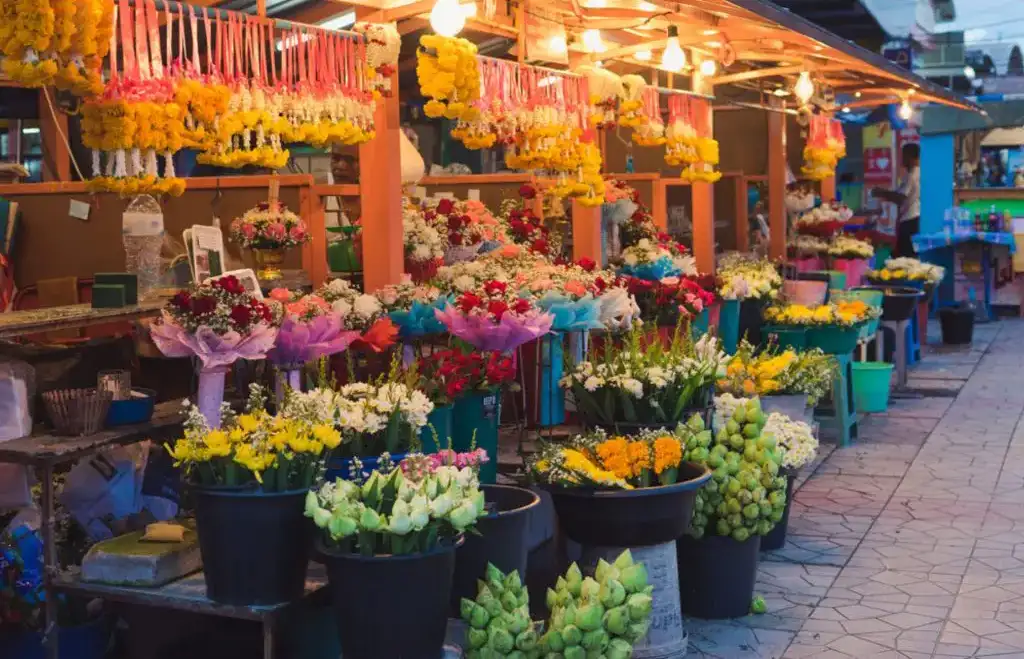
Only in Bangkok fresh and flower markets do you catch the scent of orchids at midnight and the colour of hundreds of marigolds at 4 a.m.
BeYourGuides.com
Bangkok Flower Markets – Sensory Experiences Indoors
Bangkok flower markets are a magical refuge during the rainy season. When skies are grey and sudden downpours frequent, markets like Pak Khlong Talat, Khlong Toei, and Taling Chan offer indoor or semi-covered sensory feasts of fragrance, colour, and flavour. Below is your guide to timing, what to expect, how to get there, and how to experience these places like a local.
Quick Navigation: Jump to a Section
What Makes These Markets Perfect for Rainy Days
- Covered or partly roofed areas protect you from rain while letting you still soak in smells and scenes.
- Fresh produce and flowers arrive daily (or even nightly), meaning vibrant colours and rich scents are at their best.
- Less tourist crowding during rain, especially early morning or just after heavy showers.
- Authentic local life: vendors packing and arranging flowers, shoppers selecting herbs and spices, families buying fresh food.
Key Markets & What to Expect
○ Pak Khlong Talat – The Heart of Bangkok’s Flower World
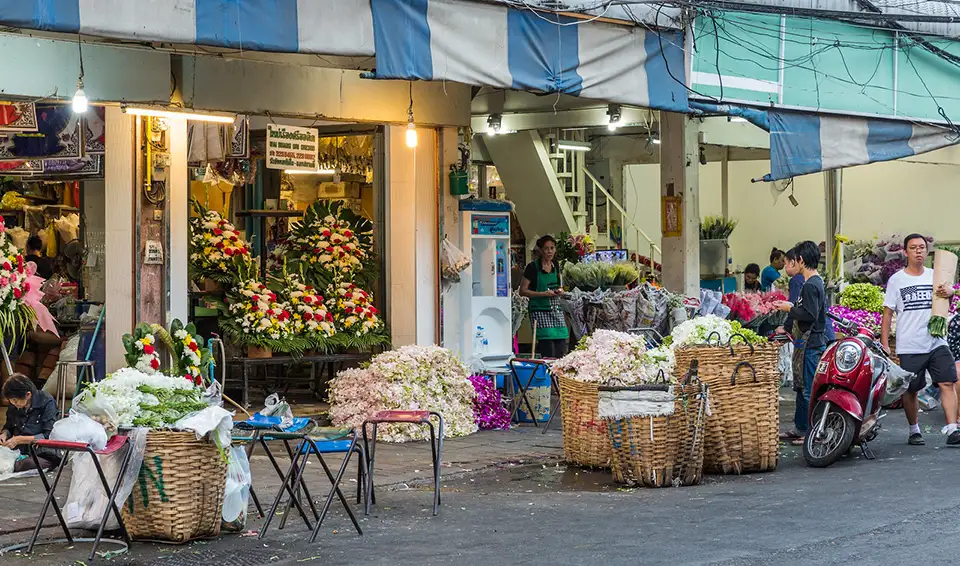
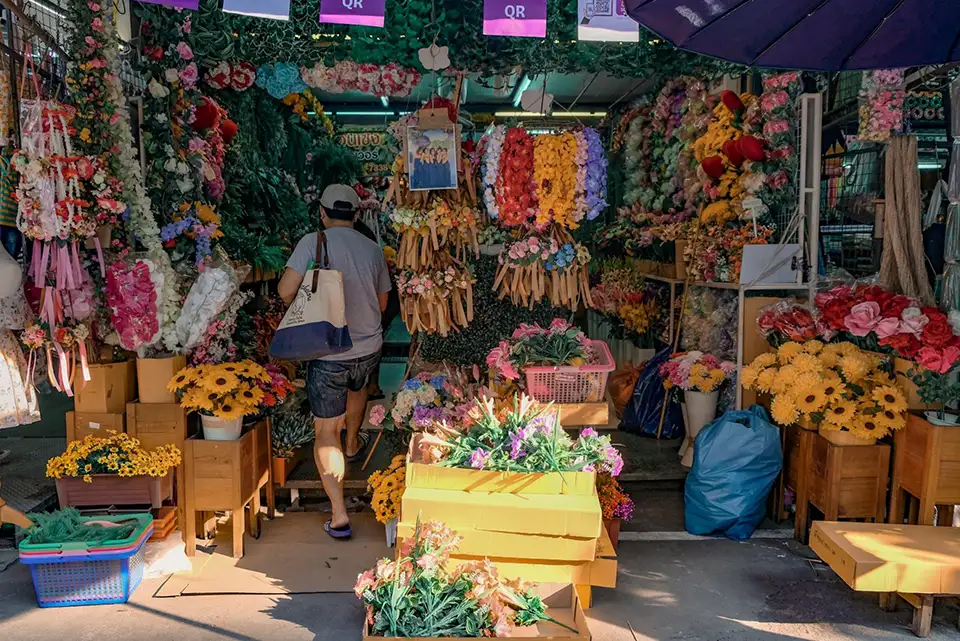
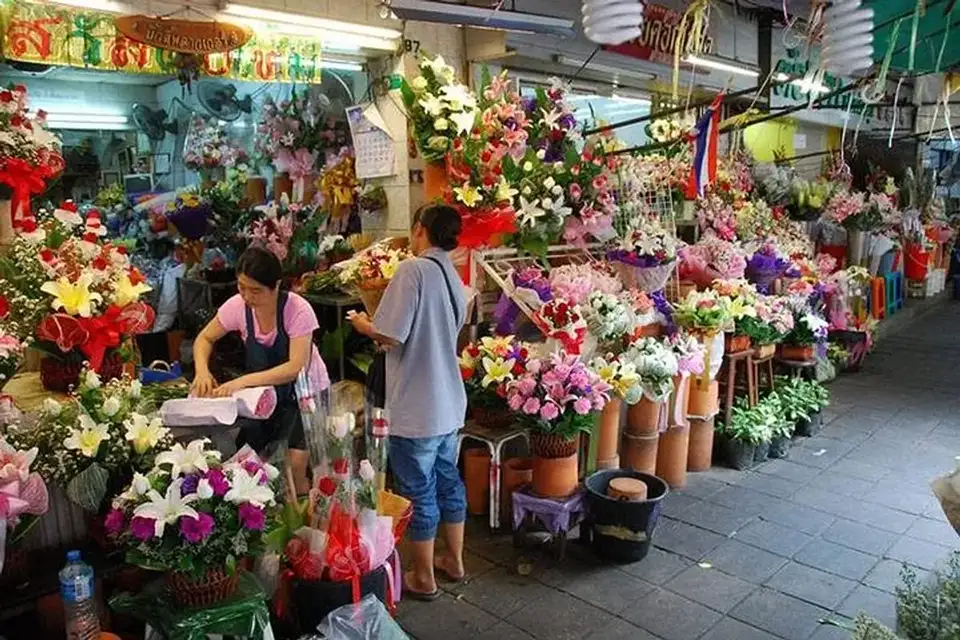
Pak Khlong Talat is the most famous of all Bangkok fresh and flower markets. Often called the “24-hour Flower Market,” it’s where millions of blossoms change hands every day.
- Atmosphere: The market feels like a living canvas—garlands of jasmine strung by hand, heaps of orchids in purple and white, and marigold chains glowing yellow under fluorescent lights.
- Cultural Note: Many flowers here are destined for temples, shrines, and festivals. You’ll see monks or local vendors purchasing large bundles for religious offerings.
- Traveler Tip: Visit after midnight for the most authentic vibe, when trucks from across Thailand arrive and sellers prepare bouquets in bulk. This is when the scents are strongest and the alleys busiest with locals, not tourists.
- Why It’s Special in Rain: Rain refreshes the streets and makes petals glisten. Sheltered tin roofs and narrow lanes keep visitors mostly dry, so you can wander while the monsoon beats outside.
○ Khlong Toei Fresh Market – Bangkok’s Largest Wet Market
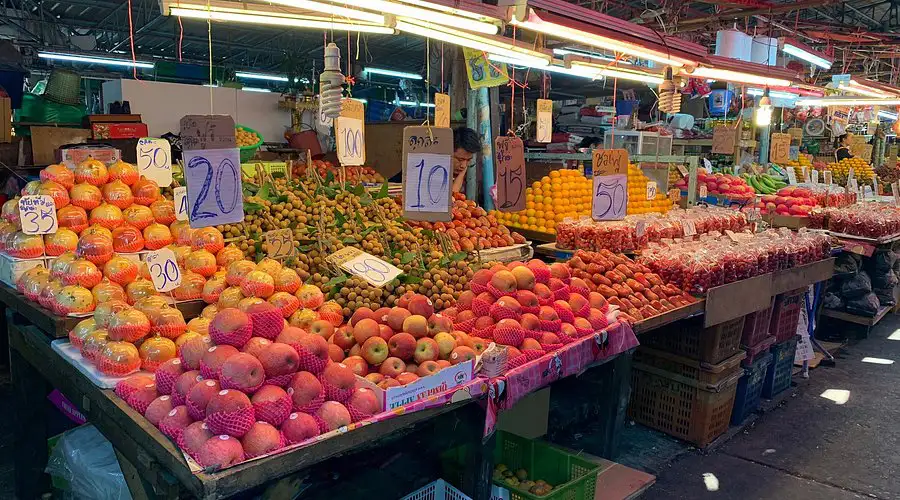
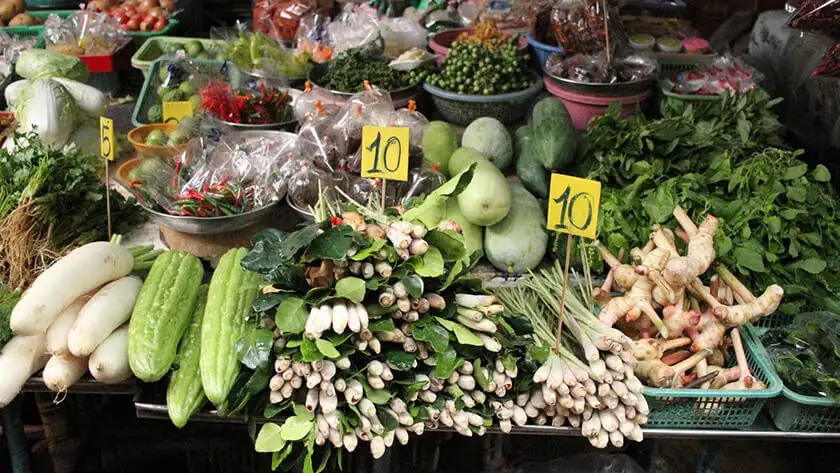
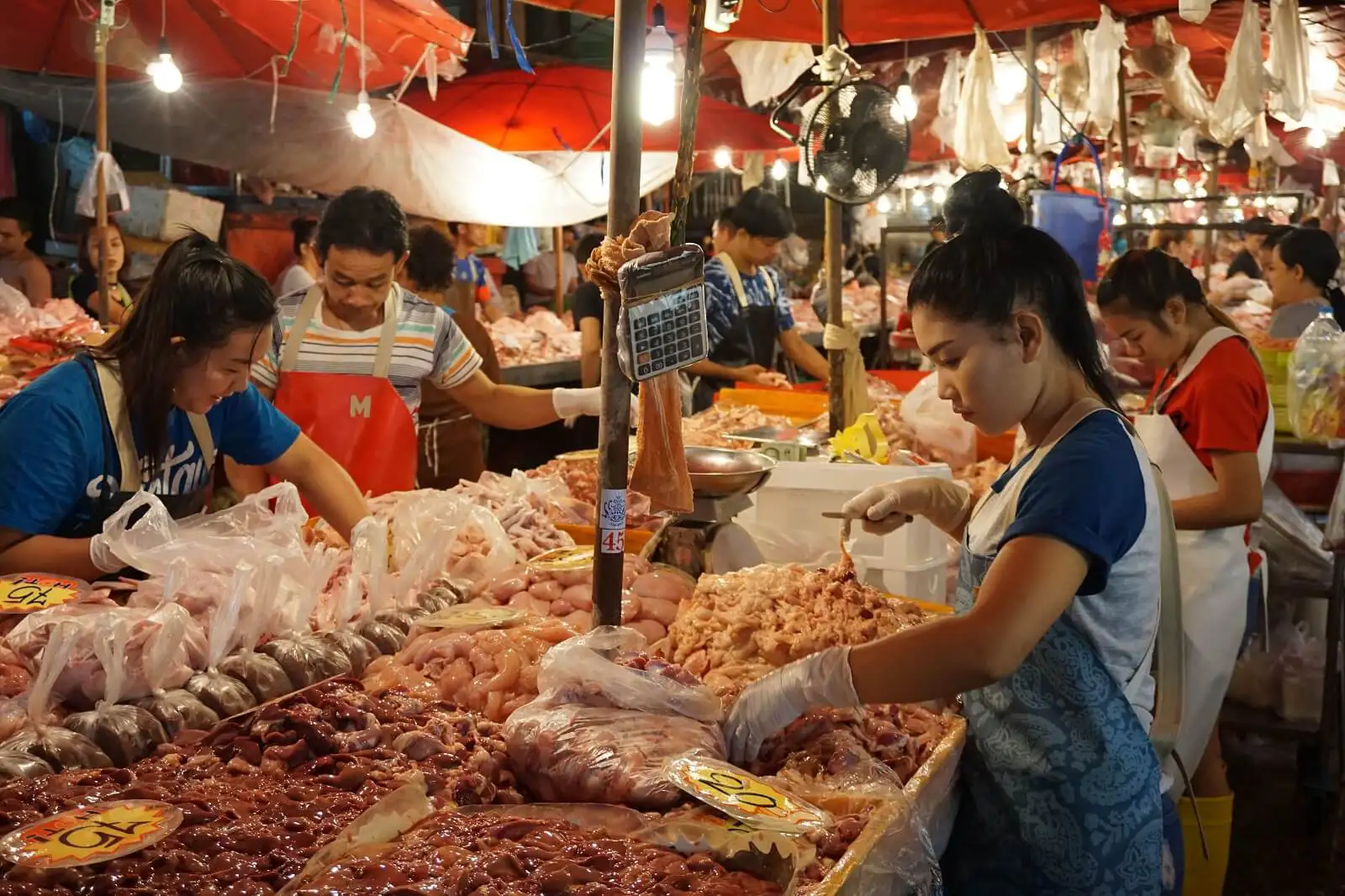
If Pak Khlong Talat is about flowers, Khlong Toei is about food. It’s the largest and busiest fresh market in Bangkok, a true immersion into local daily life.
- Atmosphere: Organized chaos—shoppers bargaining loudly, vendors chopping meat, stalls stacked with tropical fruits like durian, mangosteen, and rambutan. The air is thick with the scent of herbs, spices, and grilled food.
- Scale: Covering multiple blocks, it’s considered the “food supply center” of Bangkok. Restaurants, street vendors, and families all source ingredients here.
- Traveler Tip: Wear comfortable closed shoes—floors can be wet. Photography lovers will find endless scenes of market life: fish packed on ice, mountains of chili peppers, and smiling vendors.
- Why It’s Special in Rain: Indoor and semi-covered sections make it a surprisingly good rainy-day spot. After heavy showers, the air feels cooler, and produce looks freshly washed by nature.
○ Taling Chan Floating Market – Weekend Riverside Escape
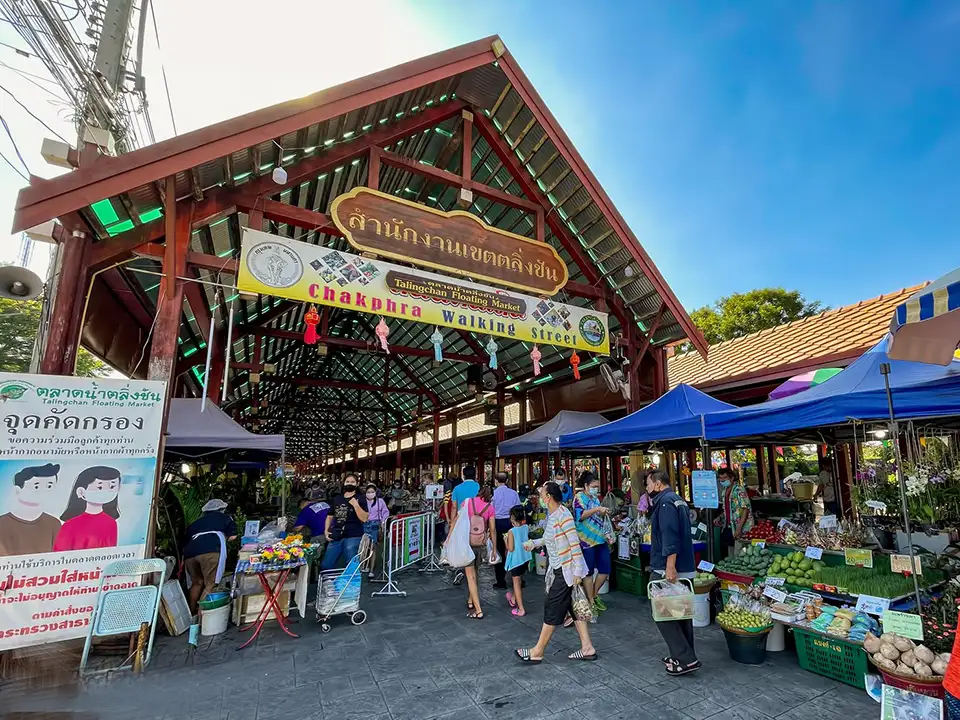
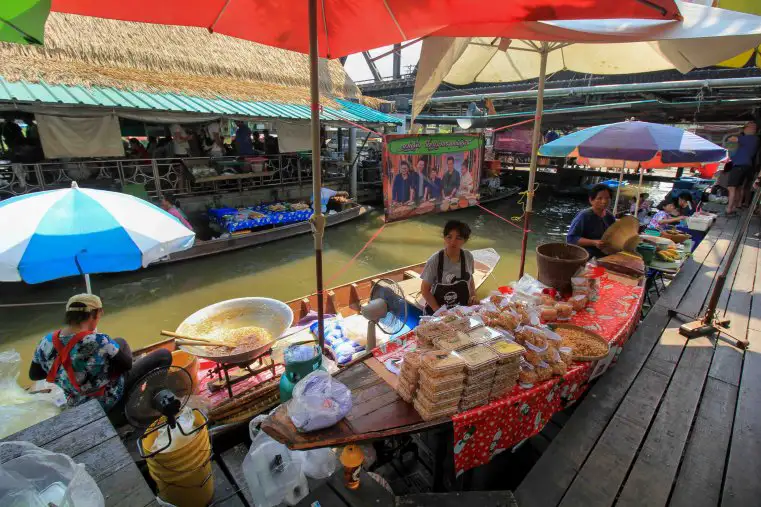
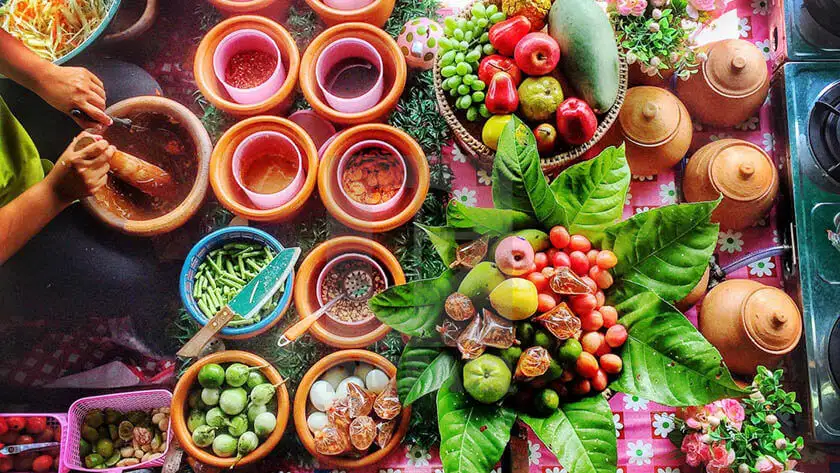
Located on Bangkok’s western edge, Taling Chan Floating Market combines riverside calm with a lively food scene. Unlike Damnoen Saduak (the famous touristy floating market outside Bangkok), Taling Chan is smaller, more authentic, and easier to reach.
- Atmosphere: Imagine wooden boats tied along the canal, each loaded with grilled fish, sticky rice, and tropical fruit. Families gather at long communal tables under roofed pavilions, eating freshly cooked meals while listening to live Thai music.
- Cultural Note: You’ll also find plant nurseries, handicrafts, and fruit orchards nearby. It feels more like a neighborhood gathering than a staged tourist attraction.
- Traveler Tip: Best visited in the morning (8–11 a.m.) when the market is lively, and before rain showers build up in the afternoon. Combine it with a short boat ride along Bangkok’s “klongs” (canals) to see traditional wooden houses.
- Why It’s Special in Rain: Covered eating areas let you enjoy steaming dishes while rain taps on the roof, creating a cozy, local vibe. Few things beat eating grilled river prawns with the sound of monsoon rain in the background.
Tips for Visitors: Rainy-Season Smart Moves
| Tip | Why it helps |
| Bring waterproof gear (umbrella, rain poncho, closed-toe shoes) | Protects you walking between stalls |
| Visit markets early morning | Cooler, fresher, less rain-delay, best light for photos |
| Keep small cash (THB) | Many sellers don’t use cards; coins help with small purchases |
| Pack a plastic bag or two | To protect electronics / camera during sudden downpours |
| Choose markets with more covered sections | Pak Khlong Talat and parts of Khlong Toei are better for this |
A Sample Half-Day Itinerary (Rainy Morning)
- Start at Pak Khlong Talat at ~ 3:30 a.m. Catch the flower trucks arriving, watch vendors string jasmine.
2. Move to Khlong Toei by 6:30 a.m. for fresh fish, fruits, and breakfast from street stalls under cover.
3. Rest at a café in nearby Chao Phraya-river side (Waterfront areas have many good cafés) until ~10:00 a.m.
4. Wrap up at Taling Chan Floating Market (if it’s weekend) for lunch on a boat or under shade, sampling grilled fish, sticky rice, etc., before heading back.
Images of the Senses
- A huge stall of orchids drenched in morning dew, petals glistening.
- The heady scent of jasmine and marigold mixed with earth.
- Sizzling street food under tin roofs, steam rising, knives chopping fresh herbs.
- Rain-splattered tin sheeting, reflections, water pooling in narrow lanes.
Why These Markets Outshine Indoor Malls During Rain
- Authenticity & local life vs polished, commercial atmosphere.
- Visual + olfactory stimulation: sights, smells, textures.
- Value: fresh food & flowers at lower prices.
- Memory-making: rare colours, local rituals, seasonal flora.
Frequently Asked Questions (FAQ)
Q1: What safety/hygiene tips should I follow in fresh markets?
Always check the freshness of fish or meat (bright eyes, clear fillets). In rainy season, stalls may be wetter—ensure food is covered or freshly cooked. Bring hand sanitizer.
Q2: Are these markets accessible for people with limited mobility?
Some areas (especially at Pak Khlong Talat) have uneven floors, wet spots, and tight stalls. Others like Khlong Toei have bigger aisles; Taling Chan’s main walkways are flatter. Best to plan with flexible pace.
Q3: Do vendors speak English?
Basic English is OK in major markets; pointing and gestures work. For flower names or produce, sometimes local names only.
Q4: Is bargaining acceptable?
Yes, especially for flowers or produce bundles. Be polite. Prices in markets like Pak Khlong Talat are already low, but small negotiation is common.
Conclusion
Bangkok fresh and flower markets offer unforgettable indoor (or sheltered) sensory escapes in the rainy season. From the scent-filled early-morning magic of Pak Khlong Talat, the raw authenticity of Khlong Toei, to the charming river breeze at Taling Chan Floating Market, these experiences bring you closer to the heart of local life. Plan for early starts, pack for rain, and let your senses lead you.
Ready to explore Bangkok’s best fresh & flower markets with an expert local guide? Book your immersive market tour now on beyourguides.com and let us show you the real sights, scents, and flavours.