


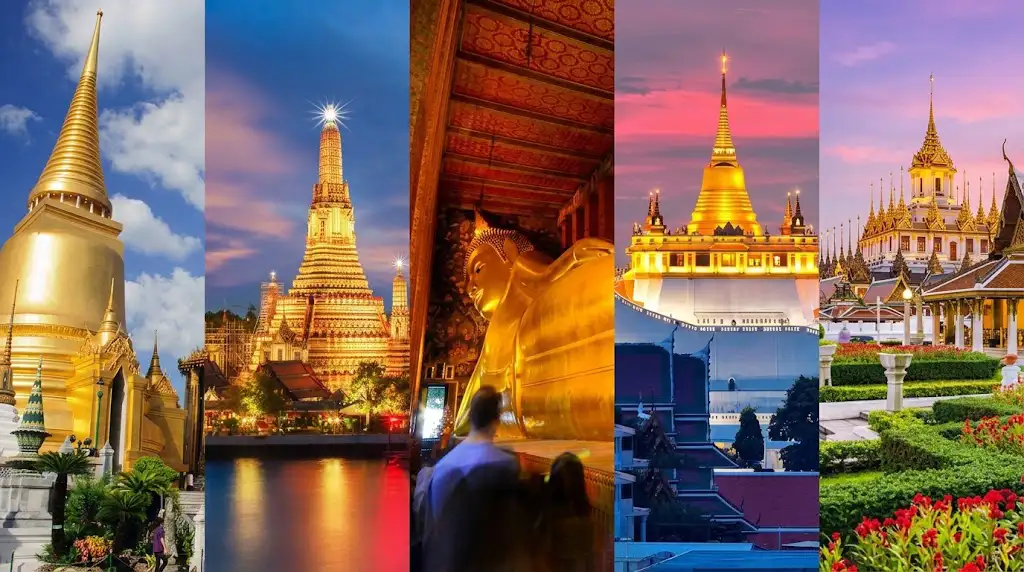
In Bangkok, every temple reveals another layer of Thailand’s history, faith, and artistic soul.
BeYourGuides.com
5 Must-See Bangkok Temples That Showcase the City at Its Most Beautiful
Bangkok temples offer one of the best ways to experience Thailand’s history, Buddhist traditions, royal heritage, and extraordinary craftsmanship in a single trip. From the glittering towers of Wat Phra Kaew to the riverside beauty of Wat Arun and the peaceful climb to Wat Saket, each temple has its own character.
Bangkok is home to hundreds of temples, but you do not need to visit them all to experience the city’s most memorable religious landmarks. If you are planning your first cultural day in Bangkok, these five temples provide a fascinating introduction to the capital’s architecture, history, and spiritual traditions.
Quick Navigation: Jump to a Section
Quick Answer: Which Bangkok Temples Should You Visit?
If you only have time for a few Bangkok temples, start with these five:
- Wat Phra Kaew – the Temple of the Emerald Buddha inside the Grand Palace.
- Wat Arun – the iconic riverside Temple of Dawn, famous for its decorated central prang.
- Wat Pho – home to the famous Reclining Buddha and a major center of Thai traditional massage.
- Wat Ratchanatdaram and Loha Prasat – an architecturally distinctive temple complex near Bangkok’s Old Town.
- Wat Saket and the Golden Mount – a hilltop temple offering panoramic views over historic Bangkok.
The Tourism Authority of Thailand recognizes Wat Phra Kaew, Wat Arun, Wat Pho, Wat Saket, and Wat Ratchanatdaram among Bangkok’s important historic and religious attractions.
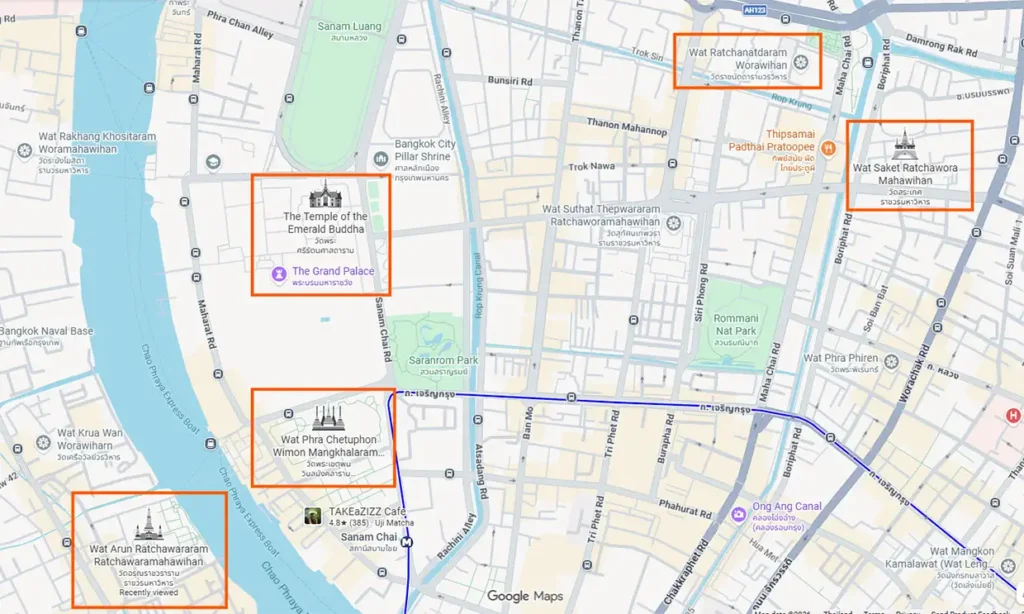
1. Wat Phra Kaew – Bangkok’s Most Important Royal Temple
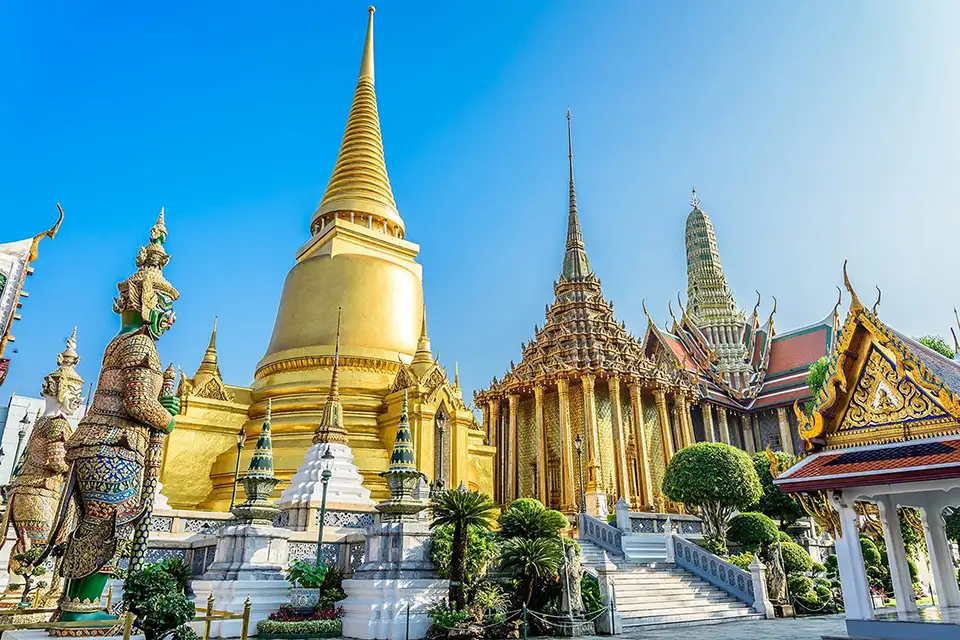
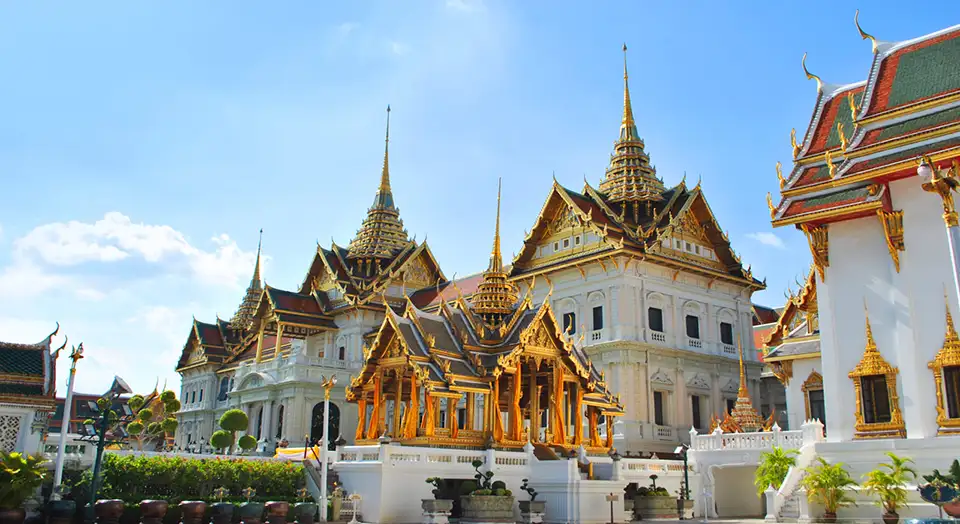
Located inside the Grand Palace complex, Wat Phra Kaew is also known as the Temple of the Emerald Buddha. For many international visitors, this is the natural starting point for exploring Bangkok’s royal and religious heritage.
The temple is visually spectacular. Golden architectural details, colorful mosaics, mythical guardian figures, painted surfaces, and elaborate roofs create a complex that feels almost like an open-air museum of traditional Thai craftsmanship.
At the heart of the temple is the Emerald Buddha, one of Thailand’s most revered Buddha images.
What makes Wat Phra Kaew particularly interesting is the way religion and royal history come together. The temple is part of the Grand Palace complex, allowing visitors to experience two major aspects of Thailand’s heritage in one location.
What to see at Wat Phra Kaew
- The Emerald Buddha
- Intricate golden and colorful architectural details
- Traditional Thai murals and decorative elements
- Guardian figures and mythological sculptures
- The wider Grand Palace complex
Travel tip
Dress respectfully when visiting the Grand Palace and Wat Phra Kaew. Shoulders and knees should be covered, and visitors should avoid tight, transparent, or revealing clothing. The Grand Palace has specific dress requirements, so checking the current rules before arrival is recommended.
BeYourGuides Recommendation #1: Grand Palace Fast-Track Admission Ticket
For travelers who prefer to explore independently, the Grand Palace Fast-Track Admission Ticket is a practical option.
🔗Related article:
The ticket provides access to the Grand Palace and Wat Phra Kaew while helping visitors avoid the standard ticket queue. Depending on the package, it also includes access to attractions such as the Queen Sirikit Museum of Textiles and the Arts of the Kingdom Museum.
Best for: Independent travelers, first-time visitors, photographers, and travelers who want flexibility.
2. Wat Arun – The Riverside Icon of Bangkok
Few Bangkok temples are as recognizable as Wat Arun.
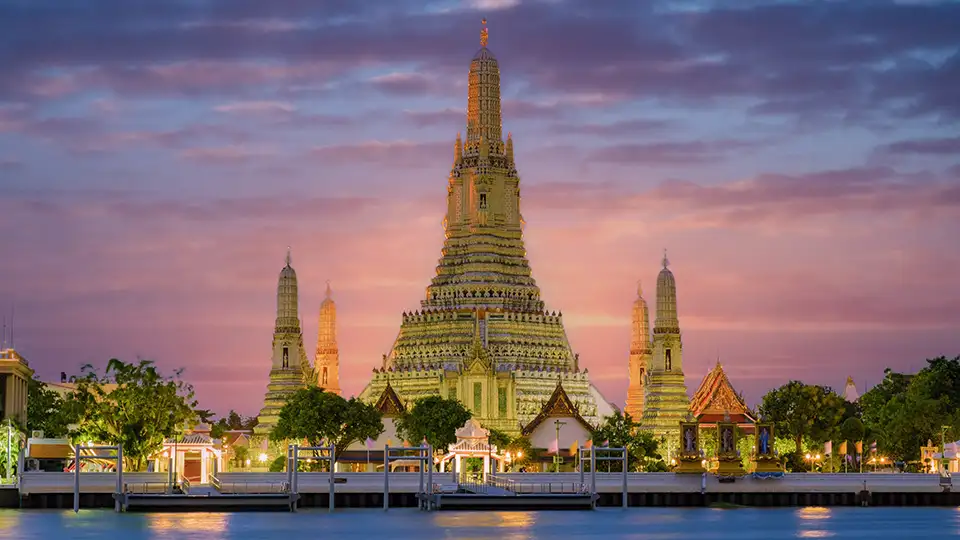
Standing on the western bank of the Chao Phraya River, Wat Arun is commonly called the Temple of Dawn. Its most recognizable feature is the enormous central prang, decorated with ceramic and porcelain details that create intricate patterns across the surface.
Rather than viewing the temple only from a distance, take time to walk around the complex. Up close, you can see the craftsmanship in much greater detail, including decorative figures, guardian sculptures, and colorful ceramic patterns.
Wat Arun is particularly photogenic because its appearance changes with the light. Morning light creates a softer atmosphere, while late afternoon can highlight the textures of the temple’s decorative surfaces.
The Tourism Authority of Thailand describes Wat Arun as an ancient temple dating back to the Ayutthaya period and highlights its distinctive architecture decorated with porcelain and other materials.
What to do at Wat Arun
- Walk around the temple complex
- Photograph the central prang
- Look closely at the porcelain and ceramic decoration
- See the guardian figures
- Cross the Chao Phraya River by ferry
- Combine Wat Arun with Wat Pho and the Grand Palace
BeYourGuides Recommendation #2: Grand Palace, Wat Arun & Big Buddha Day Trip
This is the primary BeYourGuides product recommendation for this article.
The Grand Palace Day Trip: Grand Palace, Wat Arun & Big Buddha Day Trip combines several major Bangkok landmarks into one organized experience. The itinerary includes Wat Arun, a public ferry ride, the Grand Palace and Wat Phra Kaew, followed by the large Buddha image at Wat Paknam.
The experience is available as a join-in or private option, with an English-speaking guide and air-conditioned transportation. Selected packages also include lunch by the river. Current BeYourGuides information lists the experience at approximately 5–7 hours.
Best for: First-time visitors, families, couples, and travelers who want several major cultural attractions in one day.
🔗Related article:
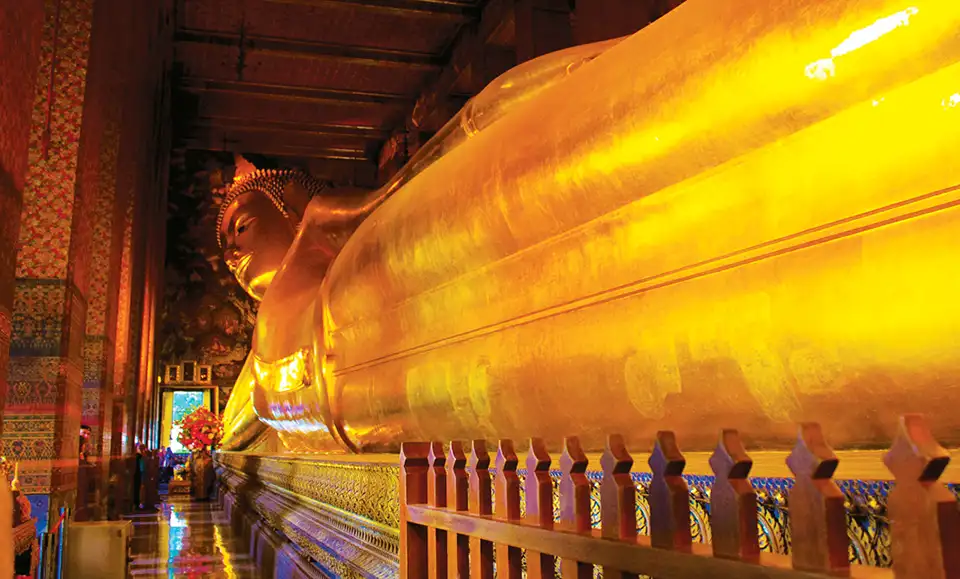
3. Wat Pho – Discover the Reclining Buddha
Just a short walk from the Grand Palace, Wat Pho provides a different perspective on Bangkok’s religious and cultural heritage.
The temple is famous for its enormous Reclining Buddha, but there is much more to explore beyond the statue itself. The complex contains numerous chedis, murals, sculptures, courtyards, and decorative details.
One particularly beautiful feature is the mother-of-pearl decoration on the Buddha’s feet. The temple grounds also contain the famous four large chedis associated with different reigns, creating one of the most distinctive architectural scenes in Bangkok.
Wat Pho is also closely associated with traditional Thai massage. For travelers interested in Thai wellness traditions, the temple provides an opportunity to connect cultural heritage with an experience that remains part of Thailand’s living traditions.
The Tourism Authority of Thailand highlights the Reclining Buddha, mother-of-pearl decoration, murals, Chinese sculptures, and the four large royal chedis as important features of Wat Pho.
What to see at Wat Pho
- The Reclining Buddha
- Mother-of-pearl details on the Buddha’s feet
- The four royal chedis
- Traditional murals
- Chinese statues and decorative sculptures
- Historic temple courtyards
BeYourGuides Recommendation #3: Grand Palace, Wat Pho & Wat Arun Tour
If your priority is seeing the three classic cultural landmarks of Bangkok’s historic center, a Grand Palace, Wat Pho & Wat Arun itinerary is particularly convenient.
The three attractions work naturally together. Start with the Grand Palace and Wat Phra Kaew, continue to Wat Pho, and then cross the river to Wat Arun.
This route also reduces the need to plan several separate transfers. BeYourGuides currently features this combination among its Bangkok cultural experiences.
Best for: First-time visitors who want Bangkok’s major temples in a single sightseeing route.
🔗Related article:
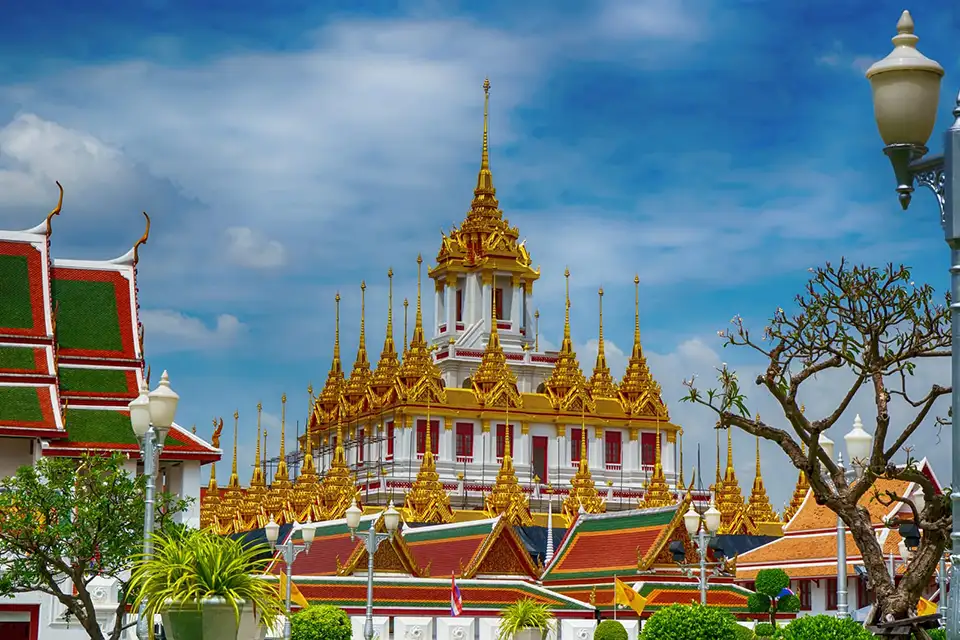
4. Wat Ratchanatdaram and Loha Prasat – An Architectural Treasure in Bangkok’s Old Town
For travelers who want to see something different from Bangkok’s most famous golden temples, Wat Ratchanatdaram is worth adding to the itinerary.
The temple is best known for Loha Prasat, often translated as the Metal Castle. Its unusual multi-level structure immediately stands apart from the traditional temple silhouettes found elsewhere in the city.
Located near the Giant Swing and the historic Rattanakosin area, the temple is also convenient to combine with other Old Town attractions.
One of the most interesting things about this area is the contrast between major tourist landmarks and quieter cultural spaces. You can visit the temple, explore the surrounding historic streets, and continue toward Wat Saket or the Giant Swing without making a long journey across Bangkok.
BeYourGuides’ Bangkok travel content also identifies Loha Prasat and Wat Ratchanatdaram among the city’s notable cultural and architectural attractions.
What to look for
- The distinctive Loha Prasat structure
- Multiple architectural levels
- Buddhist decorative details
- Historic Old Town surroundings
- Nearby Giant Swing and Rattanakosin attractions
BeYourGuides Recommendation #4: Private Tour Guide Bangkok with Car
If you want to combine several Old Town attractions in one customized itinerary, consider the Private Tour Guide Bangkok with Car experience.
A private itinerary can include the Grand Palace, Wat Pho and Wat Arun, while allowing additional time for attractions such as Loha Prasat, Wat Saket, Pak Khlong Talat, Chinatown, or other places that match your interests.
The BeYourGuides private tour information specifically describes flexible combinations around the Grand Palace, Wat Pho and Wat Arun, with options to add other Bangkok experiences.
Best for: Families, private groups, photographers, repeat visitors, and travelers who prefer a flexible itinerary.
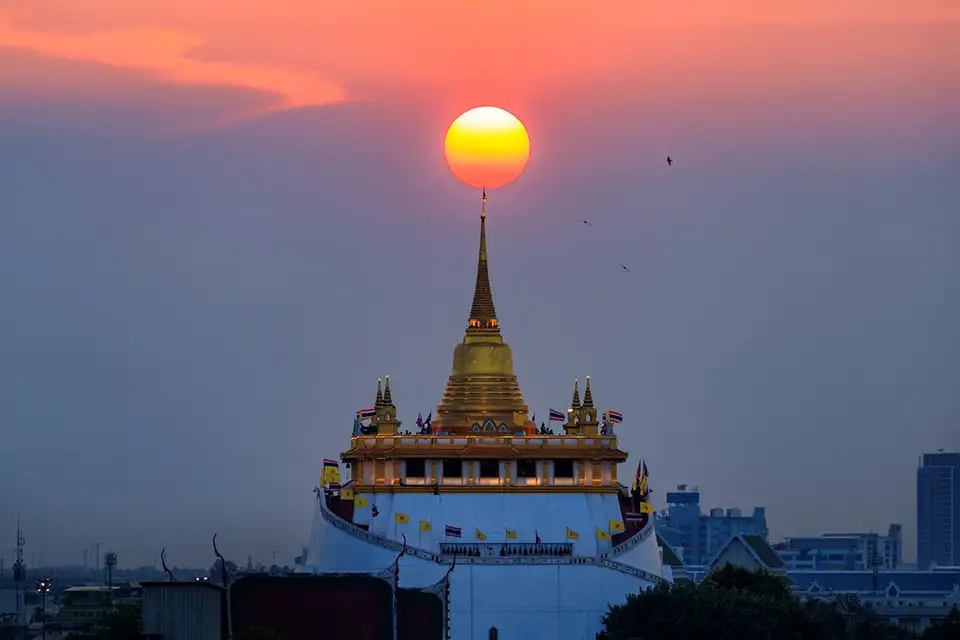
5. Wat Saket – Climb the Golden Mount for a Different View of Bangkok
If you want to experience Bangkok temples from above, make time for Wat Saket.
Known as the Golden Mount, Wat Saket sits on a man-made hill in Bangkok’s Old Town. Reaching the top involves a staircase of 344 steps, but the gradual climb is part of the experience.
As you ascend, the surroundings become noticeably greener and quieter. At the summit, the Golden Mount provides views across Bangkok’s historic district.
The experience is very different from visiting a large royal temple. Instead of moving from one ornate building to another, the visit becomes a short walk, climb, and viewpoint experience.
The Tourism Authority of Thailand specifically highlights Wat Saket’s 344-step spiral staircase and the sacred area at the top of Phu Khao Thong.
What to do at Wat Saket
- Walk around the Golden Mount
- Climb the 344 steps
- Enjoy views of Bangkok’s Old Town
- See the golden chedi at the summit
- Combine the temple with nearby historic neighborhoods
- Visit around cooler parts of the day
BeYourGuides Recommendation #5: Super Galaxy Chao Phraya River Cruise
Wat Saket is inland, so a river cruise is not a direct temple tour. However, it makes an excellent second experience after exploring Bangkok’s historic temples.
The Super Galaxy Cruise offers another way to appreciate Bangkok’s cultural landscape. The cruise travels along the Chao Phraya River, passing landmarks including Wat Arun and the Grand Palace while offering dinner, live entertainment, and city views.
The current BeYourGuides itinerary lists ICONSIAM as the departure point and includes views of Wat Arun, the Grand Palace, and other riverside landmarks during the cruise.
Best for: Couples, families, groups, photographers, and travelers looking for an evening experience after sightseeing.
How to Visit Bangkok’s Temples in One Day
If your Bangkok itinerary is short, you can combine several of these landmarks efficiently.
Morning: Grand Palace and Wat Phra Kaew
Begin early with the Grand Palace and Wat Phra Kaew. Allow enough time to appreciate the architecture rather than simply taking photographs and leaving.
Late Morning: Wat Pho
Walk from the Grand Palace to Wat Pho. This is one of the easiest temple combinations in Bangkok because the two attractions are located close together.
Afternoon: Cross the Chao Phraya River to Wat Arun
Take a short ferry ride across the river and explore Wat Arun. The river crossing itself becomes part of the sightseeing experience.
Late Afternoon: Wat Ratchanatdaram or Wat Saket
If you still have energy, continue into Bangkok’s Old Town. Wat Ratchanatdaram and Loha Prasat are good choices for architecture, while Wat Saket adds a viewpoint and a little exercise.
Evening: Chao Phraya River Cruise
Finish the day on the river. From the water, Bangkok’s temples look completely different, particularly when the historic buildings are illuminated after dark.
Best Bangkok Temple Tours at a Glance
| Experience | Main Highlights | Best For |
| Grand Palace Fast-Track Admission Ticket | Grand Palace, Wat Phra Kaew, flexible visit | Independent travelers |
| Grand Palace, Wat Arun & Big Buddha Day Trip | Wat Arun, Grand Palace, Emerald Buddha, Big Buddha, river experience | First-time visitors |
| Grand Palace, Wat Pho & Wat Arun Tour | Three iconic cultural landmarks | Classic Bangkok sightseeing |
| Private Tour Guide Bangkok with Car | Flexible temple and Old Town itinerary | Families and private groups |
| Super Galaxy Chao Phraya River Cruise | Wat Arun, Grand Palace views, dinner and entertainment | Evening sightseeing |
BeYourGuides currently lists these experiences across its Bangkok cultural, sightseeing, private-tour, and river-cruise offerings.
Temple Etiquette in Bangkok
When visiting Buddhist temples, treat the site as a place of worship rather than simply a tourist attraction.
A few simple rules make the experience more respectful:
- Cover your shoulders and knees.
- Avoid transparent or very tight clothing.
- Remove shoes where signs request it.
- Keep your voice low inside prayer areas.
- Do not touch Buddha images or religious objects unless permitted.
- Follow photography rules.
- Avoid blocking worshippers while taking photographs.
- Follow instructions from temple staff.
Rules can differ between temples, so check the requirements for each location before visiting. The Grand Palace and Wat Phra Kaew have particularly strict dress requirements.
FAQs about Bangkok Temples
Q1: What are the most beautiful Bangkok temples?
Some of the most visually distinctive Bangkok temples include Wat Phra Kaew, Wat Arun, Wat Pho, Wat Ratchanatdaram with Loha Prasat, and Wat Saket. They represent different architectural styles and experiences, from royal temple complexes and riverside monuments to historic Old Town viewpoints.
Q2: Which Bangkok temple should I visit first?
For a first cultural visit, Wat Phra Kaew and the Grand Palace provide an introduction to Thailand’s royal and religious heritage. Wat Pho and Wat Arun can then be added to create a classic historic Bangkok route.
Q3: Can I visit Wat Pho, Wat Arun and Wat Phra Kaew in one day?
Yes. These three attractions are commonly combined into one Bangkok sightseeing itinerary. Wat Pho is close to the Grand Palace, while Wat Arun is across the Chao Phraya River. BeYourGuides offers experiences that combine major landmarks in this historic area.
Q4: What should I wear to Bangkok temples?
Wear modest clothing that covers your shoulders and knees. Long trousers, long skirts, and shirts with sleeves are practical choices. The Grand Palace and Wat Phra Kaew have especially strict requirements.
Q5: What is the best way to see Bangkok temples?
It depends on your travel style. Independent travelers can visit individual temples using Bangkok’s public transport and river boats. Travelers who want historical explanations and easier logistics may prefer a guided temple tour. A private tour is another option when flexibility is important.
Q6: Is Wat Saket worth adding to a Bangkok itinerary?
Wat Saket offers a different experience from Bangkok’s larger temple complexes. The Golden Mount climb provides a combination of greenery, religious architecture, and views over the Old Town. The Tourism Authority of Thailand highlights the 344-step route as one of its key features.
Q7: Can I see Bangkok temples from the Chao Phraya River?
Yes. River cruises can provide views of major riverside landmarks including Wat Arun and the Grand Palace. This is particularly attractive in the evening when the riverside architecture is illuminated.
Experience Bangkok Through Its Temples
The beauty of Bangkok temples is not limited to golden roofs and spectacular photographs. Each site offers a different window into Thailand’s history, Buddhist traditions, architecture, and everyday cultural life.
Wat Phra Kaew connects Bangkok’s religious heritage with the Grand Palace. Wat Pho combines sacred architecture with the famous Reclining Buddha and traditional Thai massage. Wat Arun brings together intricate craftsmanship and the Chao Phraya River. Loha Prasat reveals a less familiar side of Bangkok’s Old Town, while Wat Saket rewards visitors with a climb and a view over the historic city.
For travelers who want to experience several major landmarks without spending time organizing every transfer, a guided itinerary such as the Grand Palace, Wat Arun & Big Buddha Day Trip is an easy way to combine culture, sightseeing, and transportation in one experience.
For independent travelers, the Grand Palace Fast-Track option provides more freedom, while a private guide can create a more flexible temple-focused day. In the evening, a Chao Phraya River cruise offers a completely different perspective of Bangkok’s illuminated riverside landmarks.
Whichever route you choose, these Bangkok temples offer an unforgettable introduction to the cultural heart of Thailand.